Tuesday, 12 March 2013

PART II of GREG KLYMKIW'S GUIDE: How to raise your child with the highest degree of cinema literacy!

IF YOU HAVEN'T READ PART ONE YET, CLICK HERE


In this edition of "How To Make Your Child Cinema Literate" you'll see why and how classic product (like that of Walt Disney), will instil a high degree of cinema literacy within your child, thus arming the happy toddler with the supreme taste it'll require to take out every inferior child within the sphere of its peers. For example, Disney's immortal SONG OF THE SOUTH, is difficult to acquire nowadays because it's been unfairly treated with pariah-like status by narrow-minded politically correct fascists. They myopically refuse to acknowledge that children learn so much more about the history of our world (AND art) when they're presented with unexpurgated and CONSTANT exposure to materials that display the highest degrees of aesthetic excellence, yet often represent perspectives which. in contemporary society are indeed no longer acceptable. The bottom line, dearest reader, is that your child will not become a lemming if YOU aren't a lemming yourself. So read on, learn and apply with fortitude and no shame.

PART II
How To Make Your Child Cinema Literate

Commentary and Guide by Greg Klymkiw

If you don't want your child to become a Philistine, herewith as promised is PART TWO of the handy-dandy Klymkiw Film Corner treatise on coaching select parents and their even more select children to ensure the utmost level of cinema literacy in one's progeny. I realize that most of you can't cut the mustard, and though I bear you no ill will or malice, it's important to avoid eventual heartache and just give up now if you're one of those miserable cretins who are beneath those who have the ability to positively take from this advice and make the most of their children's futures. For you who are, indeed of a superior persuasion, you're in the right place. Here you'll find tips, tricks and some viewing suggestions that allowed MY own child to choose the ideal fork in the road.

And maybe, just maybe, yours too.

In the parlance of Michael Haneke: ROTFLMFAO!

SILENT, 2-strip & 3-strip TECHNICOLOR and B&W - ONLY

1. Pre-birth and Toddler Years

Before your child is even born, there are two important things you must do. First of all, place the mother of the child in front of your home entertainment system and screen all the acceptable motion pictures - repeatedly if need be, since this will also be beneficial to the carrier of your seed. If possible, the Mother's belly should be as close to the monitor as possible. This might not work for those who use wall-mounted monitors and/or massive pull-down screens, but do your best. (A well-placed ladder could work wonders here.)

Secondly, prepare viewing lists for the first 2-to-3 years of the child's life. For home viewing, nothing on my list went beyond the release date of the mid-1960s and most were well before that date. Keep in mind that the list must be used as strictly as possible, but I do allow some leeway if the list is used as a springboard to show the child contemporary work inspired by the directors in question.

If, for example, you're going through a period where you're screening an abundance of Warner Brothers gangster films, I'd be delighted to hear that you also screened some select Martin Scorsese pictures for your toddler - notably Mean Streets and Goodfellas. My own child was especially enamoured with the latter title, so I screened it for her repeatedly, BUT made sure to ALWAYS sprinkle said screenings with palate-cleansers like White Heat, The Roaring Twenties, City For Conquest, Scarface (the Howard Hawks version, obviously) and The Public Enemy.

After screening THE PUBLIC ENEMY, it was especially delightful seeing the child at age 2, slicing a variety of citrus fruits and attempting, like Mr. Cagney, pictured above, to grind them into the face of her mother. You, like I, MUST gently chastise the child by saying, "Now, now, your Mommy isn't Mae Clarke."


At the end of the day, though, I always made sure that a good many of the films were silent and if they were "talkies", I favoured  those that were shot in monochrome (black and white for those of the uninitiated persuasion).

John Ford's HOW GREEN WAS MY VALLEY is a GREAT movie to show your children as early in their lives as you possibly can (and then repeat viewings every 6 months or so until they begin choosing it themselves as a movie to watch repeatedly). It's also a wonderful film to discuss composition, lighting and overall mise-en-scene with your kids since it might well be one of the most gorgeously photographed B&W movies ever made. Its cinematographer was the immortal 7-time Oscar nominee and 3-time Oscar winner Arthur Charles Miller.

The only colour films on this list (save for contemporary exceptions noted above) are choice classics photographed in original two-or-three-strip Technicolor.

David O. Selznick's GONE WITH THE WIND is a perfect movie to begin showing your child as early as possible. It's replete with one shot after another that will allow you to examine and explain to your child why real Technicolor was and still is better than any other colour film stock, but that sadly, this process was abandoned many years ago.

NEVER discriminate with respect to genre - musicals, drama, comedy, horror, western, romance, documentary, neorealism - all are fine so long as they stay within the aforementioned parameters. Remain true to your lists with only minor variants that are mere springboards from whatever is on them.

RABBIT EARS ONLY

2. Broadcast Television in Moderation

If you must have broadcast television available, do NOT under any circumstance allow cable television in the home. Use rabbit ears ONLY and make sure you set the channel changer to only carry programming like Teletubbies. When the child is asleep, I highly recommend you fire up a dubie and view Teletubbies all by your lonesome - alone, mind you - no need to corrupt your child. Other people's miserable children will do a good job in the corruption department. (A constant challenge to the bearer of superior parenting skills.)

TELETUBBIES 4 ALL!!!

There really are only two acceptable broadcast choices:

(A.) TVO (educational TV in Ontario - if your province does not have educational TV, you lose and if you're American, PBS is not much of a substitute for the excellence and superiority of Canadian public EDUCATIONAL television, but it will have to do I'm afraid and if you're one of my ridiculously huge number of readers in Europe, I know most of you DO have excellent public broadcasting of all kinds).

A JUBILEE OF CBC

(B.) CBC (in Canada, this is the Canadian Broadcasting Corporation, our national public television network - however, since my dear cousin Slawko Klymkiw stopped being the Head of Programming after he got an un-requested ass-fucking for the top-job, the programming became shittier and shittier due to - ahem - "visionaries" - so it's much harder these days, save for some exceptions, to recommend this option, and for my American readers, you're pretty much fucked and my European readers, you already know the score, so go for it).

SIR NATURE BOY TO YOU!

Programming choices in Canada for the aforementioned can ONLY be early morning Children's programming, documentaries (preferably "nature" docs - others are fine, but kids fucking LOVE animals, go figure) and extremely select dramatic shows. Programming choices for Americans are nil, though PBS will do if you narrow the choices to nature and select British mystery series. And, uh, you Europeans can pretty much let anything play in your home that's on your publicly owned networks.


3. What movies can your nippers see

In movie theatres, take them to everything and anything (except contemporary Disney, though selective Pixar titles are fine). Screw babysitters. Children's admission prices are free up until two years old (but if you shove a baby bottle in the child's mouth and caution them to NEVER talk, you can stretch the freebies out until they're four years of age). Also, never buy anything at the cinema, just sneak in your own beverages and munchies and if you're really smart, it's not impossible to scope out free or reasonable parking. The myth of how much it could cost you to go to the movies is just that - a myth. 

Censorship is, of course, verboten.

That said, toddlers and pre-teens might be better off if you chose not to screen the following titles: 


THE PASSION OF THE CHRIST
Probably NOT a Good Idea 2 Show 2 Kids #1
SALO: THE 120 DAYS OF SODOM
Probably NOT a Good Idea 2 Show 2 Kids #2
NEKROMANTIK
Probably NOT a Good Idea 2 Show 2 Kids #3
THE LION KING
Probably NOT a Good Idea 2 Show 2 Kids #4

4. Animation: To show or not to show?

Animation poses a special challenge since the bad stuff is REALLY awful, yet all little nippers love cartoons - they really, really do and most importantly you cannot leave animation out if your goal is to boost their cinema literacy. Well, don't fret. That's why I'm here, folks.

The following animation is acceptable for your child:


Anything by the Fleischer Brothers - includes Popeye, Betty Boop and their many one-offs, the Somewhere in Dreamland-styled Talkartoons

Anything by Jan Švankmajer
Anything by the Brothers Quay

Anything by Miyazaki/Studio Ghibli


Any Anime & Manga, but skip pictures involving demons with 20-foot-long penises chasing after pre-teen girls. Anime has tons of violent sexual imagery, so you might wish to pass on anything featuring rape. (For live-action drama - Deliverance and A Clockwork Orange are obvious exceptions to this rule. They're movies all kids must see!)


Anything from Warner Brothers - notably Bugs Bunny, Daffy Duck, Porky Pig, Yosemite Same, Tweety Bird, Pepe Le Pew, etc.

Anything by Brad Bird including The Incredibles and The Iron Giant


Anything by Art Clokey - GUMBY & POKEY, DAVEY & GOLIATH


Anything by Jay Ward - Rocky and Bullwinkle, Fractured FairyTales & Tennessee Tuxedo
Anything by Don Bluth, especially The Secret of NIMH, An American Tale & All Dogs Go To Heaven
Anything by Hanna-Barbera which is a really huge list, but it's often extremely entartaining and includes the likes of Tom and Jerry, Yogi Bear, Yakky Doodle, Huckleberry Hound, The Flinstones, The Jetsons, Birdman, Mighty Mightor, Jonny Quest and Scooby Doo, etc.
Anything by Rankin/Bass Productions
ALL Soviet animation
ALL National Film Board of Canada (NFB) 


5. The Disney Dilemma

HERE ARE YOUR STRICT ORDERS:

Nothing from Walt Disney Studios (animated, live-action and made-for-television) made after Uncle Walt's tragic death in 1966 (unless he developed it in some fashion prior to said death) will enter your home.

Alas, by the time your child turns 5 or 6 and has been tainted by cinema illiterate children belonging to miscreants not of your station, you'll start getting requests for The Little Mermaid, Beauty and The Beast, The Lion King, etc.

Do not fret.

If you're strict about the above, your progeny will have already had several years of seeing the VERY BEST Disney and what will happen once you taint them with Disney outside of the aforementioned parameters - is, very happily, something that happened with my daughter.

Every pre-Disney-death cartoon or live-action production that my daughter had seen (shorts, features, made-for-TV), she already watched over and over and over and over and yet, over again. Though she was excited to watch the post-Disney-death product, I noticed that she watched the offending titles once each and then - NEVER AGAIN. At one point, I asked my daughter is she minded if Dad took those films to a Used Record/Book store to sell them, she said: "Sure. I don't like them anyway." The only titles she wanted to keep were Lilo and Stitch and two Pixar items, The Incredibles ('natch) and Finding Nemo.

You see, she developed her own taste.

And Good God Damn!!! It was - and still is - fine taste too.

Over the years, I'd let her watch more and more contemporary stuff, but the only movies - animated or live action - that she re-screens and/or just plain loves are the best of the best.

More and more now, when we're watching movies at home, I'll ask her what kind of movie she feels like watching. Her usual response is, "Let's watch an old, movie, Dad." Just recently, I showed her The Postman Always Rings Twice starring John Garfield and Lana Turner.

She went nuts!

She not only loved the movie to bits, but she went on and on about how great John Garfield was.

"Do we have more movies with him?" she asked.

"You bet!" was my response.
You too can have a film literate child with exquisite taste. As you can see, it doesn't take much. A few days after her introduction to John Garfield, I showed her the brilliant article by Kim Morgan at Sunset Gun which focused upon Kim's own healthy, life-long devotion to Mr. Garfield. It was if the child had been Born Again. Someone else in the world - a very cool woman at that - described John Garfield in ways she clearly understood. If you're interested, feel free to read my daughters movie reviews at this site. Her review of Miyazaki's "Spirited Away" is HERE, her review of "Jaws" is HERE and her review of "Mirror Mirror" is HERE. 
During April of 2013, my 11-going-on-12-year-old has been invited to participate as an official member of the Toronto International Film Festival TIFF KIDS 2013 Awards Jury to select the Best Feature Film in the 11-13-year-old category.  She was one of a handful of children selected in a highly competitive contest for kids - based on her self-penned movie review.

Monday, 11 March 2013

PART I of GREG KLYMKIW's Two-Part Guide: "How to raise your child to be cinema literate"


How To Raise Your Child To Be Cinema Literate - PART I

By Greg Klymkiw

I'm proud to say that at the age of 18 months, the first movie my daughter ever saw in her life was the thrilling 1963 fantasy-adventure film Jason and the Argonauts (directed by Don - One Million Years B.C. - Chaffey and featuring the jaw-dropping stop-motion effects of the legendary Ray Harryhausen). The second movie during this momentous DVD double feature at home, was none other than It (1927) that delightful, bubbly silent romance starring Clara Bow.

Do you see a pattern forming? No? Are you, perchance, a fucking moron? Can you, as an adult (who should know better) not see that one movie is sans sterile digital special effects, but is instead created with hand-crafted models animated one frame at a time by human beings who must painstakingly move, light and compose the shots whilst meticulously maintaining all the levels and continuity during the gruelling PHYSICAL process of rendering the models on FILM to life? Have you, like some gibbering gibbon, been unable to grasp the simple fact that the other film was in black and white and SILENT, save for the organ accompaniment grafted onto the track of sound to reproduce what it might have been like to see the movie on a huge standard-frame screen, projected onto it from highly explosive nitrate stock in a massive 2000-seat picture palace with some musically gifted genius playing to the images before him? I thought not. THAT, my friend, is why YOUR child will become a cinema-illiterate idiot with a huge mushroom lodged in its skull instead of a cerebellum.

He, who eyes the target of his utter DISGUST

Looking DOWN upon the target of DISGUST
Need I remind you what Roman Polanski as Trelkovsky said to the whining brat who'd lost his toy boat during that seminal moment in The Tenant? You don't?

Idiot!

Just before slugging the little bugger across the face he horked out the following vitriol: "Filthy little brat!" with a delivery ONLY Polanski could pull off - "FEELTHEE, LEETOL BRAT!" (The last word spat out like a snake's venom with the deliciously rolled Eastern European "R").

BABY BOTTLES of GRAPE JUICE & PAMPERS

The first movie my daughter ever saw in a movie theatre not long after the aforementioned DVD double-bill was Peter Weir's gorgeously directed historical swashbuckler Master and Commander: The Far Side of the World (2003). Let me tell you: The child was transfixed. Of course, as courteous parents we made sure she was armed with baby bottles full of grape juice and disposable diapers to both keep her quiet and to deal with any natural, shall we say, expunging of the liquid matter processed through her bladder (the latter keeping the child from insisting upon endless trips to the bathroom and ruining the experience for herself, her parents and other patrons - HINT! HINT! To all you idiots who drag your kids to the cinema and don't do likewise). This all, I must add, transpired during a late screening time after a full day of activity, no less. When the movie was over, she wanted to see another.

Great Musical from an unsung American auteur and a film my daughter fell in love with, using Doris Day's spirited rendering of the title character as a role model and mining the copious bounty of its terrific director's other fine work.

Jason and the Argonauts, IT! and Master and Commander were my child's first movie experiences and from there they got better and better. (I know, I shared them, so to speak, with her.) The child's cinematic influences and delights were as varied as the number of insect groups populating our Earth. One of her earliest obsessions - in addition, let me add, to Polanski - was the tremendous 50s musical Calamity Jane starring the effervescent Doris Day as the tomboy-ish, buckskin-adorned, sharp shootin', Injun' fightin' little filly who gets so googly-eyed over the handsome, studly Wild Bill Hickock (Howard Keel, 'natch) that she realizes how important it is for a woman to learn how to be a REAL woman. The film is exuberantly directed by the fine, sadly unsung American auteur David Butler who delivered hit after hit after hit for over 30 years before becoming a prolific director of many of the best works from American TV's Golden Age.

His features included Ali Baba Goes to Town with the brilliant Eddie Cantor, the glorious part-talkie musical comedy extravaganza Fox Movietone Follies of 1929 that features an early appearance from comic genius Stepin Fetchit, Road to Morocco, the third and absolute best of the Bob Hope, Bing Crosby and Dorothy Lamour "Road" comedies and among many, many other delicious cinematic bon bons, Butler was the go-to-guy for Shirley Temple and helmed many of her biggest and most beloved hits. My little girl watched Calamity Jane all the way through about 100 times, but this did not include all the times she'd replay the sprightly musical numbers. It wasn't, however, prudent as a parent to allow the child to watch Calamity Jane repeatedly WITHOUT introducing her to Butler's stellar canon. This, she surely appreciated as all his films offered first-tier entertainment value.

Funny Things Happen in Morocco. VERY funny!!!

The child's taste in movies was varied and, if I do say myself, she was well on her way to cinema literacy. That said, she required someone to gently guide her through 100 years of movie history. Unlike other parents, I took special care with what she was allowed to see. I wished desperately that others would do the same. I recall how often I'd find myself needing to viciously stare down any miserable miscreants of the bairn persuasion who demanded to see the latest Pixar or Disney animated trifle and, as is my wont, I'd drill holes of ocular hatred into all those cretinous little bastards who'd say, "Eeeew, that's not in colour" or worse, "Why are those special effects so cheesy?"

Fuck them!

Fuck them and whatever rotting hobby-horses they rode in on.

Whenever I heard such ignorance spewing from the mouths of bone-brained cinema-illiterate whelps such as these, my first impulse was, in the tradition of Polanski's Trelkovsky, to smash them with a motherfucker of a roundhouse to the face. I would restrain myself, though, for these offending dribblings were clearly the product of nurture, not nature. Nine times out of ten, I had no need to effect corporal punishment since the fault of these grotesque atrocities of taste were, in actuality (and in a less charitable age referred to as freaks of nature), wholly derived from the miserable progenitors of these innocents.

These breeders with careless abandon were solely and with nary a doubt in my sharp mind, the dregs, the reprehensible and UTTERLY STINKING, RANCID FILTH, who truly deserved my ire.

When my daughter was a toddler she'd wake me up every morning at 4 or 5 with the delightfully demanding words, “Movie! On!” And believe you me, it was MY distinct pleasure. Exposing oneself (and one’s children) to only the best not only results in developing exquisite taste in motion picture product (and pretty much everything else) but it allows for an acute awareness of what is truly mediocre. If a child is capable of this, anyone is. Most importantly, such exposure allows for the development of the highest degree of critical analysis. The following example I provide is proof positive of such critical acumen a child is capable of.

A VERY FOOLISH MAN

At age four, I fondly remember when the child joined me for lunch with a film critic/professor pal of mine and sat mutely as we discussed, among other important issues of the day, Raoul Walsh’s magnificent They Died With Their Boots On (starring Errol Flynn as General George Armstrong Custer). This happened to be a film she had, at the time, just seen. During this confab of middle-aged geek discourse, she was finally compelled to interject with the remarkable assertion that General Custer was “a foolish man” and not unlike “Peter Rabbit”. (Yes, believe it or not, I never deprived the child of fine cinema or literature beloved by children the world over. I read Beatrix Potter to her nightly.)

My pal, an American raised to believe that Custer was a heroic military defender of all that was right with might in the making of his country and NOT the perpetrator of mass genocide against the First Nations, queried my child on her admittedly contentious pronouncement and she calmly explained that just as Peter Rabbit unwisely ventured into Mr. MacGregor’s garden where his departed father had been captured and killed by the merciless rabbit-hunting Scotsman, so did General Custer unwisely venture into the Battle of Little Big Horn where he and all his men were spectacularly defeated by the armies of the Sioux Nation. My pal of the American persuasion nodded his head solemnly, lamenting that his own undergraduate students were unable to make similarly astute observations about movies (“or anything, for that matter”, he quipped).

Now before you jump to any conclusions I must state (in my defense) that I never attempted to indoctrinate the child (just as I would never attempt to indoctrinate anyone). My daughter developed this appetite for cinema all on her own. Though I did prepare and ultimately urge her to adhere to strict viewing lists during her youngest years, I did so to ensure well-roundedness.

Not to indoctrinate.

As she enters her tweener years, my dear child has seen over 4000 movies. Even now, she can occasionally point out stylistic traits in certain directors and has developed a great photographic eye. This pleases me greatly (though I do hope she'll eventually be a doctor or lawyer with great taste in movies, literature and art).

Ultimately, I do think that chances are pretty good, given the fine Ukrainian blood coursing through her veins, that she'd have come by all of this quite naturally, but I do suspect her phenomenal cinema literacy came a lot quicker, thanks mostly to my superior form of parenting.

If you don't want your child to become a Philistine, check out Part II of this treatise in the next edition of Klymkiw Film Corner where I'll offer tips, tricks and viewing lists that allowed MY own child to choose the ideal fork in the road. Maybe, yours too. LOL
Here is PART II of this important Guide HERE. If you're interested, feel free to read my daughter's movie reviews at this site. Her review of Miyazaki's "Spirited Away" is HERE, her review of "Jaws" is HERE and her review of "Mirror Mirror" is HERE.

Further readings on my methodologies can be found in the following important tomes:

Psychopathia Sexualis
by Richard Fridolin Joseph Freiherr Krafft von Festenberg auf Frohnberg, genannt von Ebing

The Ethics of the Dust
by John Ruskin

Là-Bas
by Joris-Karl Huysmans

L'histoire de l'oeil
by Georges Bataille

Les Chants de Maldoror
by the Comte de Lautréamont

Chicken Soup for the Soul
eds. Jack Canfield and Mark Victor Hansen

PART II CAN BE FOUND BY CLICKING HERE


-->
-->


Sunday, 10 March 2013

CLOUDBURST - Thom Fitzgerald's exquisite new film is playing theatrically all across Canada with the fantastic support of indie cinemas and smaller chains across the country, but NO real support from the supposedly all-Canadian exhibition chain (with a virtual monopoly - ahem - I mean, market share) Cineplex Entertainment. This is yet another example of Cineplex Entertainment's - ahem - stellar support of Canadian Cinema. If you have not yet seen CLOUDBURST - NOW IS THE TIME!!! Below find current playdates, a rave review of the film and some thoughts about how Cineplex Entertainment might deliver even more playdates for this and other Canadian films.

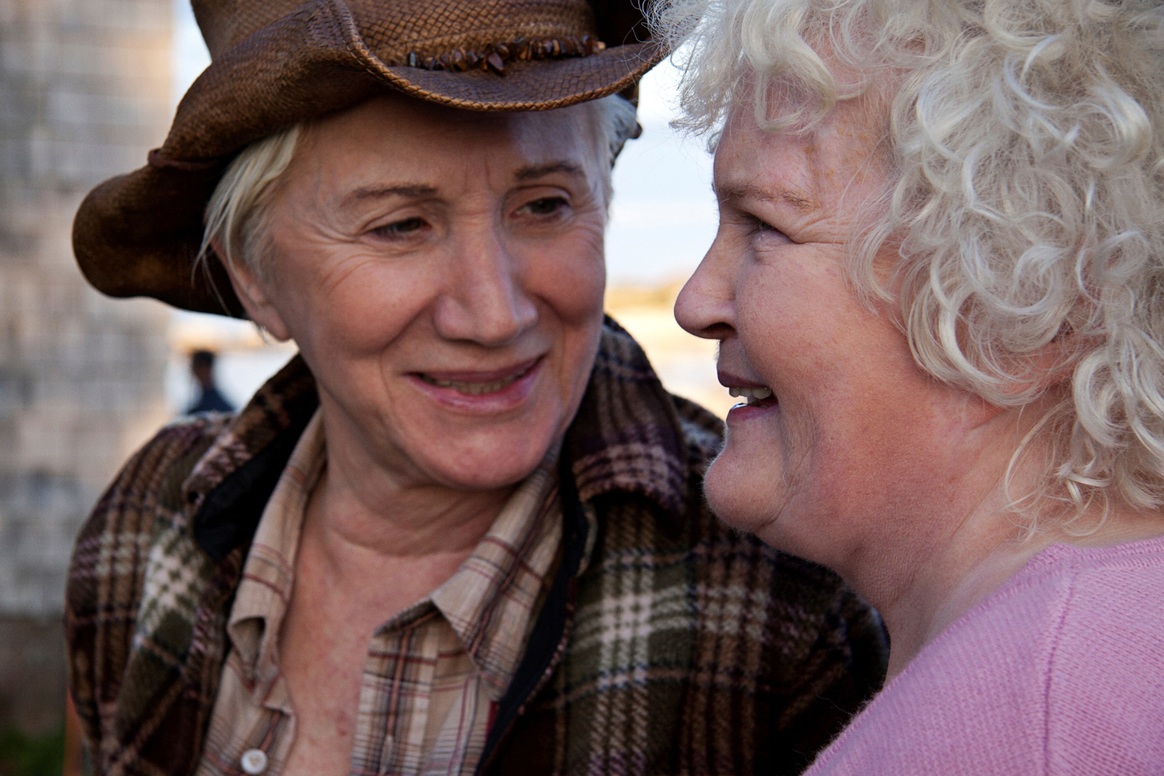
Oscar Winners Olympia Dukakis & Brenda Fricker
Here is a complete list of CLOUDBURST playdates across Canada. 
You have NO EXCUSE to miss this TERRIFIC Canadian MOVIE with BIG STARS, and a GREAT STORY from a GREAT DIRECTOR. 
NO EXCUSES ALLOWED! NONE! NONE WHATSOEVER!!!  

ONTARIO PLAYDATES:
TORONTO: Playing until March 14 at The Carlton Cinema
SUDBURY: Playing until March 14 at Rainbow Cinemas
PETERBOROUGH: Playing March 18 at Galaxy Theatres
WATERLOO: Playing March 26-27 at Princess Cinema

YARMOUTH: Playing until March 14 at Empire Cinemas

VANCOUVER: March 15 - April 1 at Vancity Theatre

EDMONCHUCK: Playing until March 13 at Metro Cinema
"Metro" is a nice Ukrainian first-name.
Special note to Ukes in Edmonchuck:
Prove how progressive your kind has become.
See the movie at Metro Cinema.
Name your first-born male child Metro.
Name your first-born female child Olympia.
(Greeks brought Christianity to Ukraine, after all)

The delightful maniacs at the lovely Mayfair Theatre in Ottawa posted this humungolicious poster of my original review in their front window.


Please note, HOWEVER: There is only ONE date on the aforementioned list at a theatre from the Cineplex Entertainment chain, a supposedly all-Canadian company with a virtual monopoly over exhibition in this country.

Cloudburst is a THEATRICAL feature. More importantly, it is a Canadian theatrical feature - and, I might add a commercial one. Alas, Canada's major exhibitor Cineplex Entertainment, rather than displaying the sort of vision I used to take pride in Canadians having, has scuttled into the unimaginative, lazy realm of American-styled notion of biggest return for least investment (and work - God forbid the rich from working). If Cineplex displayed even a pubic hair's worth of vision that Canadian independents and smaller exhibition chains have displayed, we could actually have something resembling a far more successful and vibrant THEATRICAL industry of feature film.

For films like Cloudburst (and many others) television, PPV, VOD, etc. are the LAZY WAY of exhibiting THEATRICAL FEATURE FILMS. They need a decent theatrical life to begin with - THEN everything should follow. The Americans (both distribution and exhibition) are rolling over independent and foreign films on their tummies and freely offering up the respective prostate glands of indie product to TV, PPV, VOD instead of WORKING for a living (which theatrical exhibition truly is).

Canadian feature films are at an even bigger disadvantage. If one TRULY STUDIES the history of exhibition and distribution in this country (as I and those who I can count on two hands have done), the cold, hard facts are that cinema in Canada, most notably English-language Canadian cinema didn't ever have a proper chance to get on its feet. My argument is not specifically to do with financing, but proper exhibition of Canadian films. Cineplex Entertainment can more than afford to do it, but it takes someone in the organization to do it properly with a decent budget to LOSE MONEY to eventually MAKE MORE than they could have imagined.

Our brave boys in World War I, whose corpses fertilize Europe, were the real spirit of Canada. That spirit seemed to die on those battlefields while the Status Quo who sent them to die in the first place, insidiously and slowly pulled the strings of both government and visionary entrepreneurship to make a lot of money for the very few.

Screw the Canadian people.

Screw Canadian Culture.

Screw Canada.

I blame Canadian producers, too. Those who are led to the trough could care less and all the rest are quivering in their boots to do anything about this. Nothing's going to change until EVERYONE in this industry marches into Chair Phyllis Yaffe's office at Cineplex Entertainment (or perhaps the office of the company's head film buyer Michael Kennedy), occupies it and chants incessantly, "I'm Mad as Hell and I'm not going to take it anymore."

The solution to this issue MUST come from within and it cannot be half-assed. I'm so sick of seeing exhibition, distribution and production in this country handled in the most lazy, vision-bereft and greedy manner. An all-Canadian entertainment company with a virtual monopoly has a responsibility to Canadian culture and, frankly, their own self worth as a potentially important corporate entity that actually displays its balls, vulvas and vision where it counts.

Does the industry need to perpetuate the models it created and that new generations merely accept? I began my life in this business over 30 years ago in journalism, THEN; exhibition, film buying and distribution before moving into producing and I lived through that world before, during and after. One thing I know is that models can be changed for the better and that cycles of this sort of corporate stupidity/laziness are often manufactured by the puppeteers. As producers are a viable force in the industry, they have a right to lobby violently for proper exhibition models. They MUST violently lobby for this.

The new model of limited (or worse, NO) theatrical realease followed by home viewing opportunities (which, frankly, used to be called "ancillaries") is pathetic - a pale shadow of what still could be revived, restored and revitalized for the next century and beyond. There is a strong aesthetic argument to be made for revitalizing big screen bricks and mortar experiences for ALL audiences. Granted, I'd need about 2000 words or so (if not more) to adequately explain (with a proper historical context) WHY there is a difference aesthetically between a film intended for theatrical release and one intended for home viewing. One only needs to look at any theatrical original (let's say Sam Raimi's wonderful Darkman) and its straight-to-home-viewing sequels. The latter are not only cheaper, but the story aesthetics are sans the same levels of high stakes AND sweep. One can compare this easily to the Sam Raimi Spider-Man films where II was even better than I because it was infused with the aforementioned attributes. By the way, I'm using big genre pictures as examples because they refute the notion that all Hollywood product is aimed at young audiences - ultimately the aforementioned titles were celebrated by all on the big screen. (The pathetic Spidey reboot was not.)

The bottom line is that there is a lot of truth to the old adage: "Everything old becomes new again." It's never too late to restore the glory of movie-going for ALL. It takes WORK and VISION - both of which are ALWAYS worth cherishing. Theatrical IS a real release for motion pictures crafted as such. Never mind small indie films (or most Canadian films). Under the current exhibition/distribution system, we'd NEVER see films like Warren Beatty's Reds or Pollack's Out of Africa or Cimino's The Deer Hunter. The list goes on and on and that's truly, deeply and madly sad.

All those extended series on HBO etc. that have an epic scope are a completely different medium than theatrical. Ridiculously, some will argue that they replace real adult-oriented epics made for the big screen. They should enrich the choices, not replace them. Adults WILL go to great movies: big, medium or small - it's the industry that requires the VISION to make it so.

When I was a film buyer in the early 80s, the country was overflowing with bricks and mortar cinemas - almost every small town or city had one. These were my primary clients. When the studios began closing the windows between theatrical release and video release, it destroyed most of those brick and mortal businesses. I saw it with my own eyes and experienced the deep sadness of this. It was like the 50s of Larry McMurtry's The Last Picture Show (which, as a movie, would never be made today as a theatrical feature) happening all over again. The industry created this - it was easier, less work.

It's laziness - pure and simple.

Fitzgerald's Cloudburst and so many other worthy Canadian films are not only stuck in this mire, but plunged even deeper due to the ludicrous history of English-Canadian exhibition and distribution.

While I think it's great that independent Canadian cinemas and smaller chains are picking up the slack and exercising their responsibility to their Canadian audiences to play great Canadian films (and I'd never want to see this change), the fact remains that Cineplex Entertainment has a CORPORATE RESPONSIBILITY to support the exhibition of Canadian Cinema. There are plenty of cities and communities in Canada that have yet to play Cloudburst - many of these cities have Cineplex Entertainment-controlled multiplexes (like the Galaxy Theatres). In addition to presenting foreign opera, theatre and films (the recent Cineplex Digital Film Series) should  - for LIMITED PLAYDATES - be carving out a niche for the Canadian Cinema through their Front Row Centre Events (not if they do it half-assedly, though). On the Cineplex webite, they tout their Front Row Centre Events thusly:

Front Row Centre Events: Bring the world of entertainment to your community and put you in the centre of the action with the best seats in the house! Presented in High Definition via satellite with Digital Surround Sound onto screens as large as 60 feet wide. These programs are unique and Cineplex Entertainment is pleased to be presenting them in theatres across the country.

Audiences across Canada have already enjoyed the sights and sounds of spectacular performances ranging from the Metropolitan Opera to World Wrestling Entertainment. Canadians are laughing along with the world's funniest comedians or rockin' with some of the world's greatest musicians right in their own local movie theatre. There's more!! Live speaking engagements, documentaries, family programs and world premieres are just the beginning. Cineplex Entertainment continuously shops the world of entertainment for the most exclusive events, guaranteed to take your breath away and put you front row centre!

The word "world" keeps popping up in all their bumph. It's great they're bringing the world to Canadian audiences, but how about bringing Canadian Cinema to Canadian audiences?

Now, after you read the review below, feel free to come back here and click on the link HERE for my commentary on Cineplex Entertainment's commitment to Canadian Cinema and some elaboration on how THEY as a major Canadian company can funnel some of their huge profits into an initiative that's not merely philanthropic, but one that could yield even more profits in the long-run.

If you build it, they will come.


Cloudburst (2011) dir. Thom Fitzgerald
Starring: Olympia Dukakis, Brenda Fricker, Ryan Doucette, Kristin Booth

****

By Greg Klymkiw

"They danced down the streets like dingledodies, and I shambled after as I've been doing all my life after people who interest me, because the only people for me are the mad ones, the ones who are mad to live, mad to talk, mad to be saved, desirous of everything at the same time, the ones that never yawn or say a commonplace thing, but burn, burn, burn like fabulous yellow roman candles exploding like spiders across the stars and in the middle you see the blue centerlight pop and everybody goes 'Awww!'" - Jack Kerouac, On The Road

The open road is freedom, but in reality and in the best popular culture, there is always a point where one must reach the end of the road. Sometimes it's sad and empty, sometimes it's not what you expected, often it's bittersweet. Whatever lies at the end of the journey, it's the ride that should always be the thing. It's what you discover and celebrate on the road that is often far more important than what's waiting there (if anything) when it ends.

Stella (Olympia Dukakis) and Dot (Brenda Fricker) have lived an incredible journey of love and mutual respect as a couple for over 30 years, but when circumstances seemingly beyond their control threaten the joy and happiness they've had, the open road becomes the only real way to obtain a pot of proverbial gold at the end of a new journey.

Family, it seems, is not always defined by blood - it takes love - and for this couple, family comes in the unlikeliest of places and circumstances. Love is what defines lives well lived and this couple have had love in spades, but in order to keep it unfettered from the unwelcome intrusion of a well meaning, but completely out-to-lunch blood relative - public affirmation becomes the ultimate goal. They must marry.

The problem is that they live in the United States and can only gain the legal status as a married couple in Canada. What's a foul-mouthed, cowboy-hat-adorned, k.d. lang-obsessed, self-described old dyke and her jolly, sweet, visually-impaired longtime companion to do? What would you do? Me, I'd hop in my half-ton pickup truck, stock it with k.d. lang CDs, pick up a hunky male hitchhiker headed to visit his ailing Mom in Nova Scotia and cross the 49th parallel to get myself good and hitched - kind of like Stella and Dot do in the lovely, funny and touching new film written and directed by Thom Fitzgerald.

Cloudburst is a movie that needed a deft directorial touch and a script that could take the cliches normally associated with road movies and generate truth, humanity and humour and thankfully, for the most part it succeeds in this regard.

For years I kept wondering when director Thom Fitzgerald, who made one of the most thrilling feature debuts of the 90s, The Hanging Garden, was going to generate a picture that fulfilled the considerable promise displayed in that exquisite heartbreaker of a movie. This is not to discount the intervening years of work, but Cloudburst feels like a return to form and, on occasion, a step or two forward.

Olympia Dukakis and Brenda Fricker are tremendous actresses, but given the emphasis these days upon demographics and the usual requirements from studios and other financiers to cater exclusively to younger audiences, the number of great roles for talents in this august age group are getting fewer-and-far-between-er. Fitzgerald crafted two roles that any great actress would love to sink her teeth into and frankly, Dukakis and Fricker are so captivating, moving and funny, I have to admit it feels like they were born to eventually step into these parts.

Set against the lush, superbly photographed backdrop of Nova Scotia, Fitzgerald took this story, a sort of gentle retirement-age Thelma and Louise, and both wisely and bravely delivered a tale that's as mature as it's downright universal. Love should have no boundaries and his direction indelibly captures a love story that's familiar, but bolstered by such genuine compassion, that I frankly can't imagine any audience not succumbing to it's considerable charms.

There are a few overwrought moments of humour that try a bit too hard, but for the most part, I found myself laughing heartily and genuinely and damn it all, I shed more than a few tears.

It's one of the few unabashedly sentimental celebrations of love I've seen in quite some time. The picture wears its heart proudly on its sleeve and while there's something just a little bit old-fashioned about that, Fitzgerald handles the proceedings with such grace, that everything old becomes happily new again. Some might choose to deny the power of sentiment, but they'd be lying (or just plain foolish). We all need sentiment from time to time and Cloudburst is the right time, the right place and just the right film to make us all feel grateful for the joy that life, with all its ups and downs, bestows upon us and hopefully prepares us for whatever journey we take beyond the end of the road.

"Cloudburst" is playing across Canada. See list of playdates above.

Sunday, 3 March 2013

CITADEL - A New In-Depth Review & Analysis written by Greg Klymkiw PLUS - Klymkiw Interviews CITADEL Writer-Director Ciarán Foy in Virginie Selavy's ultra-cool UK Film Mag "Electric Sheep - a deviant view of cinema" (links provided below).

Welcome to this special edition of the Greg Klymkiw Film Corner where I will be presenting an all-new in-depth review and analysis of Ciaran Foy's contemporary masterpiece of horror CITADEL. This article is a preview of a chapter I'm adding to my book about the visual techniques of cinematic storytelling. Entitled "Movies Are Action", my book has been a culmination of over 30 years in the movie business - producing and/or co-writing numerous independent features, seeing and studying over 30,000 motion pictures, covering cinema as a journalist in a wide variety of publications and teaching for 13 years at the Canadian Film Centre (founded by Norman Jewison) wherein I had the honour to serve as the producer-in-residence and senior creative consultant for over 200 screenwriters, directors, producers and editors. It's become very clear to me that Mr. Foy's astounding first feature film CITADEL is not only one terrific movie that introduces the world of cinema to a genuine original with filmmaking hard-wired into his DNA, but that his film can and should also serve as a template to all young filmmakers on the precipice of diving into the breach. It's lonely out there, kids, and there's nothing better than using such a mature, accomplished and extraordinary work by someone who is, for all intents and purposes, your peer. Here on this site, you'll be reading a reasonably polished first draft of the chapter to appear in my book, but I'm confident you'll find, thanks to Mr. Foy's great film, a few nuggets to take with you onto the battlefield. -- Greg Klymkiw

CITADEL (2012) ****
Dir. Ciarán Foy
A New Appreciation
By Greg Klymkiw

Single Dad With Agoraphobia. Crime. Poverty. Infection. CITADEL
Context is Everything: Big Screen Pictures on a Big Screen
I first saw Citadel, Ciarán Foy's contemporary masterpiece of horror, during the 2012 edition of the Toronto After Dark Film Festival (TADFF), one of the most genial celebrations of genre cinema in the world. Blood geysers copiously from the screens at TADFF as both audiences and programmers take deliciously perverse delight in as much carnage wrought by filmmakers as is humanly possible.
But, it's not always about the blood. 
Every year, without fail, I discover one or two gems that scare the faecal matter out of me because they tap into quiet, creepy, subtle and intelligently rendered fears that haunt all of us. And though there will be blood in such pictures, it's meted out sparingly. Like, for example, Citadel. 
TADFF prides itself on presenting genre films designed for BIG-SCREEN THEATRICAL VIEWING, but due to the rather idiotic vagaries of an ever-changing landscape of big-box theatrical exhibition, far too many worthy movies are forced to bypass being exhibited the way movies are ultimately meant to be seen. Citadel , of course, demands a big screen. Thanks to festivals like TADFF, this is - however briefly - possible.

TADFF, like many good festivals, endeavours to present filmmakers in front of each film to introduce it and then to engage in a post-show Q and A. Mr. Foy had been tripping the festival light fantastic for quite some time and when TADFF rolled around, he was in the midst of writing his next feature film. Understandably, but alas, he was not available to attend. 
This was fine by me. I was pretty fucking shagged out from several days in a row of feasting my eyes on all manner of carnage and was in just the perfect mood to sit quietly in the cinema and see what I assumed would be another splatter-fest, but sans the usual raucous, celebratory shenanigans pervading screenings where filmmakers were in attendance. 
I sunk deeply into my front row seat. 
The lights dimmed.

My virginal plunge into Citadel began.

***************

The word "trinity" is derived from the Latin noun "trinitas" which is interpreted by Jesus-Believers as "three are one", though what it means literally is the number "three" (or "triad"). The Greek equivalent also means the number "three", or more literally, a set or grouping of three. In most Christian religions (save for some of the more fruit-cake offshoots - well, in fairness, those that are marginally nuttier than Catholicism), the trinity is recognized as The Father, The Son and The Holy Spirit (or my preference as a Ukrainian Eastern Rite Catholic - The Holy Ghost - YEAH!). And yes, indeed, when you see us wing-nutted Catholics (practising or lapsed) crossing ourselves, it is indeed our tribute to God the Father, Christ the Son and the Holy Ghost which is the collective essence of what we're honouring with our pagan ritual.

For me, trinity is a word I'm fond of using to describe elements of storytelling. An example of this comes from the idea that doing things in threes (or higher "odd" numbers) gives your story more bang for the buck. Got a running gag? Great. When a movie presents it twice or four times, it's usually not as effective as when it's rendered three (or five, or seven, or - God forbid - nine) times. Three, however, is a decent enough rule of thumb when crafting a story. A four-act story just doesn't seem to cut it. Tell it in three-acts (properly, mind you), then you're usually on-track.

Of course, trinity can also be played out as a symbolic and/or subtextual storytelling tool. However, it won't work if the storytelling overall is falling flat on its face. Using subtext under such circumstances becomes ham-fisted and pretentious - drawing us completely out of what narrative might remain. This, is never a problem in Citadel. Within both visual and narrative contexts, Foy's extraordinary tale is ultimately rooted deeply in the notion of "trinity", but on a subtextual level it's a visually powerful approach to cinematic storytelling - especially given the harrowing narrative he spins.

Because Foy builds "trinity" into both his narrative and visual design, it provides ample opportunities to tell the story with as many evocative qualities as possible. What separates the men from the boys, the women from the girls, the filmmakers with vision from the filmmakers who are little more than camera jockeys (the latter term applied to by-the-numbers TV drama directors), is the ability to dazzle us visually, but in a manner wherein the imagery doesn't overtake the narrative, but compliments it.

This works two-fold. First of all, it allows (and/or forces) the filmmaker with vision to integrate what I like to refer to (if you will), the visual subtext into the opening of the film - to establish the mise-en-scène, to provide gripping and visually arresting images to draw us into the narrative and to propel us ever-further into the events of the opening - to keep us guessing so we want more story information to answer our questions as to where the story is going and ultimately, to build an opening sequence that is going to knock us on our collective asses. Secondly, the integration of said visual subtext throughout the film shapes and hones the progression of dramatic sequences (and individual scenes) so that we get a series of almost epiphanous dollops of narrative zingers. These work to propel us even further towards the climax of the film and in so doing, provide exponential gains in terms of visceral responses to the narrative. This ultimately provides a climactic sequence that builds on the elements of the opening and delivers something that not only knocks us on our duffs, but slams us repeatedly with the force of a baseball bat every single time we attempt to get up. In Quentin Tarantino's honour, one could demurely refer to this storytelling technique as the "Bear Jew Triple-Ass Turnbuckle Trinity". But, let's not.

From the very beginning of his film, Foy bombards us with sets of three items of note within the images that are used to tell the story. And they are powerful images that build the narrative cinematically to always draw us forward. Given that Citadel is a horror film rooted in the theme of fear, images of trinity are especially salient. Our main character Tommy (Aneurin Barnard) witnesses (not just once, but twice), people he loves being snatched away from him. This set of tragedies manifests itself within Tommy as deep crippling agoraphobia and unless he's able to face his fear (a fear, I'd argue that is a fear of fear itself), he'll suffer a sickening third and maybe deadliest tragedy of all.

One of the first exposures to trinity is the "citadel" itself, a bleakly decrepit housing project with a centre tower as its bulwark and two smaller buildings flanking either side and set further back. Drably coloured grey cement, set against murky blueish-grey skies, it's a formidable and chilling image to dive into at the film's beginning. It stands like some crumbling urban architectural representation of Cavalry during Christ's crucifixion.

Bad Shit goes on in the projects - CITADEL

(Oh, and before you think I'm extolling some foul "God Squad" picture aimed to reel in Christian viewers, you'll see soon enough that Citadel is the complete antithesis to that horrendous genre.)

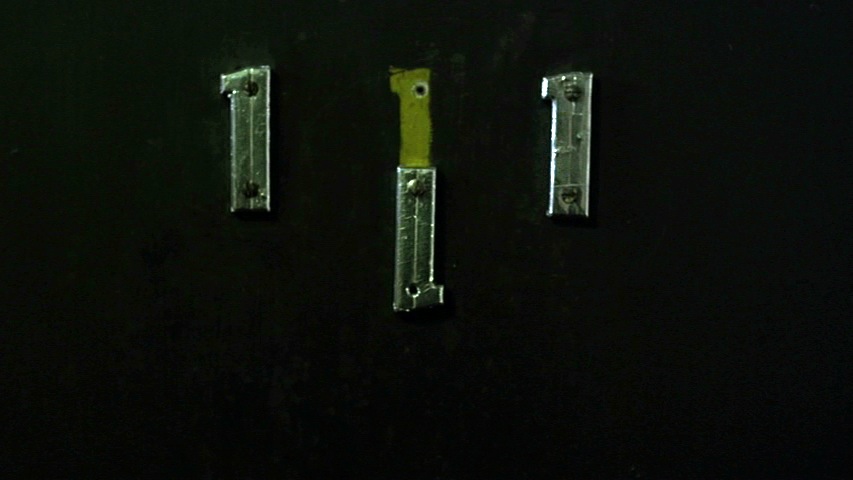
Now, once inside the Citadel, we're introduced to Apartment 111.

1+1+1=3 Trinity in the projects - CITADEL

Some activity on the other side of the door causes the middle number to become unhinged and flop down. Surely this can't be a good sign.
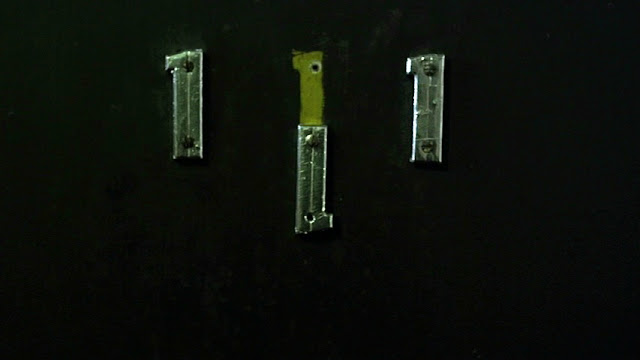
When Trinity is unhinged, we know shit's gonna happen - CITADEL   

When the door opens, we're introduced to a young couple who are preparing to leave the condemned housing project for a new life. And indeed, Foy reveals a literal new life - a child is clearly growing within the woman's belly. One can see immediately how such opening moments in the hands of a mere camera jockey could be rendered in a dull, by the numbers manner to give establishing information ONLY in a race to get to something suspensefully titillating. Such images would be a by-rote series of pure informational shots. Foy, however, delivers sheer, unadulterated suspense from the very beginning and places us firmly in a world that gets increasingly tossed on its noggin as the film progresses. All is rooted in character, narrative and theme. It also reveals a distinctive voice off the bat.

With his cinematographer Tim Fleming, production designer and art director Tom Sayer and Andy Thomson respectively, Foy serves up a sumptuous (and dramatically apt) look for the film, betraying its low budget nature so that the film's cost is not even a point to consider whilst watching it. This is not to say the "look" is picture-postcard in any way, shape or form. The look is instead one of unremitting bleakness, but it is rendered so expertly and artistically, that shot after shot reminds me of the constant refrain in W.B. Yeats' great poem "Easter, 1916" wherein he refers to the notion that "a terrible beauty is born." And so it is with the masterful look and direction of Citadel.

Too many contemporary films capture bleak imagery with slap-dash sloppiness, but Foy and his team deliver one clearly intentional shot after another that create an indelible and stunningly dichotomous "terrible beauty" that infuses the heart and soul of this film.

Note the lighting, design and composition of this shot as Tommy anxiously tries to get back to his pregnant wife in a grindingly slow elevator. Even though we've been given nothing overt to fear, everything leading up to and including this shot has been slowly keeping us on edge and with the camera rooted claustrophobically close (but not TOO close) and set effectively in what came to be Howard Hawks' almost-trademark eye-level positioning, we're plunged into Tommy's anxiety with the skill one would expect of a master team of filmmakers.

Have I mentioned yet how fucking extraordinary this film is?

Elevators in the projects are slow... and scary - CITADEL

With one salient exception (which, I'll not give away), Foy makes the wise decision to always stay in the sphere of his main character Tommy. Every shot is either WITH Tommy, from his POV or from an angle/perspective he'd be able to have a view of/from. Given that we're dealing with a film about fear and specifically, a horror film where an even bigger challenge than the "monster(s)" is overcoming agoraphobia, this is a perfect approach.

Some might argue it is an OBVIOUS approach as if "obvious" is a dirty word, but for my money it's only a verboten epithet if and when it's the only way to describe that which is mediocre and/or barely (or maddeningly) competent. I'm much happier when a filmmaker "idiot proofs" the work so the audience is not lost for too long without their questions and/or need for information being addressed - either directly, or indirectly with an even more delicious tidbit of information.

In creating a film narrative, the worst thing one can do is force the audience to ask questions which are not answered - especially when those questions are nagging at an audience to the point where they're pulled out of the story and subsequently miss out on even more story beats because the filmmaker was too stupid (and/or pretentious) to pinch a loaf or two that forces their viewers to be ruminating rather than paying attention. Where Foy takes leaps and bounds beyond most young filmmakers (and many old ones who should know better) is how he maintains his proximity to Tommy while also keeping to the subtext of trinity.

For example, once Tommy's elevator reaches the right floor, Foy serves up an incredibly simple, effective and chilling shot from Tommy's POV through the broken elevator doors. There's a creepy inevitability to the contents of the shot, yet you're still jangled into filling your drawers with some manner of unmentionable viscous-like matter.

In the following frame-capture, however, is the subtle use of trinity. On one side of the window is Tommy and on the other is his wife and unborn child. Sorry to sound like an egghead here, but bear with me, as this point has more to do with intelligent, personal filmmaking than anything artsy-fartsy. Masters, like Hitchcock or Spielberg or Friedkin, et al will either be consciously and/or instinctively be choosing to utilize visual motifs that tie into both the narrative and psychology of their films.

Here, the chain of trinity between Father, Mother and Child is broken by an elevator door that's mechanically broken. It's not JUST the sudden terror of Tommy struggling to re-connect this chain and restore balance by rescuing (or at least giving it the old college try), but that what he sees are three hooded figures - another form of trinity in the middleground - that have an upper hand, threatening those he loves (and by extension, himself). Finally, there's the trinity employed within the composition itself - the doors in the foreground, the hooded figures in the middle and Tommy's wife further back.

This, ladies and gentlemen, is what the best filmmakers do.

A door that won't open. Three hooded figures. A Woman alone.  CITADEL

In the next two frame-captures we see Tommy in the bus shelter preparing to enter the bitter, cold, cruel world outside with the traditional manifestation of Trinity - he crosses himself.

In the Name of the Father, the Son and The Holy Ghost.

Great horror films in the western world often knew well enough to employ any number of Judeo-Christian images and rituals in an attempt to ward off evil. With increasing secularity in the world, contemporary horror films oft-abandon religion in both the passive form (as protection) and as purely aggressive weaponry (crosses thrust forward like swords against minions of the Devil or, in fact, the Devil himself). To the latter, none who see it, never, ever forget the image of trapping a vampire in the shadow of a windmill that projects the image of the crucifix upon the ground in Terence Fisher's extraordinary Brides of Dracula. Tommy's use of Old World Christian values here is a perfect element to weave into the narrative.

Lord (as He were) knows, William Friedkin's The Exorcist, the greatest horror film of all time is replete with mega-crucifix action. Not only that, it shares a wonderful thing with Citadel that all great horror films swap saliva over. In The Exorcist, Demon Pazuzu's shenanigans (which included grotesque head-spinning, crucifix-as-dildo-masturbatory-action and green pea vomit expulsion), were preceded by an hour of screen time devoted to the creepy and increasingly painful poking and prodding of the possessed 12-year-old girl by esteemed members of the medical profession. (God Bless the 70s - all the doctors smoke IN the fucking hospital, no less.) As realized by director William Friedkin, the cold and clinical approach to healing by inflicting the extremes of scientific exploration turn out to be equally harrowing as the grotesqueries of the Devil. Foy also plunges us into Tommy's illness with a similar realism. A wise move, indeed.

And with respect to the crucifix in The Exorcist, it's used by priests Max Von Sydow and Jason Miller to wear the Devil's minion down (Max believes, Miller less so). The cross ultimately turns out to be powerless and it's a Christ-like (Christ, the MAN) sacrifice on Jason Miller's part when he demands to be taken by the demon and then commits suicide to destroy the evil. Miller musters his strength of character and humanity to fight the evil.  Tommy's faith in God gets him by (just barely), but when push comes to shove he digs a lot deeper than adherence to New Testament fairy tales to survive.

Though it's partially a matter of interpretation, there are, I think, enough visual signs to suggest that Tommy had most probably eschewed any deep adherence to Christian values long ago, but that his use of them now comes out of a sense of desperation - a kind of unconscious placebo effect or, if you will, a perverse Pavlovian Dog instinct to use the Holy Trinity to temper fear in hopes that it will ward off danger.

Mind and body are finally more powerful allies than faith in the Holy Trinity.

FATHER. SON. HOLY GHOST.  CITADEL

Notice above the sheet of paper affixed to the bus shelter behind Tommy - a tried and true storytelling prop, but one that's often shoehorned in with a bludgeon to get information across or worse, especially in low budget affairs, so poorly designed that instead of assisting the narrative, the audience is taken out of the story. Timing is also important when using such props as a narrative tool.

Turning your attention to the frame-capture below you'll see a punch-in on the same sheet of paper, a notice for a missing child. This shot comes at a perfect point in Tommy's story. His wife has given birth, but remains in a coma and not only is Tommy faced with being a single Dad, his agoraphobia increases a thousand-fold. After all, he has a baby to raise and protect in this dystopian world.

... and children, you see, are going missing in the projects.

Desperate disenfranchised parents are posting such notices where they can. This is not only an effective "milk-carton-like" piece of story information, but note again, the "terrible beauty" of the composition of the shot and how exquisitely designed everything within the frame is - from the Missing Child notice to the smoky, smudged and scratched window of the bus shelter that, through the glass, reveals a somewhat misshapen landscape - bleak and despair ridden.

This is no world for humanity, let alone children.

In the projects, who can afford cartons of milk, anyway? CITADEL

Another superb approach to visual storytelling is on view within the frame-capture below. First of all, there's the big picture as it's one of the very few wide shots in the film to deliver a magnificent snapshot of where Tommy and his baby live. This, very ironically, is where he and his wife were on the verge of moving before the tragic events in the film's opening. The condemned three-tower housing project looming over everything, the row of natty ground floor low-income townhouses and the huge sign in the right foreground that extols the grand design of the local government are not only powerful pieces of story information, but add to the visual design of claustrophobia by creating an environment that feels like it's closing in and practically crushing poor Tommy.

Dwarfed by the oppressive forces of squalor and fear, hunched over (as is his wont) while pushing the baby carriage forward, he passes by an abandoned vehicle. Foy and his team deliver a magnificently composed shot that's both aesthetically pleasing in terms of the "terrible beauty", but also provide a superb sense of spatial geography. (AFTER you see the film on DVD or Blu-Ray, be sure to take a look at the Making-of supplement. This will give you a better idea of how brilliant Foy and his team of collaborators were in their clever design of these and other visual elements in the film.)

The second important element of this shot is to draw your attention to the importance of always knowing in advance what your visual beats are as a director. Knowing what they must be involves delivering prose in the script that paints pictures with words, designing storyboards to ensure that you as a director can piece every needed story-beat together and finally, in so doing, ensure there will be enough footage that will provide an editor with elements needed to breathe life into the film during the post-production process. Throughout the film, Foy and company deliver one maximum impact shot after another, thus allowing editors Tony Kearns and Jake Roberts to weave the magic they do throughout the film - delivering on creepy, elongated suspense that sometimes makes you feel you're being dragged over a bed of hot coals in ultra-slow-motion (yes, for me, this IS a compliment - think Don't Look Now or The Innocents) and when needed (and in blessed moderation) the kind of shock cuts that send you up and out of your seat as if some John Holmes-sized dildo unexpectedly rammed up your asshole (most definitely a compliment - of the highest order).


Hell, go ahead and marry the shot above with the shot below - we go from creepy to mega-creepy. As Tommy moves forward with trepidation, the view of him from within the twisted metal hulk gives a sense of the eyes on him AND MOST IMPORTANTLY HIS BABY!!! As mentioned above, we're always in Tommy's sphere, but often when we're not in his point of view, there's always a profound, creepy sense of eyes upon him - not only when he is alone, but even in seemingly benign moments, the camera oppressively shoves itself towards him and voyeuristically encroaches upon his space - whether it be a specific character's POV or not - all eyes, real and imagined, are on Tommy.

He is, after all, an agoraphobe.

LADIES & GENTS: ALL EYES ON THE AGORAPHOBE, PLEASE!  CITADEL

One of the most lovely touches in the narrative, is the introduction of the character Marie (the stunning and truly great actress Wunmi Mosaku), a kind-hearted nurse who offers support to Tommy in the same hospital his wife vegetates within.

When a genre film can be rooted in reality, it stands a good shot at immortality. When audiences can see aspects of their own lives (a la the aforementioned opening hour of The Exorcist), they respond more strongly to the material. In Citadel, it's the strong elements of humanity that contribute to scaring the fuck out of people.

Marie is an especially crucial character on a number of fronts, but for me, one of the most moving things to come from her is the observation that Tommy needs to express his love for the baby by communicating with it as if the child was, in fact, a person (which, obviously, it is). At the best of times, men often don't have natural communication proclivities when it comes to babies. Speaking for myself, I had to be reminded by virtually everyone I knew that instead of referring to my infant by her name, I kept referring to her as "the child". Ah well, chalk that up to my being infused with barbaric Cossack DNA.

Tommy is not, however, experiencing the best of times. (An understatement if there ever was one.) Marie's careful, gentle observations and prompting are exactly what spins a perfect narrative turn in the story. For the first time, Tommy holds his child and communicates to it with love and humanity, not fear. The frame below captures a sequence that is designed to both move you, but to also add a new layer to Tommy's character that assists him with moving forward - especially since the most horrible events occur soon after.

Let me again stress - Horrible Events.

Plural.

Note to Hollywood and casting agents the world over: The camera loves Wunmi Mosaku (above right) and she is an extraordinary actress. Someone please make this lady from CITADEL a star.

The screen capture below allows for added discussion on the issue of faith in God. Pictured in the foreground is a distressed Tommy. Way in the background are hordes of bloodthirsty feral kids and in the centre is The Good Father (a sterling performance from the great James Cosmo). The Father is the unlikeliest man of the cloth; he'll go through the motions of reading over the graves of those who are being decimated by crime and rampant infection within the projects, he charitably rescues a young orphan from the citadel and he'll wear his clerical collar when it's necessary for those who believe. His belief system, however, has been shattered. He is hell-bent on destroying the evil residing in the projects - even if it means killing them in cold blood. In the scene below, he's agreed to help Tommy out, but warns him that faith in the rubbish that is Christ won't go as far as faith in oneself.

As bloodthirsty feral children begin streaming from the CITADEL, Tommy is cautioned by the Good Father that faith in God is rubbish. He'll need faith in himself to overcome a greater evil than what lurks in the shadows, his fear.
Citadel resembles Val Lewton's approach to fantastical genres that began in the 1940s American studio system. This brand of cinematic horror, exclusive to RKO Studios is inspired by a myriad of artistic influences from fairy tale through to classical literature, with much of it based on European sources and drenched in film-noir-like shadows and darkness. (Lewton believed that what scared people most were the everyday things that caused many people distress and secondly, the DARK.)

The two back-to-back images below represent the opening frame and closing frame of an exquisitely lit and perfectly composed push-in on Tommy's face. It's simple, yet so effective and most of all, enshrouded in the darkness and shadows of the place he fears most. Like the Lewton pictures (a huge influence upon the best of the best, like Friedkin, Scorsese, etc. and the art of cinema itself) this an example of how Citadel takes us from one manner of fear to another. Throughout most of the picture, Tommy deals with his fears by surrounding himself in the light of day and/or the interior light of his home. The film's final third has Tommy plunged almost completely into darkness - the final bastion to conquer both the pervasive and very real object of terror. And given the final frame below, you can bet your entire stake that the very next frame will be the sweetest of sweet spots chosen by the film's editors to jolt you with the reality of what Tommy witnesses. (And a shot that probably demands you wear a pair of Depends when you see the film.)

Any guesses what the next shot will be? CITADEL
We are living in dangerous days. It's no secret that the gap between rich and poor is ever-widening. Our streets are over-burdened with poverty and the denizens of the gap's debilitating, soul-draining effects have become completely disenfranchised from society. The cruelty with which they are despised is overshadowed only by how they are ignored. Their fears are many, but sadly I suspect their greatest fear is to be forgotten.

Citadel is indeed an important film on many artistic levels outlined above (and in other writings by myself and others). However, its primary importance is that within the context of genre (which has the power to reach huge audiences and young ones), the movie seriously (and, all importantly - entertainingly) addresses, head-on, the horror facing many of us.

While many begin their lives in a state of disenfranchisement and seldom escape,  others have never known the meaning of the word until the rug was pulled from under them due to the increase in downsizing, the insidious magnetic pull of consumerism, the equally spurious lustre of debt and last, but not least, the lack of political will that's been mostly bought off by corporate interests that use government as its puppet to increase profits at the expense of everyone but themselves. Even those few politicians who might have genuinely made a difference were assassinated and in this day and age, unless the powers-that-be want to send a statement using public assassination, kill our best and brightest leaders with secret and nefariously-inflicted "infections".

Then, there is the culling.

The richest, most powerful men in the word clearly want to siphon as much wealth and power as they can, but even now, they are engaged in advocating and downright supporting massive forced sterilization (sometimes right up front and others more subtle, like the new x-ray technology at any number of security checkpoints) in addition to outright murder (spurious "wars" against terror, getting government to approve deadly products like aspartame, fluoride and ANYTHING ingested from sources like Monsanto, Dole and other corporate food entities).

Ted Turner (and he's sadly not alone - yes, YOU Bill Gates and all the rest of this foul ilk) has stated (and defended and reiterated) the following sentiment:


"Right now there are just way too many people on the planet. A total world population of 250-300 million people, a 95% decline from present levels would be ideal."


Citadel is set in a dystopian world, but there's little that's futuristic about it. The movie feels like it's set "ten seconds into the future" (to coin a tagline from City of Dark, a Bruno Lazaro Pacheco film I produced). One gets the sense that the housing projects Foy's film is set in are but the tip of the iceberg in the larger world of the film. The streets are deserted - not because it's a low-budget movie and not because the majority of the populace in the film are too scared to be on the streets - but because there is an "infection".

A culling.

"Infections" (Ebola, AIDS, SARS, the list goes on and on) are here and now. They kill people. We can fool ourselves into believing they're "natural", but to cull such wide swaths of humanity is a multi-pronged approach.

The results of the 'infection" in Citadel are devastating. It kills adults and children alike, but the latter are often susceptible to living - in a living hell - blind (except to fear), bloodthirsty, savage and feral. If there's a cure, nobody is chomping at the bit to find it.

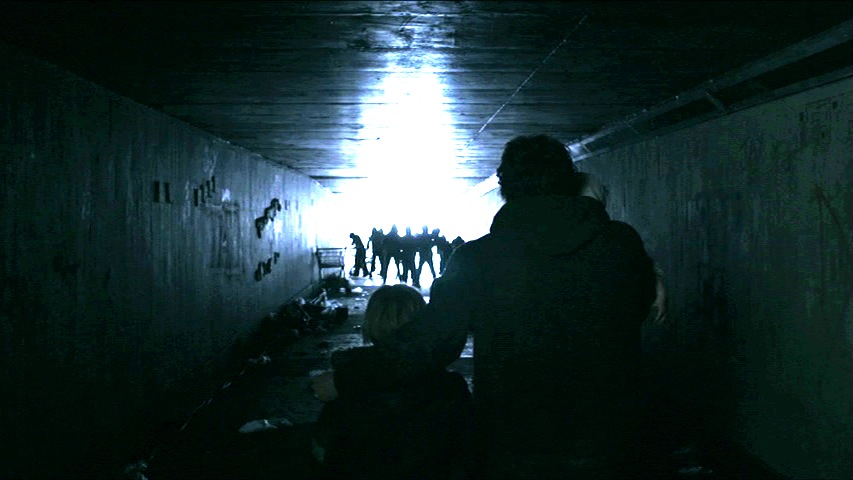
Though (as pictured below), trinity, however briefly, seems restored to Tommy, accompanied as he is by the young rescued feral kid and baby. What awaits them is a light at the end of the tunnel, but getting there might well prove deadly. And even if they do reach the light, what will they be facing?

It's a bit like life as it is now, and seemingly forever in this age of suffering and collapse. Agoraphobia is a very real and debilitating sickness, but I can't help think that it works within the film as a larger metaphor to expose the potential of a mass agoraphobic reaction to the beleaguering attacks upon those who are described by George Bailey (James Stewart) in Frank Capra's It's a Wonderful Life as all those in this world "who do most of the working and paying and living and dying" in it.

Yes, Citadel is ultimately a film infused with humanity and it seems appropriate that the movie reminds me of George Bailey's full speech to the corporate pig Mr. Potter (Lionel Barrymore) during a point when Bailey's levels of courage are at their highest and before, like Tommy, when they crash to their lowest point and an angel named Clarence (Henry Travers) shows up, much like the Good Father in Citadel, to infuse him with the power he needs to fight his greatest and most debilitating fears:
Just remember this, Mr. Potter, that this rabble you're talking about... they do most of the working and paying and living and dying in this community. Well, is it too much to have them work and pay and live and die in a couple of decent rooms and a bath? Anyway, my father didn't think so. People were human beings to him. But to you, a warped, frustrated old man, they're cattle. Well in my book, my father died a much richer man than you'll ever be!

Ciaran Foy has made a great film. Those who see Citadel will also be much richer for doing so.
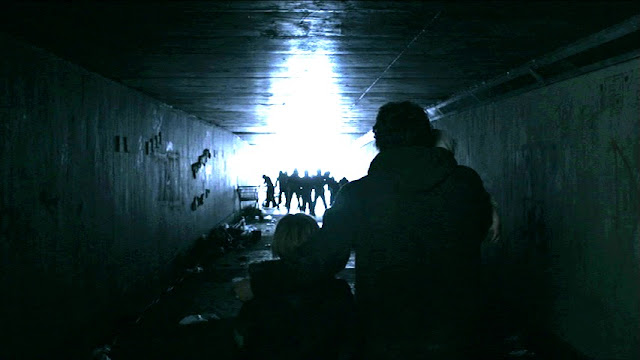

Trinity, now restored. Will it survive the light at the end of the tunnel that is CITADEL
Please read my interview with writer-director Ciaran Foy in Virginie Selavy's ultra-cool UK Film Magazine "Electric Sheep - a deviant view of cinema". And whatever you do, buy this movie, study it and cherish it. You'll be getting a ground-floor glimpse into the work of a director who we'll be hearing from for years to come. In the USA, Citadel is distributed by New Video Group, in Canada by Mongrel Media and in the UK by the Revolver Entertainment Group.