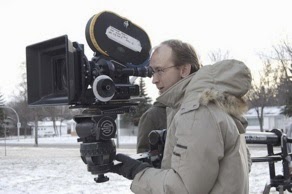
Showing posts with label Matthew Rankin. Show all posts

Friday, 13 September 2019

Rankin's Feature Debut, World Premiere @ TIFF 2019 / By Greg Klymkiw

The Twentieth Century (2019)
Dir. Matthew Rankin
Starring: Dan Beirne, Louis Negin

Report and Review By Greg Klymkiw

The festivities surrounding the World Premiere of Matthew Rankin’s glorious feature film The Twentieth Century at TIFF 2019 got off to a delightful start when I received a communique from him hoping that I might be able to muster the added “psychic energy” to attend yet another social event.

You see, I’d been kvetching to Matthew about the ridiculous number of film festival social events I had been attending (including a four-hour-long stint at the Canadian Film Centre BBQ on Sunday in which I traversed my way through amongst the throngs on the lawns of the North York Windfields estate).

I was keen to celebrate Matthew’s formidable achievements and when he extended an invitation to a soiree hosted by his Quebec-based distributor Maison 4:3, I was, in fact, thrilled to accept his gracious entreaties. Though Matthew and I hang our hats these days, respectively in Montreal and Toronto, we are both Winnipeggers born-and-bred and any excuse to hang out in our homes away from our Prairie Hearts/Roots, is enough of a cause for celebration.

However, when Matthew provided the address to the fête, my jaw dropped and I wondered if he had concocted a friendly ruse to send me into the heart of darkness in the east end of downtown Toronto. You see, the celebratory event would be taking place just behind a notorious rooming house that doubles as a brothel for street hookers and a home for malcontent veterans.

This same location was also just across the street from a park filled with enterprising purveyors of crack cocaine, meth and other mind-altering delights.

“Seriously, Matthew, is this REALLY where the party is?” He confirmed the address. The cockles of my heart warmed to a comfortable level of Hellfire. 

Gotta love Montreal film distributors!

The party itself was on the top floor of a gorgeous brownstone and outfitted with all manner of delectable comestibles and libations. A special treat included an array of candies (which I filled my pockets with to eventually give to the daughter of Coppers director Alan Zweig).

And, get this: bowls of cigarettes were available.

This was truly a first.

I’ve been going to film festival parties for decades and I have NEVER seen oodles of free cigarettes available on the buffet tables. (Though, in fairness, during one of my sojourns to the Berlin Film Festival in the late 90s, the Berlinale marketplace was crawling with young ladies dressed as Cowgirls handing out mini-packs of Marlboro cigarettes.)

But this was indeed a first! Cigarettes with pita, dips and candies knocked this event right out of the park. Though I had quit smoking cigarettes months ago, I did indeed break down and join Matthew’s producers out in the back alley for several smokes, a grungy locale conveniently perched behind the aforementioned rooming house of dubious repute.

Curiously, given the wide availability of hallucinogens in the park across the street, no such treats were available at the party - at least not in plain view.

And then, on Tuesday came the main event - the official world premiere at the huge packed house at the Ryerson Theatre on Gerrard. This yielded yet another first. The Midnight Madness director of programming Peter Kuplowsky was adorned in full Royal Canadian Mounted Police regalia. Prior to introducing Matthew and the film, Kuplowsky took to the stage and sang “Oh Canada” in both English and French. Hundreds of audience members stood at attention and sang our national anthem along with him.

Needless to say, the movie was a huge hit - greeted with laughs, gasps and applause. Matthew was accompanied after the screening by his entire cast and a spirited Q and A ensued.

The movie is great, to be sure, but the film's mad inspired genius was matched by the showmanship of a truly magnificent party and premiere. Winnipeggers and Montrealers are an unbeatable combination, mais non?

And now, as to a few ruminations on the greatness of Matthew Rankin and the great movie itself...

I wish I could remember the precise year I first met Matthew Rankin, but I do recall it was on the grounds of the Windfields Estate which houses “Uncle” Norman Jewison’s Canadian Film Centre (CFC) during the annual Toronto International Film Festival (TIFF) CFC BBQ. In those halcyon years I taught and mentored young filmmakers there, sharing an office (the late E.P. Taylor’s office, no less) with John Paizs (a pioneer of independent filmmaking in Winnipeg).

What I recall about first meeting Matthew was coming face to face with this insanely young, dashing, erudite gentleman and member of the Winnipeg Film Group (WFG) who sought me out amongst the throngs of TIFF denizens prowling the rolling lawns in search of free booze and hamburgers. Matthew might well have been in search of similar libations and comestibles, but I remember this first meeting very fondly due to the fact that I was in the presence of a filmmaker from Winnipeg, my old “Winter City” (a phrase I continue to coin and rip-off from Paizs who placed the term in the mouth of his immortal title character in the legendary WFG short The Obsession of Billy Botski).

I was immediately drawn to Matthew, this brilliant young fellow whose acute cinema literacy was at a highly advanced level, but that he also amazingly seemed to have an encyclopaedic knowledge and love of those in Winnipeg who came before him. He not only knew and loved the 100+ years of Cinema History, but he was able to rattle off scenes, shots and dialogue from a myriad of WFG films. And now, here we are in 2019. When I first got wind of the title of Matthew's film I assumed it would be an homage to the great 1934 Howard Hawks pre-code screwball romantic comedy Twentieth Century with John Barrymore and Carole Lombard (a movie I’m not embarrassed to admit to having 40+ viewings under my belt). Rankin’s film is definitely in the spirit of that magnificently insane movie - it’s decidedly screwball, wildly romantic and blessed with style to burn. However, as I used to say to all my young filmmakers, it’s important to ingest 100+ years of history to not only “rip-off cool shit”, but to take that influence and use it as a springboard for their own unique voice. Rankin’s film is easily just as funny as the Howard Hawks picture, but it’s pure Rankin.

Over the years I was so privileged to discover and revel in Matthew's work. The Twentieth Century brings me back to everything I loved and continue to love about his short films: the classic piece of prairie post-modernism, Death By Popcorn: The Tragedy of the Winnipeg Jets (which Rankin co-directed with the estimable Mike Maryniuk and Walter Forsberg); the magnificence that is Mynarski Death Plummet, the only film to ever detail the bravery of that famous Manitoba “Moose Squadron” gunner (and with clear, glorious nods to Powell/Pressburger’s A Matter of Life and Death); and of course, Rankin’s Cannes Film Festival hit, The Tesla World Light which so grandly plunged us into the magnificent synaesthesia of the visionary Serbian-American engineer-inventor Nikola Tesla. (Of course for me, on a personal level, one of the cool things about The Twentieth Century was seeing Matthew pay homage to a number of films made in Winnipeg that I had actually produced.)

And here’s the amazing thing - Rankin’s work reflects elements of Canadian history that are all but forgotten and ignored. Though some might have a smattering of knowledge with respect to the clearly insane Prime Minister William Lyon Mackenzie King (Dan Beirne), the central figure of The Twentieth Century, Rankin plunges us into the early political life of that complete and utter madman in ways that no mere biopic would ever be able to do. (King's perverse relationship with his Mother played by the initimitable Louis Negin is definitely a high point in the film's perversity sweepstakes.)

The Twentieth Century is a kaleidoscopic dreamscape, the likes of which we’ve never quite seen. And it’s not only gorgeous to behold, but it’s laugh-out-loud funny. And yes, it is infused with love for the sheer joy of cinema. Seeing this movie reminds me of why I fell in love with movies in the first place.

THE FILM CORNER RATING: ***** 5-Stars

The Twentieth Century: World Premiere at the Toronto International Film Festival (TIFF 2019) Midnight Madness series

Friday, 27 April 2018

DEATH BY POPCORN: THE TRAGEDY OF THE WINNIPEG JETS - Review By Greg Klymkiw: Hot Docs 2018 Hot Pick - REDUX series


Little did Burton Cummings know that the WHA Jets
would be gone with the wind, forever.

Death By Popcorn: The Tragedy of the Winnipeg Jets (2006)
Dir. Matthew Rankin, Mike Maryniuk, Walter Forsberg

Review (sort of) By Greg Klymkiw

In honour of the Hot Docs 2018 25th Anniversary, ace programmer/critic Kiva Reardon put together a selection of Canadian documentaries in a series entitled "Redux". When she asked me to recommend Canadian documentaries from the city of Winnipeg, I put together a long and detailed list of films I loved from my beloved Winter City where I'm currently residing and helming the legendary Winnipeg Film Group as its Executive Director.

From that list, which I might publish sometime since it contains fairly extensive assessments of said films, Kiva chose Matthew Rankin, Mike Maryniuk and Walter Forsberg's classic piece of prairie post-modernism, Death By Popcorn: The Tragedy of the Winnipeg Jets. The film, of course, targets that horrible time when Winnipeg lost its beloved team. However, the team is back and actually in the midst of playoff fever.

For me, the real tragedy of the Winnipeg Jets was not losing the team, but rather, that the Winnipeg Jets joined the NHL and that furthermore, the beloved WHA disbanded. (The other tragedy was the decimation of the historic Winnipeg Arena in favour of a cold, corporate, ugly new arena in downtown Winnipeg which was built on the spot which once housed the beloved, historic Eaton's department store at Portage and Donald. But, I digress).

In any event, I'll just reprint Kiva's capsule note in the Hot Docs 2018 program book which quotes me extensively. I do this because I am, like most Winnipeggers, in need of a nap.

Here it is:

SUGGESTED for Redux by Greg Klymkiw, executive director of the Winnipeg Film Group, Death by Popcorn is an unsung Canadian tragicomedy. "A collaboration," writes Klymkiw, "twixt the inimitable Matthew Rankin (heir apparent to John Paizs and Guy Maddin), Mike Maryniuk (who just had a world premiere at Rotterdam) and Walter Forsberg (a film archivist with uber-artistic flair)," the found-footage documentary explores the star-crossed romance between Winnipeggers and their ill-fated Jets. Containing footage from the local news and Jets games, and including familiar faces like Wayne Gretzky and Gary Bettman, Death by Popcorn is a postmodern portrait of corporate greed and Winnipeg itself. Though a sell-out at the Winnipeg Cinematheque upon its release, Death by Popcorn seemed destined to suffer the same fate as the NHL team it followed, as copyright issues plagued subsequent screenings. Now, come relish the highs and lows of the film billed as "sadness on ice."

THE FILM CORNER RATING: **** Four-Stars

Death By Popcorn: The Tragedy of the Winnipeg Jets, plays at Hot Docs 2018 in the Redux series.

Friday, 1 September 2017

THE TESLA WORLD LIGHT (Tesla : lumière mondiale) - Review By Greg Klymkiw - TIFF 2017

"I've fallen in love with a pigeon... a beautiful bird."
- Nikola Tesla to John Pierpont Morgan Sr.

The Tesla World Light aka Tesla : lumière mondiale (2017)
Dir. Matthew Rankin
Starring: Robert Vilar

Review By Greg Klymkiw

O! A dream! A dream to unite the world across the Heavens, to transmit energy, to communicate across the vast Atlantic: absolved of cables, wires, mere radio technology, with the freedom of a bird in flight - THIS is a dream worth having. Alas, to be a visionary is to burn with the light of the world and to often have the dream fall on deaf ears, empty minds and souls bereft of the percipience only true genius can spawn. But, O! The vision! When it burns, it burns bright and in The Tesla World Light, a glorious new masterpiece from Winnipeg-born-and-raised Montreal filmmaker Matthew Rankin, vision burns brightly indeed!

And so it will be, and indeed so it is, that Rankin plunges us into the magnificent synaesthesia of Serbian-American engineer-inventor Nikola Tesla (Robert Vilar), his huge head, brimming with ideas, glowing with a magnificent oil-slicked straight edge razor double pompadour, two winged Matterhorns of pitch black hair, divided with a part that cuts deep into the scalp, into the very bone marrow housing the roiling cerebellum of the world's greatest pioneer of electricity. Rankin shares with us the Eureka of Tesla as he pens yet another entreaty to his erstwhile benefactor John Pierpont Morgan Sr. This will be his final appeal to the filthy-rich old man. It is 1905, in New York, in yet another squalid hotel room Tesla is forced, penniless, to reside in.

Tesla writes that his "pillow has been bathed in tears" for over a year with the sorrow and frustration he feels, that Morgan has not provided the funds he needs to finish "The World System" - his penultimate invention which, could advance world communication by a century. Webs of light explode around him as he lies on his bed, occasionally looking out the window to the sky, knowing that only filthy lucre is what keeps world unity at bay.

Then, it appears! Like an avian symbol of peace and flight!

The light of the world is the heart of the world.

"I've fallen in love with a pigeon... a beautiful bird," writes Tesla, enveloped in the fever of invention and receiving visits from the hand-animated, then stop-motion animated feathered creature. He details his dreams, they explode before us and for eight astounding minutes of dazzling cinematic brilliance we share Rankin's fantasia of the bushy-moustachioed Tesla.

A magical spiral coil spits out blasts of energy as Tesla's hand grips the switch, pulls it with purpose, the beauteous bird of hope perched upon his shoulder and then, the "infinite power for all nations" erupts from the engorged phallic joy that is Tesla's Wardenclyffe plant on Long Island, splattering upon the greedy faces of mankind.

O! This is cinema! In all its radiant poetic beauty, the true promise of the medium is borne upon our souls through our eyes. As he did with his previous film, Mynarski Death Plummet, Rankin's The Tesla World Light takes its rightful place alongside such classic Canadian short films as John Martins-Manteiga's The Mario Lanza Story, John Paizs's Springtime in Greenland, Guy Maddin's The Dead Father and The Heart of the World, Phillip Barker's Malody and Deco Dawson's Ne Crâne pas sois modeste / Keep a Modest Head. Rankin (son of the late, great Canadian writer/historian/curator Laird Rankin) unites the clocks, the toasters, the world and through his visionary imaginings of Nikola Tesla, he unites all of us in the dark room, lit only by the pieces of time we call cinema.

Curiously, the movie is about a great visionary needing a benefactor. Rankin himself is a visionary of the highest order. Happily, he did find a benefactor for his vision, the National Film Board of Canada. Oh Canada! We stand on guard for thee!!!

THE FILM CORNER RATING: ***** 5-Stars

The Tesla World Light is a National Film Board of Canada production. After its triumphant World Premiere in competition at the Cannes Film Festival, it enjoys a Canadian premiere at TIFF 2017.

Friday, 2 January 2015

THE FILM CORNER'S 4TH ANNUAL TOP 10 HEROES OF CANADIAN FILM as selected by your Most Reverend Greg Klymkiw in this, the year of Our Good Lord, 2014 (in alphabetical order, of course)

THE TOP 10 HEROES OF CANADIAN CINEMA 2014
as selected by the Film Corner's Most Reverend Greg Klymkiw
(in alphabetical order, of course)

Tuesday, 7 October 2014

Klymkiw Reviews 3 short films U can't miss at FNC (Festival international du nouveau cinéma de Montréal) - AVEC LE TEMPS (aka BEFORE I GO), MYNARSKI DEATH PLUMMET, THE WEATHERMAN AND THE SHADOWBOXER

WHITE LIGHT OF SNOW
LIGHT OF NATURAL WORLD
LIGHT OF FLASH FRAME
LIGHT OF FLASH FRAME SHADOW
LIGHT OF SPIRIT
AVEC LE TEMPS
aka Before I Go (2014)
Dir. Mark Morgenstern

Review By Greg Klymkiw

Mark Morgenstern's exquisite new film reminds us of the oft-neglected poetic qualities of cinema. Avec le temps/Before I Go also happens to be a real film. It's "real" in that it was actually shot on real film. Its beauty and importance lies in the evocation of the greatest narrative of all - life, death and the seasonal journey of every beat of our lives. Like a short end, life is like a series of leftover bits, seemingly unused and discarded, yet there to be used and to comprise the whole of our existence. Like a flash frame, life is also adorned with those mistakes of perception that are very real, but are so fleeting that we might only be aware of them in times of either repose, reflection and/or death. Like Tom Berner, life only has meaning when we give selflessly to the passion which drives us and, in turn, drives those who receive the benefit of gifts given by those with no other agenda other than to do what has to be done in order to make life richer.

A "short end" is unexposed motion picture negative that is left over at the end of a film roll when the next take cannot be achieved with the amount of stock actually left on the roll. Over the course of shooting any film, especially a series of shorts or a single feature, there can be enough "short ends" to make a whole new film out of. A "flash frame" occurs when the camera is stopped while the gate is still open, leaving a blank frame of extremely overexposed stock. Even better is when the camera takes a few pubic hairs to get up to speed before cranking and allows a frame or two of "flashes", which are, essentially, blasted out frames which include picture. A "Tom Berner" is a man who made independent film a reality for several generations of artists. On the surface, he was a lab rep at Toronto's Film House and Deluxe, but beneath the layers of flesh, he was the spirit of cinema in Canada during a time when it needed him most. It still needs him, but he retired in 2001 and passed away in 2004.

Those whose lives were touched by his, will hopefully be able to infuse others with their own touches of self-sacrificing devotion to the art of film. If cinema is not consecration, it's nothing.

Avec le temps/Before I Go begins with the image of nature resting under a fluffy blanket of snow. The film moves into an interior where faceless shadows appear furtively amidst objects of both beauty and decay. The film has quite literally been constructed with short ends. With occasional flashes of fleeting frames the movie ultimately leaves us with the words "for Tom Berner" on its final frames before the end title credits.

Throughout Morgenstern's haunting, yet joyous and yes, occasionally and alternately creepy film is the light of day through the windows. The light changes as do the seasons - from darkness into light. Ultimately, we're left with the whiteness we began with. No longer is it the chilly scenes of winter, but the warmth and spirit of life itself, which is, ultimately death - a new stage in the journey of existence. A montage of flash frames and extremely short ends (shots), blow our mind during the film's climax, like Stanley Kubrick's 2001: A Space Odyssey Stargate sequence, albeit with neo-realist dollops, which lead to and leave us with the dedication to the late Tom Berner, enveloped, of course, by light.

We're reminded of two other key moments in cinema.

1. Clarence, the guardian angel's words to George Bailey in Frank Capra's It's a Wonderful Life:

"Strange, isn't it? Each man's life touches so many other lives.
When he isn't around he leaves an awful hole, doesn't he?"

2. Most evocatively, Morgenstern's film reminds us of Gabriel's voice-over at the conclusion of John Huston's immortal film adaptation of James Joyce's short story The Dead:

"One by one, we're all becoming shades. Better to pass boldly into that other world, in the full glory of some passion, than fade and wither dismally with age. . . Think of all those who ever were, back to the start of time. And me, transient as they, flickering out as well into their grey world. Like everything around me, this solid world itself which they reared and lived in, is dwindling and dissolving. Snow is falling. . . Falling faintly through the universe and faintly falling, like the descent of their last end, upon all the living, and the dead."

Avec le temps/Before I Go is 12 minutes long. Morgenstern evokes a lifetime in that 12 minutes. It's proof positive of cinema's gifts and how they must not be squandered, but used to their absolute fullest.

THE FILM CORNER RATING: ***** 5-Stars

Canada's Great War Hero, Andrew Mynarski VC,
Shooting Star of Selfless Sacrifice, a man of Bronze.
Mynarski Death Plummet (2014)
Dir. Matthew Rankin
Starring: Alek Rzeszowski, Annie St-Pierre, Robert Vilar, Louis Negin

Review By Greg Klymkiw

The true promise, the very future of the great Dominion of Canada and La Belle Province lies beneath the soil of France and Belgium. Between World Wars I and II, Canada lost close to 2% of its population, the vast majority of whom were the country's youngest and brightest from the ages of 16 to 30. Canadian lads bravely served on the front lines, well ahead of the glory-grabbing Americans, the Yankee Doodle mop-up crew that dandily sauntered overseas after all the hard work was paid for by the blood spilled upon European soil by the very heart and soul of Canada's future and that of so many other countries not bearing the Red, White and Blue emblem of puffery. As a matter of fact, any of the best and bravest in Canada came from Winnipeg and if you had to pick only one hero of the Great Wars from anywhere in the country, Andrew Mynarski, a gunner in the famed Moose Squadron, would be the one, the only. He is the subject of Matthew Rankin's perfect gem of a film, the one, the only genuine cinematic work of art to detail the valiant sacrifice, the one, the only, the unforgettable Mynarski Death Plummet.

THE FILM CORNER RATING: ***** 5-Stars
Read the full review HERE

A maze begins in childhood & never ends.
The Weatherman and the Shadowboxer (2014)
Dir. Randall Okita

Review By Greg Klymkiw

One of Canada's national filmmaking treasures, Randall Okita (Portrait as a Random Act of Violence), takes the very simple story of two brothers and charts how a tragic event in childhood placed them on very different, yet equally haunted (and haunting) paths.

Fusing live action that ranges from noir-like, shadowy, rain-splattered locales to the strange, colourful (yet antiseptically so) world of busy, high-tech, yet empty reportage, mixing it up with reversal-stock-like home movie footage, binding it altogether in a kind of cinematic mixmaster with eye popping animation and we're offered-up a simple tale that provides a myriad of levels to tantalize, intrigue and finally, catch us totally off-guard and wind us on a staggering emotional level.

Winner of the Toronto International Film Festival's 2014 Grand Prize for Best Canadian Short Film.
THE FILM CORNER RATING:
**** 4-Stars

Read the full review HERE

For further information visit the FNC - Festival international du nouveau cinéma de Montréal website HERE

Saturday, 13 September 2014

MYNARSKI DEATH PLUMMET, THE WEATHERMAN AND THE SHADOWBOXER, THE UNDERGROUND: 3 SHORT CANADIAN FILMS at TIFF 2014 (TIFF Short Cuts Canada) - Review By Greg Klymkiw


Canada's Great War Hero,
Andrew Mynarski VC,
Shooting Star of
Selfless Sacrifice,
a man of Bronze.

Mynarski Death Plummet aka Mynarski chute mortelle (2014)
Dir. Matthew Rankin
Starring: Alek Rzeszowski, Annie St-Pierre, Robert Vilar, Louis Negin

Review By Greg Klymkiw


The true promise, the very future of the great Dominion of Canada and La Belle Province lies beneath the soil of France and Belgium. Between World Wars I and II, Canada lost close to 2% of its population, the vast majority of whom were the country's youngest and brightest from the ages of 16 to 30. Canadian lads bravely served on the front lines, well ahead of the glory-grabbing Americans, the Yankee Doodle mop-up crew that dandily sauntered overseas after all the hard work was paid for by the blood spilled upon European soil by the very heart and soul of Canada's future and that of so many other countries not bearing the Red, White and Blue emblem of puffery. As a matter of fact, any of the best and bravest in Canada came from Winnipeg and if you had to pick only one hero of the Great Wars from anywhere in the country, Andrew Mynarski, a gunner in the famed Moose Squadron, would be the one, the only. He is the subject of Matthew Rankin's perfect gem of a film, the one, the only genuine cinematic work of art to detail the valiant sacrifice, the one, the only, the unforgettable Mynarski Death Plummet.

Played dashingly in Rankin's film by a real, live, honest-to-goodness, in-the-flesh, Goralska-Sausage-Slurping Polish-Canadian actor, Alek Rzeszowski, Mynarski himself was a fearless Polish-Canadian kid born and raised in the the North End, the only neighbourhood in Winnipeg (alongside St. Boniface, 'natch) that bears any real historical significance in Canada's keystone to the west, the former "Little Chicago" perched majestically on the forks of the mighty Red and Assiniboine Rivers. In 1944, Mynarski flew an Avro Lancaster bomber into the heavy action of northern France. After taking out his fair share of Nazi Pigs, the plane was aflame. He ordered the other lads aboard to drop the Polski Ogórki from his Mom, grab their chutes and bail. They did so with pride in a job well done.

Mynarski was last to leave. Or so he thought until he realized that Officer Pat Brophy (Robert Vilar) was trapped in the tail gun compartment. Our North End Hero did everything possible to save his friend until Brophy demanded Mynarski save himself. The lads exchanged salutes and the Polish Prince of King Edward and Isaac Newton schools, his chute now sadly in flames, took a fateful plunge from the plummeting Avro. His fire-engulfed body shot itself over the fields of France, mistaken as a bomb by some, including a rural mayor (Louis Negin, Canada's greatest actor - like, ever), but was correctly identified by a ravishing, babe-o-licious, though simple country girl of France as 100% REAL MAN, his body melted to bronze as the woman shot beams of love and gratitude from her heart into the spirit of the eventual posthumous recipient of the Victoria Cross and honoured by Winnipeg's citizenry with a legendary North End Junior High School in his name.

This is such a great film. I could have watched all seven minutes of it if they'd somehow been elongated to a Dreyer-like pace and spread out over 90 minutes. That said, it's perfect as it is. The fact that you don't want it to end is a testament to director Matthew Rankin one of the young torchbearers (along with Astron-6) of the prairie post-modernist movement which hatched out of Winnipeg via the brilliantly demented minds of John Paizs and Guy Maddin. Blending gorgeously arcane techniques from old Hollywood, ancient government propaganda films with dollops of staggeringly, heart-achingly beautiful animation - bursting with colour and blended with superbly art-directed and costumed live action - Mynarski Death Plummet takes its rightful place alongside such classic Canadian short films as John Martins-Manteiga's The Mario Lanza Story, John Paizs's Springtime in Greenland, Guy Maddin's The Dead Father and Deco Dawson's Ne Crâne pas sois modeste / Keep a Modest Head.

In many ways, Rankin's film is history in the making of history. Most Canadians of my generation know Andrew Mynarski's story by heart, but even still, Rankin's film is so compelling, I kept hoping it wouldn't end as tragically as it did. Thankfully, Rankin infuses his tale with the sumptuous, wildly romantic image of the French babe looking longingly into the night sky and her magical explosion of squid-like polyps from within her big heart, allowing them to sail into the black Gallic atmosphere and plunge into Mynarski's very soul before he transforms into the likeness of the bronze memorial statue erected in Ottawa, the capital of our fair Dominion.

The other part of the story that all Canadians of my generation know is that Officer Brophy actually survived the crash. He was not only able to recount Mynarski's bravery and sacrifice, but he was kept alive by the strength and just-plain brick shithouse qualities of the Canadian-invented-and-manufactured Avro Bomber - an incredibly moving moment Rankin recreates in his film. (And sadly, the AVRO corp and its eventual superior aircraft, including "The Arrow", were decimated by the Americans into smithereens when Uncle Sam couldn't hack the fact that Canada had actually created something, uh, better than they could.)

A final important thought about Rankin's astonishing film. There is so much ludicrous, politically correct lip service paid to the new "face" of Canada and the need to represent the histories and stories of the said "new face". I'm all for that, but the problem is that Canadian Cinema has not even properly addressed its own history prior to the "new face of Canada". Until that happens, I think it might not be a bad idea to begin recounting and mythologizing Canada's true heroes as Rankin has done with Mynarski Death Plummet.

I hope this film is shown everywhere - especially in schools, especially to our "new" faces. It's bad enough Canadian History is so poorly taught in our schools, but maybe, just maybe, a super-cool new masterpiece of cinema is a good first-step to begin writing wrongs that the past century has wrought upon our great Dominion. When I say our future was decimated in the World Wars, I'm not exaggerating, but there's more to it than that. Our country has long been besieged by a cultural colonialism that has stifled genuine creativity and placed far too much emphasis on staid approaches to the cultural industries decided mostly by unimaginative bureaucrats who seek either the Status Quo of dull-edged blades or worse, hang pathetically onto their jobs by promoting "diversity" rather than genuinely looking to find ways of dramatically and artistically render a history and stories that have sadly been neglected.

Mynarski Death Plummet is a mere seven minutes long, but its impact and lasting value can be multiplied to the power of the infinite - a fine equation, if you ask me.

THE FILM CORNER RATING: ***** 5-Stars

Mynarski Death Plummet is part of TIFF14's Short Cuts Canada program. Visit TIFF's website HERE for more info.


A maze that begins
in childhood
and never ends.

The Weatherman
and the Shadowboxer
(2014)

Dir. Randall Okita

Review By Greg Klymkiw

One of Canada's national filmmaking treasures, Randall Okita (Portrait as a Random Act of Violence), takes the very simple story of two brothers and charts how a tragic event in childhood placed them on very different, yet equally haunted (and haunting) paths.

Mixing live action that ranges from noir-like, shadowy, rain-splattered locales to the strange, colourful (yet antiseptically so) world of busy, high-tech, yet empty reportage, mixing it up with reversal-stock-like home movie footage, blending it altogether in a kind of cinematic mixmaster with eye popping animation and we're offered-up a simple tale that provides a myriad of levels to tantalize, intrigue and finally, catch us totally off-guard and wind us on a staggering emotional level.

Okita's cinematographer Samy Inayeh is more than up to the challenge of attacking a variety of visual styles with superb compositions and gorgeous lighting. Editor Mike Reisacher knocks us on our proverbial love-buns with his thrilling slicing and dicing.

As per Okita's mise-en-scene, Reisacher's challenge is to maintain the film's avant-garde nature with its equally profound narrative and thematic elements. He's more than up to the challenge and cuts a picture that we're unable to ever look away from and follow a trajectory that wends its way like a complex maze between two different characters and lands us to a spot that kicks us in the solar plexus and wrenches our hearts.

Unbelievably for some, this was produced by the National Film Board of Canada, but it appears to have been seeded and birthed out of the Montreal offices which still manages to consistently escape the often dour safety-zone prevalent in much of the Board's English Canadian output.

As for Okita, he's delivered yet another roundhouse for the ages. This is what cinema should be. Screw ephemeral needs. Immortality is, uh, like, better, eh.

THE FILM CORNER RATING: **** 4-Stars

The Weatherman and the Shadowboxer is in TIFF14's Short Cuts Canada program. Visit TIFF's website HERE for more info.


We're all cockroaches.
Don't forget it.
The Underground (2014)
Dir. Michelle Latimer
Starring: Omar Hady

Review By Greg Klymkiw

What's especially fine in this slice-of-life/slice-of-consciousness dramatic cinematic tone poem is how it presents a contemporary political and social reality that's seemingly the exclusive domain of a very specific segment of our population. Through its careful mise-en-scene, that comes close to overplaying its metaphorical hand, but pulls back in time to maintain the necessary poker face (as it were), The Underground deftly creates feelings that can, indeed, be universal.

Inspired by Rawi Hage's novel "Cockroach", the film feels all of a piece rather than some horrendous calling card for an eventual feature length adaptation. If, God forbid, it's supposed to serve this purpose, it would be a tad disappointing to know, but at least it has a singular integrity that allows it to work as a piece of film art unto itself. Cleverly rooted in simplicity to yield complexity, we follow a young refugee from some Middle Eastern hell hole as he lives out his lonely life in Canada within the isolation of a filthy, cockroach-infested slum apartment.

Part of the reason for the cockroaches could be his fascination with these seemingly vile creatures and his penchant for capturing them and setting up strange domiciles in glass jars. He spends much of his time on the floor of his filthy suite intently examining his "pets", but also experiencing flashbacks to the horror of what must have been his incarceration and torture. When a notice is slipped under his door to prepare for a visit from a pest control company, the film truly takes on the feeling of a living nightmare.

We become immersed in paranoia through a cockroach-eye-view and indeed, the images of hooded pest-control guys take on the same kind of creepy horror so prevalent in David Cronenberg's very early genre features that featured similarly-masked and/or accoutred killers/exterminators. There's a truly sickening and recognizable sense of fear, paranoia and loneliness so acute one wants the protagonist to scream. He won't, though. His is a silent scream.

And though we might all not be or can even fully comprehend what it's like to be a political refugee in a strange land, the film does make us feel and believe that at some point in our lives, if not for always and for ever, we are all little more than cockroaches in a world hell-bent upon weighing us down. We cower, hugging our floors as if we were a fetus in a blood-lined belly of viscous fluids and we wait for the secret police to drag us out of our home, or our cell, to be ripped from the safety of a womb we've made for ourselves.

And then, and only then, are we plunged into sheer horror.

The Film Corner Rating: ***½ Three-and-a-half Stars

The Underground is in TIFF14's Short Cuts Canada program. Visit TIFF's website HERE for more info.

PLEASE FEEL FREE TO ORDER ANYTHING FROM AMAZON BY USING THE LINKS BELOW. CLICKING ON THEM AND THEN CLICKING THROUGH TO ANYTHING WILL ALLOW YOU TO ORDER AND IN SO DOING, SUPPORT THE ONGING MAINTENANCE OF THE FILM CORNER.

AMAZON.CA


AMAZON.COM


AMAZON.UK


A similar scene to the one experienced by Jim Jarmusch and others in New York during the 70s and 80s and captured in the documentary BLANK CITY as well as many other works in the "Forgotten Winnipeg" series was happening in Winnipeg. A very cool explosion in indie underground cinema that I and many colleagues and friends were involved with was spawned during these halcyon days. This period, coined by film critic Geoff Pevere as Prairie Post-Modernism included the works of John Paizs, Guy Maddin, Greg Hanec and many others.

A great selection of early Guy Maddin, many of which that I produced and were written by George Toles, can be secured directly through the following links:


Another great film from Winnipeg during this period is Greg Hanec's extraordinary DOWNTIME which has the distinction of being a parallel cinematic universe to Jim Jarmusch's "STRANGER THAN PARADISE". Both films were made at the same time in two completely different cities and scenes and both Hanec and Jarmusch premiered their films at the same time at the Berlin Film Festival. One's famous, the other isn't - but now that the "lost" and "found" DOWNTIME has been remastered from original elements to DVD, it can now be purchased directly online.

Order DOWNTIME directly
from the film's new website
by clicking HERE

Perhaps the greatest Canadian independent underground filmmaker of all-time is Winnipeg's John Paizs. It's virtually impossible to secure copies of his astounding work which, frankly, is responsible for influencing the work of Guy Maddin, David Lynch, Bruce McDonald and an endless number of great indie filmmakers the world over. Paizs' great short film SPRINGTIME IN GREENLAND is available for purchase in a beautiful remastered edition from a fan website, the inimitable Frank Norman. Norman has Paizs' blessing to provide copies of the film, so feel free to directly make your request to Mr. Norman by clicking HERE.


Visit Frank Norman's CRIME WAVE
fan site by clicking HERE


Alas, it's super-impossible to get a copy of Paizs' masterpiece CRIME WAVE (not to be confused with the super-awful Coen Bros/Sam Raimi film of the same name that was released the same year Paizs' film was NOT released properly by its scumbag Canadian distributor Norstar Releasing, which eventually became Alliance Films (where the boneheads sat on the film and turned down several excellent offers from small indie companies to release the film properly on DVD in super-deluxe special editions because they lazily purported to be negotiating a massive package deal on its catalogue titles with some tiny scumbag public domain company that, as far as I can tell, has neither purchased nor released the film). This truly great and highly influential film is, no doubt, languishing in some boneheaded distribution purgatory within the deep anal cavities of the new owner of Alliance Films, a humungous mega-corporation called E-One. Feel free to repeatedly bug their stinking asses and demand a proper release. In the meantime, VHS copies of CRIME WAVE can still be found with the ludicrous title THE BIG CRIME WAVE. Here's a copy available on Amazon:

BLANK CITY and other works in the "Forgotten Winnipeg" Series can be accessed here:


Friday, 21 March 2014

SNAPSHOTS The Epic Story of My Life. Appendix C - Review By Greg Klymkiw - a new short film classic by one of Canada's best filmmakers unveils @ CanadianFilmFest2014 in glorious Royal Cinema of Toronto's Little Italy.


SNAPSHOTS The Epic Story of My Life. Appendix C (2013) Dir. Brian Stockton *****

Review By Greg Klymkiw

In 1982, Regina-born-and-bred filmmaker (of the National Treasure variety), got his first camera and it became his primary eye to capture, in still frame, the world around him. For 25 years this camera took hundreds of photographs until it was laid to rest in 2007. Most of the pictures were looked at only once before being filed away in a box.

Growing up in a prairie town
Learning to drive in the snow
- Randy Bachmann, Prairie Town

In 1984, Stockton found himself driving very safely at the modest speed of 100 kilometres per hour during a standard 780 kilometre sojourn from Regina, Saskatchewan to Edmonton, Alberta. On a lonely single lane highway at night he did, like so many of us did, fearlessly and confidently continue forward through a massive snowstorm - at night, 'natch. The less-than-zero visibility was enough for any skilled prairie boy to ascertain that huge drifts were forming on the sides of the road, so he made sure not to go any faster, even though the chances of hitting an R.C.M.P. speed trap was unlikely in such weather since the scarlet lawmen would be sitting in donut shops with their radios off as they'd be in no mood to attend any violent, booze-fuelled domestic disputes which might force them to brave windchill temperatures where exposed flesh would freeze in under thirty seconds.

Alas, even for a prairie boy, there's little one can do when a huge drift appears suddenly, a veritable wall of snow from one end of the highway to another. You don't slam on your brakes. That would be suicide. You drive through the motherfucker and pray as your life flashes before your eyes.

Now, as a prairie boy myself, I can assure you that fishtailing in the middle of the night is a whole lot of fun, especially when accompanied by jars of open liquor, but only in empty mall parking lots or the frozen Red River near the asylum in Selkirk, Manitoba - you know the one, the loony bin that still has a huge water tower from which several inmates each year take deadly dives from. But no, you really don't want to go into a fishtail on a prairie highway at 100 kilometres an hour on a lonely prairie highway during a snowstorm in the middle of the fucking night. And make no mistake, young Mr. Stockton was sober and an event of this kind spells the sort of split-second calamity that can take your life.

Luckily, on the prairies, ditches are designed properly, unlike most places in Canada - especially the idiot province of Ontario. On the prairies, whilst fishtailing on almost any icy highway at night, at 100 KMH, in a storm, after you've ploughed through a massive fucking drift spanning the entire road, sitting there like some misplaced coastal breakwater, chances are good - if you don't flip - that you'll happily skid into a gentle pocket of fluffy snow filling the aforementioned properly designed ditch. (On the prairies, where drinking and driving is illegal, but socially acceptable, a party host will always fill you up with a beaker of booze just as you're leaving and offer you the neighbourly salutation, "Here you go, bud. Have one more for the ditch.")

Well, to make a long story short, one which is already much shorter as related within Mr. Stockton's, uh, short film, the filmmaker's car did indeed gently whoosh into the comfy blanket of snow in the prairie ditch where he could sit safely with candles from his survival pack, nibbling on tasty semi-sweet chocolate (from said survival pack) and keeping himself all toasty whilst tuning in some crackling radio station and listening to scratchy music for old invalids drifting over the air waves and then, wait patiently for an R.C.M.P. car to eventually come by so the officers, not leaving the comfort of their vehicle, as they clutch their warm travel mugs of Tim Horton's coffee, bravely call dispatch for a tow truck to come and pull you out so you can continue your journey.

Yes, this is one of two stories Stockton relates in his moving, funny, haunting and important short film. Both stories entail near brushes with death - the kind that cause images of your life to flash before your eyes. As Stockton relates the tales in a delightful deadpan, the aforementioned 25-years worth of photographs from that box, so long-ago shelved and only recently opened, flash profoundly before our eyes.

The first story had particular resonance for me. In the halcyon days of my youth, I ploughed through many a prairie winter storm in my car and gently drifted - usually after hitting an icy patch or snowdrift in around the Trans-Canada Highway near the Elie-Portage La Prairie Township Line and/or up-a-ways in the fine Rural Municipality of Gimli, Manitoba - cascading with the telltale whoosh-whoosh as my car nestled into one of our beautifully designed rural ditches.

The flashing images Stockton assembles from that seldom-touched box of photos also have resonance. I am a prairie boy, too, you see. They're pictures of Stockton, his friends and family over a 25-year period - on the prairies and beyond. There are few shots that don't resemble those sitting forlornly in my own boxes. It's a piece of time, place and history that Stockton encapsulates - one that paints a glorious, nostalgic and elegiac portrait of Canada.

Filmmaker Matthew Rankin is also a prairie boy. His brilliant short film Negativipeg tells a story similar to the second story Stockton relates in Snapshots. Both stories involve blood spilling, violence and a near-death experience in an all-night prairie convenience store. I too, have had a few of those exact experiences. Prairie boys like to spend inordinate amounts of time in all-night convenience stores. The only difference between Stockton's tale and Rankin's is that the former is Stockton's own personal tale, whilst Rankin's is a strange documentary reconstruction of a similar event in the North End of Winnipeg which involved the famed Guess Who lead singer Burton Cummings. Cummings, of course, is a prairie boy too.

Aside from the clear overall artistic merits of Stockton's short film, it is a work of great cultural significance with respect to the Canadian experience. His film was funded, as are so many Canadian films through the generosity and importance of a Canadian government agency called the Canada Council for the Arts. Sadly this organization has been slashed and burned by Canada's Conservative Party. While most countries around the world value the reflection of their unique cultures and provide adequate public assistance - even in these tough times - Canada, especially English Canada, could seem to care less. It's not like important works which are funded by entities like the Canada Council can be financed in the free market. This is not corporate welfare because it's not industry-driven. Ironically, Stockton's film would probably resonate in its own way with Canadian Prime Minister Stephen Harper. Harper, you see, is a prairie boy too.

This is a film that speaks to thousands, if not millions of Canadians from this region and probably elsewhere in the country too. Its value is not ephemeral, either. Its cultural significance to living generations of Canadians, future generations of Canadians and the world as a whole should not have a price-tag affixed to it. Even more ironically is that, at least from my experience, cultural support of Canadian artists' endeavours was never stronger than under the most hated administration in the country's history - the Progressive Conservatives under former Prime Minister Brian Mulroney. The new conservatives, like Harper and his cronies (and yes, even factions within the Liberal Party) have less interest in cultural preservation than a conservative who was (and still is) reviled. Funny, that.

Even more ludicrous are the lack of venues to publicly screen such films. Thanks to the Conservative funding cuts to the National Film Board of Canada, local cinemas housed under the umbrellas of the NFB have been shuttered (and in fairness to those who orchestrated said funding cuts, the NFB ultimately fucked-up the true potential of this cross-country circuit of screening venues). Thankfully, organizations like the Canadian Film Fest exist to provide public vehicles to present Canadian work to Canadians. Even more importantly is that this is a venue with few ties to the kind of Status Quo programming in other venues that repress so many works of Canadian film art by kowtowing to the narrow needs of God-Knows-Who-Anymore.

I wonder if Prairie Boy P.M. Stephen Harper is familiar with the work of another Prairie Boy, Randy Bachmann, lead guitarist of The Guess Who and leader of B.T.O.? I leave him and you one important line from Bachmann's song "Prairie Town". It reflects, so simply, why Canada and its artists and the country's indelible regional cultural history are preserved by our art, just as in Brian Stockton's superb Snapshots.

. . . the prairies made me what I am today. - Randy Bachmann, Prairie Town

You can find out more about filmmaker Brian Stockton and even buy his movies by accessing his website HERE.

A similar scene to the one experienced by Jim Jarmusch and others in New York during the 70s and 80s and captured in the documentary BLANK CITY as well as many other works in the "Forgotten Winnipeg" series was happening in Winnipeg. A very cool explosion in indie underground cinema that I and many colleagues and friends were involved with was spawned during these halcyon days. This period, coined by film critic Geoff Pevere as Prairie Post-Modernism included the works of John Paizs, Guy Maddin, Greg Hanec and many others.

A great selection of early Guy Maddin, many of which that I produced and were written by George Toles, can be secured directly through the following links:


Another great film from Winnipeg during this period is Greg Hanec's extraordinary DOWNTIME which has the distinction of being a parallel cinematic universe to Jim Jarmusch's "STRANGER THAN PARADISE". Both films were made at the same time in two completely different cities and scenes and both Hanec and Jarmusch premiered their films at the same time at the Berlin Film Festival. One's famous, the other isn't - but now that the "lost" and "found" DOWNTIME has been remastered from original elements to DVD, it can now be purchased directly online.

Order DOWNTIME directly from the film's new website by clicking HERE

Perhaps the greatest Canadian independent underground filmmaker of all-time is Winnipeg's John Paizs. It's virtually impossible to secure copies of his astounding work which, frankly, is responsible for influencing the work of Guy Maddin, David Lynch, Bruce McDonald and an endless number of great indie filmmakers the world over. Paizs' great short film SPRINGTIME IN GREENLAND is available for purchase in a beautiful remastered edition from a fan website, the inimitable Frank Norman. Norman has Paizs' blessing to provide copies of the film, so feel free to directly make your request to Mr. Norman by clicking HERE.


Visit Frank Norman's CRIME WAVE
fan site by clicking HERE


Alas, it's super-impossible to get a copy of Paizs' masterpiece CRIME WAVE (not to be confused with the super-awful Coen Bros/Sam Raimi film of the same name that was released the same year Paizs' film was NOT released properly by its scumbag Canadian distributor Norstar Releasing, which eventually became Alliance Films (where the boneheads sat on the film and turned down several excellent offers from small indie companies to release the film properly on DVD in super-deluxe special editions because they lazily purported to be negotiating a massive package deal on its catalogue titles with some tiny scumbag public domain company that, as far as I can tell, has neither purchased nor released the film). This truly great and highly influential film is, no doubt, languishing in some boneheaded distribution purgatory within the deep anal cavities of the new owner of Alliance Films, a humungous mega-corporation called E-One. Feel free to repeatedly bug their stinking asses and demand a proper release. In the meantime, VHS copies of CRIME WAVE can still be found with the ludicrous title THE BIG CRIME WAVE. Here's a copy available on Amazon:

BLANK CITY and other works in the "Forgotten Winnipeg" Series can be accessed here: