Monday, 15 June 2015

BLOOD CAR - Review By Greg Klymkiw - Bloody Original Regional Indie on Kino-Lorber DVD

Blood, Babes and Fast Cars in the great state o' Georgia
Blood Car
Dir. Alex Orr
Scr. Orr & Adam Pinney & Hugh Braselton
Starring: Mike Brune, Anna Chlumsky, Katie Rowlett

Review By Greg Klymkiw

Preface: Blood Car and the
importance of independent, regional cinema

In a recent review I mentioned how I almost missed seeing a great movie (Liza The Fox-Fairy). If it hadn't been gently recommended to me by its publicist for the Niagara Integrated Film Festival (GAT PR's Ingrid Hamilton), I'd still be ignorant of its charms. A similarly fortuitous intervention occurred with this movie. In an email copied to the KL publicity director to ensure a specific review title was added to my list, Bret Wood, filmmaker and home entertainment production executive at Kino-Lorber wrote:

"If you haven't already requested it, you should get a copy of Blood Car. I think it would appeal to your warped sensibility."

Two simple sentences which spoke loudly to this fella.

That said, I've had recommendations before which, on occasion, have not always yielded happy results. However, I'm starting to detect a certain tone in such urgings from certain parties which places their suggestions on another rung altogether.

After five minutes of watching this movie and occasionally throughout, a thought occasionally did glide upon my cerebellum:

How in the name of Jesus H. Christ did I missed this film's 2007 release? I eventually discovered it played during my favourite film festival in Canada, the Toronto After Dark Film Festival, the one year, 2007, in which I was sadly unable to attend.

Blood Car more than appealed to my own perversities, but was, in fact, a genuinely terrific regional indie genre film which additionally warmed the sentimental cockles of my heart as it reminded me of the kind of stuff I loved promoting and making in my youth when I lived far away from the Canadian "centres of [film industry] excellence" like Toronto, Montreal or Vancouver and wherein I produced, sold and marketed similar movies whilst programming a repertory cinema in the middle of Nowheresville - Winnipeg.

For me, what typifies regional indie filmmaking are the exclusive perspectives brought to the work which are rooted, not only in the specific time and place in which the films are set, but are infused with their unique qualities by virtue of telling the kind of stories which mainstream industrial factory towns like Hollywood, could never hope to achieve. For example, George Romero or John Waters created early, low-budget cinema that was inextricably linked to places like Pittsburgh (Night of the Living Dead) and Baltimore (Pink Flamingoes) respectively, just as the work I produced, amongst which included the early shorts by John Paizs and the first three feature films by Guy Maddin, etc. brought genuine indigenous qualities to them which also helped to translate into a kind of originality that lived outside their hermetically sealed worlds whilst capturing elements of said worlds which were intrinsic to their ultimate artistic success.

An engine which rivals gas-guzzlers and even the Electric Car
The Movie Itself

Blood Car exists along blood lines of the very special pedigree which initially spawned Seymour Krelborn, the main character played by Jonathan Haze in Roger Corman and Charles B. Griffith's immortal 1960 Little Shop of Horrors. Shot on the fly over two days with virtually no money, it told the story of a nebbish plant shop employee who nurtures Audrey, a very special flower which can only feed upon human blood. At first, pin pricks drained from Seymour's fingers into the plant's maw prove acceptable, but as the film progresses, Audrey requires the bodies of those Seymour must murder.

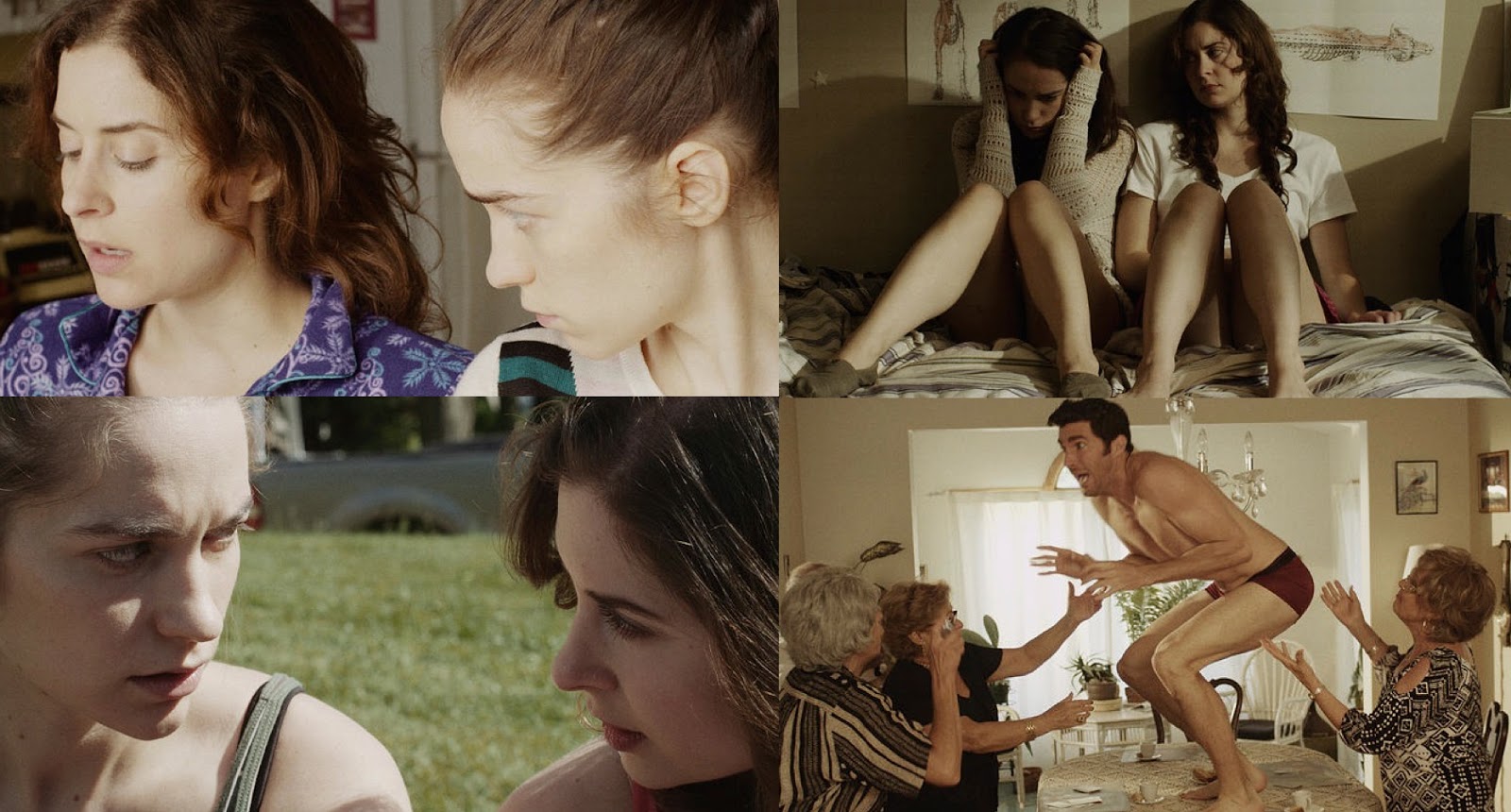
Here, we have Archie Andrews (Mike Brune), a nebbish vegan kindergarten teacher in the severely underpopulated region surrounding Atlanta, Georgia. His world is just slightly in the future, one in which gas prices have soared to over $30 per gallon. Archie invents a new motor he hopes to fuel with the disgusting lime green wheat germ drink he purchases from the sweet, innocent babe Lorraine (Anna Chlumsky) who runs the local outdoor health food stand. Alas, his invention keeps sputtering out until he discovers, quite by accident, that a geyser of his blood infuses it with the force it needs.

At first, our geeky hero attempts an extremely grotesque and painful blood transfusion, then outfits his long-dormant car with the new invention which rests conveniently in the rear trunk. It works!!! He drives over to the Veggie Stand to impress Lorraine, though he dupes her into believing that it's her special wheat germ beverage that fuels the car, not blood.

Just across from the Vegan Stand is a Meat Stand presided over by the hot trollop Denise (Kate Rowlett). Where but in a zero-budget independent indigenously-produced film would you find a Vegan food stand and a rival Meat stand, both in the middle of an empty field through which only a handful of people pass through?

Denise's deep-seeded fetish for cars soon manifests itself in the vigorous provision of endless sexual gratification for our hero. Her first ride in the car inspires the dark, Goth-like babe to deliver an enthusiastic knob-polishing upon Archie as he puts the pedal to the metal. Archie soon realizes that the mad sex will only continue if he can keep his vehicle fuelled up. Happily, his infirm elderly neighbour Mrs. Butterfield keels over from a heart attack and he tosses her corpse into the trunk where the blades shred her body to a bloody pulp which feeds the engine with all the nutrition it needs.

Unfortunately, the old broad's scarlet viscous hamburger meat (as it were) lasts only so long and like Seymour Krelborn in Little Shop of Horrors, Archie begins to murder his fuel providers. Add to this mix the romantic back and forth between the good girl and the bad girl, hilarious montages of both murder and sex (at one point culminating in a golden shower) plus mysterious Men in Black-style government agents, following and observing Archie's every move - all of which yields an endlessly hilarious and caustic satire of America, delectably, perfectly and appropriately rooted in the Georgia Hinterlands.

The movie is often rough around the edges, as per its budgetary constraints, but for the most part, it more than makes up for such occasional deficiencies, many of which are cleverly spun by its director into virtues and the added bonus of delightfully over-the-top gore effects, often unique camera compositions, a breakneck pace not unlike a Hawks' screwball comedy, a magnificently short running time (keeping you wanting more in all the right ways), a constantly hilarious and engaging screenplay rife with absurdity and mordantly snappy dialogue and, of course, there are the babes. Not only do we have two leading-lady babes, but the film is full of Georgia Peaches so quim-moist over Archie's wheels, that they're constantly baring their breasts in his general direction to entice him.

Blood Car careens wildly from sharp satire to down and dirty raunch. Roger Corman would certainly be proud and so too should the entire team who generated this no-budget treat.

As for the rest of us, it's a wild ride well worth taking.

THE FILM CORNER RATING: **** Four Stars

Blood Car is available on DVD via Kino-Lorber Films. Its only extras include two brilliant, savage and funny short films from the same creative team and confirm this feature is no fluke. Orr and associates are on to something very special indeed.

Sunday, 14 June 2015

VENDETTA - Review By Greg Klymkiw - Prison Pic Directors/Cast Rise Above Ho-Hum Script


Vendetta (2015)
Dir. Jen and Sylvia Soska
Scr. Justin Shady
Starring: Dean Cain, Paul "The Big Show" Wight, Michael Eklund, Kyra Zagorsky

Review By Greg Klymkiw

There's one thing screenwriter Justin Shady gets right in the WWE Studios production of the prison thriller Vendetta - he wastes no time in getting to the goods hardened genre geeks and prison picture aficionados appreciate.

When cop Mason Danvers (Dean Cain, star of TV's Lois & Clark: The New Adventures of Superman) and his partner (Ben Hollingsworth) miraculously bust the seemingly un-bustable psycho serial criminal Victor Abbott (WWE's Paul “The Big Show” Wight), they don't count on chief witnesses "disappearing" and their infamous collar going free. What Danvers especially doesn't expect is Victor exacting revenge upon him by savagely beating his pregnant wife (Kyra Zagorsky) to death - with his bare hands. Victor almost seems happy to take the rap for this and go to prison. Danvers, hell-bent upon revenge (of course), murders Big Vic's brother and two other scumbag associates in cold blood. Like his bulky nemesis Victor, Danvers is happy to take the murder rap and go to prison so he can have a shot at killing the killer of his wife and unborn child.

All our hero has left is hatred. He has nothing to lose.

So, this takes all of 20 minutes. No time-wasting on trials or procedurals, but time enough for the dazzling director duo Jen and Sylvia Soska to deliver just enough footage twixt Danvers and his preggers wifey so we can see how much they love each other and how hard they've worked at having their first child and then, the sickening assault upon her, climaxing with Victor repeatedly bashing in the woman's belly, killing both her and the fetus and finally, Danvers delightfully dispatching the three aforementioned pieces of crap with plenty of gushing blood and brain-splattering.

And now, we get to prison. Yeeeeeee Haaaaaaaa!


In fairness to scenarist Shady, he hauls out all the prison picture tropes - the corrupt warden (Michael Eklund), the shifting allegiances on the yard, the requisite scenes against the backdrops of cafeteria, laundry room, solitary confinement, shower room and an eventual full-blown riot. This all continues to move the action briskly enough so the Soskas can continue to bowl us over with their considerable directorial prowess. Things also move narratively at a breakneck clip so we don't have a lot of time to mull over the stadium-sized holes in the plot (such as it is).

Niggling plot-holes aside (as they can ultimately be forgiven) where Shady's script lets discriminating genre fans and, frankly, the Soskas down, is the lack of any genuine thematic, political subtext. Given that the current American prison system is one of the most horrific abusers of basic human rights in the free world, especially since it's been hideously privatized so that prison administrators want their institutions to be ludicrously full and to not let anyone go free (all for profit, of course), one feels a huge missed opportunity here for the Soskas to inject their trademark social commentary and sensitivity to such areas as thematic and/or political resonance. Jesus, even See No Evil 2, their first WWE gun-for-hire gig was rife with strong elements of female empowerment and had a feminist subtext running through it that its screenplay offered plenty of room for.

This script is sadly missing such key elements. Genre fans are not idiots - a bit of flesh on the bones of exploitation is always a welcome treat. I feel badly dumping on the screenwriter here, though, since it's quite possible that the Lions Gate and WWE head honchos were the primary culprits in their own demands for a cookie-cutter approach to the writing. That seems a likely scenario to this fella.


It's too bad. Not only is the direction far better than the film (as written) deserves, but I was especially delighted with the performance of leading man Dean Cain (he's definitely got a nice, steely Eastwood-Bronson quality about him). The delectably smarmy Michael Eklund is never less than entertaining. He comes close to the grotesqueries of John Vernon in Chained Heat.

Why is it that Canucks like Eklund and Vernon make such good wardens in the movies? Probably because of Canada's history of politely corrupt bureaucracies. (Who will ever forget Canuck Hume Cronyn as the detestably sadistic head of prison security in 1947's Brute Force?) This all said, the screenplay doesn't quite allow Eklund to be anything more than a sleaze and he doesn't quite reach Vernon's level of genuine malevolence. (As for Cronyn, we won't even bother going there.)

The real revelation for me was Paul "The Big Show" Wight. Look, he's never going to be doing Shakespeare at Stratford (nor, I suspect, even Shakespeare in the Park in Elbow, Saskatchewan), BUT, as a villain, the man can act. He's a major creep in this picture and even brings a bit of sardonic humour to his line readings. One line the script gives him which he spits out with glee is when he brags about killing Danvers's pregnant wife and chortles that he at least got a "two for one" deal when he decimated her and the unborn child.

I'm happy to credit Shady with this line, but I must also admit, this is the kind of villainy I expect from the Soskas (a la the scum bucket surgery professor in American Mary). Here, though, it's not really allowed by the overall scenario to tie into any larger thematic scope. As for "The Big Show", I, for one, will be looking forward to a lot more of him on the silver screen. Hell, he even has it in him to be a heroic action figure in an Expendables-style picture.


Now, however, we get to the meat of the matter - the action and violence. The Soskas do not disappoint in this regard. Their direction goes far beyond just covering the thwacks, whacks, kicks, testicle-twisting and gore in a perfunctory manner, nor do they resort to the usual wham-bam with no sense of spatiality. I was delighted that they placed a fair degree of faith in actors who could clearly fight, some superb stunt choreography/coordination and a few occasional frissons like the makeshift "brass" knuckles Danvers creates and uses with sweet abandon. (Again, I'm happy to credit this delightful invention to screenwriter Shady.)

As a side note, it is incumbent of me to point out that the one prison movie cliche sadly missing from Vendetta are a few instances of forcible sodomy and blow jobs. Most disappointing. What gives? Even a dull, inexplicably beloved piece of crap like The Shawshank Redemption had a decent anal rape scene.

But, I digress.

Happily, the Soskas avoid the horrendous herky-jerky style of movement, dreadful compositions and endless closeups we're forced to endure by overrated hacks like Sam Mendes, J.J. Abrams and Christopher Nolan, but that they also keep the cuts spare (compared to most pictures these days). My only quibble, and this might partially relate to exigencies of the modest budget and (no-doubt) speedy shooting schedule, is that the action choreography is so good that I longed for wider shots and for many of the cuts to not be employed, thus allowing the action in many of those same shots to play out longer.

The Soskas demonstrate that they naturally understand that both the shots and cuts of action set pieces are dramatic beats and as such, many of them play out more than satisfactorily. That said, the next film they do that has this much action, if not more, one hopes that their producers will budget extra time for these sequences to allow for more shot variation and to allow choreography to play out in longer shots so that the only cuts which occur are those meant to drive the dramatic action forward.

Even though the budgets are ridiculously higher, a good rule of thumb for genuine filmmakers like the Soskas ("genuine" as in their prowess as film artists being hard-wired into their DNA), is to study the work of filmmakers like Sam Peckinpah and John Woo. Both of them utilize a lot of cuts (the final shootout in The Wild Bunch or Chow Yun Fat's first mass slaughter in the bar in The Killer are two of many examples), but what those directors do is to treat the action scenes like dance numbers in a musical (Woo) or a ballet (Peckinpah). Scorsese is a master of this too - the boxing matches in Raging Bull are rooted stylistically in the Powell-Pressburger ballet sequences in 1948's masterpiece of British Cinema, The Red Shoes.

Virtually every shot amongst the aforementioned masters is composed with the crosshairs aimed (a la George Miller in the Mad Max films) in the centre of the main dramatic action. This allows for more sumptuous compositions, but also allows for quicker cuts (if and when necessary) that treat everything as dramatic beats and hence, always maintaining spatiality (unless the director wants to intentionally mess with us, but that only works when said approaches are buried judiciously amidst more classical compositions).

This all said, the Soskas' instincts are right. There's just a few two many medium two shots that don't hold long enough before the cuts and a definite dearth of wider shots.

Finally, one very odd issue is the casting - not for the leads, but with the background extras as inmates. This corresponds to my earlier complaints about too many tropes and not much in the way of thematic layering. Given that the vast majority of American prison populations are African-or-Hispanic-American (a genuine tragedy and failing of America, a nation infused with deep-seeded racism and discrimination), this prison population (supposedly outside of Chicago in the state of Illinois, albeit with the hole that is Coquitlam, British Columbia standing in) seemed awfully "white".

While I'm tempted to continue the litany of laying blame upon the beleaguered screenwriter - characters, even background characters do, after all, need to be written in order to be cast and shot, however, there's a part of me which suspects that such failings fall within the purview of too many suits at Lions Gate and WWE wanting a specific property which ultimately lends itself to the eradication of elements which could allow for a film's pulp sensibilities to rise into a slightly more elevated plane.


God knows, classic American directors like Jules Dassin in Brute Force (maybe the best prison film ever made) or Don Siegel with Riot in Cell Block 11 (maybe the second best prison picture ever made) maintained B-movie squalor that crackled with excitement because the films had inner lives beyond the surface tropes. Is it unfair to compare Vendetta to classics? No. The Soskas are such damn special filmmakers, it would be an insult not to compare them to early works of masters like Dassin and Siegel.

The bottom line I think is that WWE and Lions Gate were the ones with their heads up their asses. Thank Christ the Soskas were at the helm to pull a superbly directed picture out of their respective asses in spite of the vision-bereft parameters of the screenplay and property itself.

Curiously, I watched Vendetta with my 14-year-old daughter who has long been a fan of the Soskas (yeah, I know, I know, but she is my daughter, after all). When the picture ended and cut to their credit, she yelled out, "God! That was such a good movie!" And you know what? In spite of wanting a fucking masterpiece, I felt exactly as she did at the end.

Like Daughter. Like Father.

Or something like that.

THE FILM CORNER RATING: ***½

Vendetta is currently available on VOD, DVD and limited theatrical venues.

Saturday, 13 June 2015

A PIGEON SAT ON A BRANCH REFLECTING ON EXISTENCE (En duva satt på en gren och funderade på tillvaron) - Review By Greg Klymkiw - The third in Roy Andersson's "Living" Trilogy is a fond, sad and funny farewell to a world of muted existence, of deadpan whimsy (Swedish-style, of course). @ TIFF BellLightbox & rest of Canada via FilmsWeLike


A Pigeon Sat on a Branch Reflecting on Existence (2015)
Dir. Roy Andersson
Starring: Nils Westblom, Holger Andersson

Review By Greg Klymkiw

How much you'll enjoy Roy Andersson's A Pigeon Sat on a Branch Reflecting on Existence will most likely depend upon how much Roy Andersson you can take, if at all. He is, to be sure, either an acquired taste or one who is immediately embraced by those who experience his unique vision for the first time. Though he made his first feature in 1970 (the acclaimed A Swedish Love Story) and his sophomore effort in 1975 (the unjustly reviled Gillap), most of his contemporary followers discovered him with the first in his astonishing "life" trilogy, Songs from the Second Floor in 2000, then the second, You, the Living, in 2007 and just this past year with the final instalment which won the Grand Prize at the Venice International Film Festival.

If you've never seen his previous work, never fear. A Pigeon Sat on a Branch Reflecting on Existence can easily be enjoyed without having experienced any of his films, including those first two instalments of the trilogy. What you might have to first get over - I know I did - are the touches of whimsy permeating the work. If there's anything I can't stand, it's whimsy. Happily, this is neither French nor Belgian whimsy, so it doesn't immediately land like so many globs of bilious chunks blown into a vomit bucket.

It's Swedish - THANK CHRIST! - which immediately takes it into the territory of deep, almost unrelenting sadness. Not that you won't laugh, though. Andersson is a veritable knee-slap-inducer of the highest order. Some have idiotically linked him to the grotesqueries of mid-to-late Fellini, but for me, he's always been a curious amalgam of Chaplin (albeit on heavy doses of lithium) with splashes of De Sica/Rossellini neo-realism and, best of all, the deep ennui of Ingmar Bergman and the pathologically insane reliance upon tableaux so rooted in most of Carl Dreyer's canon (post-The Passion of Joan of Arc and notably in Ordet and Wrath of God).


Andersson creates images and situations which are often deeply sublime and the laughs he wrenches from you must be paid for in dire, often endless moments where you're shedding tears - often due to the universal truths of humanity which he brilliantly exposes, but just as often because one is simply blown away by his virtuosity as a film artist.

Set in the major sea port city of Göteborg, one would immediately think the place is utterly bereft of the joyous cultural and historical touchstones that make it one of the most vibrant cities, not just in Sweden, but the world. I can't recall a single instance of sun peeking through the heavy clouds, nor any interior that wasn't splashed in fluorescent light and a kind of spartan decor which borders on a complete lack of anything resembling warmth, taste or style. In fact, there are only two instances in the entire film where we see anyone smile. One involves an ever-so brief moment involving children and the other, so heart-rending I refuse to spoil it for you (and, you might even miss it altogether).

Gotta love Roy Andersson! There's nobody out there like him in contemporary cinema, though I'd argue that Austrian Ulrich Seidl or bad boy Lars von Trier are not unlike a Roy Andersson who train their lenses upon the most vile aspects of human ugliness and moral decrepitude.

A Pigeon Sat on a Branch Reflecting on Existence is as episodic as they come. Andersson presents several mini-playlets (he's happily all-too-in-love with a kind of skewed proscenium quality to his compositions) in which we observe slices of life involving numerous characters who are only connected by virtue of living in the same city. Andersson affixes his camera in one position, usually in a slightly off-kilter angle from some discrete corner viewpoint as he almost sneakily seems to be spying upon the action of the scenes. All 100-minutes of the picture is comprised of - I kid you not! - about 35 single shots and they are beautiful, as much as for the dramatic content as they are for their compositional qualities. Somehow, Andersson manages to make the harshly bland quality of the settings as pulchritudinous as all get out.


The movie begins with a series of short snappers which are presented with the inter-title "Three Meetings With Death" and they are exactly that. From a man suffering a fatal heart attack in his dining room after unsuccessfully attempting to uncork a bottle of wine while his wife continues to putter about the kitchen, through to an absolutely hilarious sequence involving a dead man on the floor of a cafeteria aboard a ferry as the cashier wonders what to do with the meal and beer the man ordered and paid for, before keeling over, of course. The middle vignette is as heartbreaking as it is funny - a self-contained mini-masterpiece within the larger whole as a woman on her deathbed refuses to part with her handbag full of jewels and money, hoping to take it with her to the afterlife.

Throughout the movie are several other vignettes - one involving a chunky flamenco teacher and her obsession with a lithe, beautiful young man in her class, a befuddled military officer searching for a lecture, an inexperienced barber filling in for his infirm friend (and scaring away customers as he describes that he hasn't cut hair since his military days), several sequences involving different characters engaged in telephone calls in which they all utter similar pleasantries of the “I’m happy to hear you’re doing fine” variety.

There are moments of out and out surrealism. My least favourite involves a bar which keeps receiving visits from King Charles XII and his army and my "favourite", though that's not quite the right word to describe it, is a horrific dream sequence involving stiff-upper-lip British Colonial soldiers forcing a huge lineup of African slaves into a humungous copper drum, locking them in, setting fires underneath and rigidly observing as it revolves like a spit and roasts the people alive.


There is one narrative thread which ties the movie together and involves two sad-sack door-to-door salesmen specializing in wholesale novelty items to mostly uninterested or payment-welching shopkeepers. Both men seem fraught with the mental illness of depression, though it's poor Sam (Nils Westblom) who appears to suffer the most, especially since his partner Jonathan (Holger Andersson) is an inveterate bully who keeps referring to his old pal as a "crybaby" (which, he actually resembles since he's prone to breaking out into painful sobs at the drop of a hat).

Their scenes are the funniest and saddest in Andersson's film (and perhaps up there with some of the funniest and saddest moments in all of film history). When Sam, with dour deadpan, oft-repeats his sales pitch, "We want to help people have fun," it's clearly obvious these men are ill-prepared to sell vampire teeth with extra-long fangs, a laugh-bag (described by Jonathan as guaranteed to "bring out a smile at parties, either at home or in the office") and their "new item" which they place a lot of faith in, a grotesque rubber mask called "Uncle One Tooth" which crybaby Sam is forced to repeatedly demonstrate, an item so horrific it even terrifies a store clerk upon first viewing it.


Of all the characters in this kaleidoscope of humanity, Sam and Jonathan are a perfect pair for us to follow as Andersson takes us on this genuinely exquisite journey. It's a world most of us would never want to live in, but we're grateful for the experience of living it in the film. Indeed, like Bruegel's 1565 oil on wood painting "The Hunters in the Snow", Andersson's chief influence here, A Pigeon Sat on a Branch Reflecting on Existence works on a similar plane as those birds in the 14th Century masterpiece looking down upon the weary, downtrodden men trudging through snow under grey skies. Andersson's a sly one, though. We'd like to think we're the pigeons, but ultimately, we're all the dupes.

Andersson uses his film to hold up a mirror to all of us.

THE FILM CORNER RATING: ***** 5-Stars

A Pigeon Sat on a Branch Reflecting on Existence is in theatrical release via FilmWeLike. It plays in Toronto at the TIFF Bell Lightbox and throughout the rest of Canada soon after.

Friday, 12 June 2015

THE QUIET HOUR - Review By Greg Klymkiw - NIFF 2015 - Low-Key Post-Apocalypse


The Quiet Hour (2014)
Dir. Stéphanie Joalland
Starring: Dakota Blue Richards, Karl Davies, Brigitte Millar, Jack McMullen

Review By Greg Klymkiw

After the Apocalypse, it's going to be very quiet.

At least that's the way it's got to be in Stéphanie Joalland's first feature film The Quiet Hour. The end of the world as we know it in the universe of the film is an alien invasion in which the unseen extraterrestrial critters (save for their hovering spaceship and mini-patrol-jets) are wiping out as many humans as possible and stripping the Earth of its natural resources.

Humanity has about two one-hour periods a day (hence the title) to wander about outdoors without getting zapped. The rest of the time, mankind needs to hunker down, ever-so quietly, lest they give their position away to the merciless space invaders.

Perhaps the most merciless creature on God's soon-to-NOT-be-green Earth is man. Food is scarce, so many marauders have turned to cannibalism. (This flesh munching is all handled a bit too discretely for my bloodthirsty tastes).

Safe havens are also in short supply, so if you've got one, it's eventually going to be under siege.

Placing a whopping emphasis upon character over action and suspense is probably not a bad thing to do, but every so often, it reminds the viewer that we're dealing with what is probably a very minuscule budget - hence: no onscreen aliens, only a handful of visible humans and most of the action confined to an isolated old farm house.


No matter. It's what happens inside the farmhouse that's important and writer-director Joalland acquits herself very well in this respect. Sarah (Dakota Blue Richards) is a hot babe (Thank Christ!), holed up in the stately country house with Tom (Jack McMullen), her blind younger brother. When Jude (Karl Davies), an army-fatigue-adorned young hunk shows up with a bullet wound in his leg, he's allowed, grudgingly, to stay and get patched up. The wounded lad claims to be a young father whose wife and child have been killed by marauders.

The plot thickens when a group of armed inbreds show up and demand Jude be turned over to them.

Hmmm. Why? Is he really who or what he says he is? Is he a killer? A scavenger lying in wait to decimate our plucky bro and sis? The reality, however, is that even if they acquiesce to the demands to give him up, the sibs risk losing an ally against a passel of dangerous scumbags.

Suspense and violence follow.

Very quietly, mind you.


The accent is on the relationships between these people in a world on the brink of disaster and much of the film involves three-hander interplay between them. Joalland's script is nicely written with an accent on character development and realistic dialogue. The performances are solid and as a director, her mise-en-scene deftly juggles the demands of making this claustrophobic setting work dramatically and cinematically.

I appreciated the muted quality of the film, but after awhile, I did expect a good, old fashioned Straw Dogs-like orgy of violence. There is violence, but it continues to play out in the muted realism of the rest of the movie. This, of course, is the noble way to play things out, but I do fear that many (including myself) will be a tad letdown by the lack of a truly, madly, deeply inspired donnybrook with geysers of blood-letting.

We deserve it. We've paid attention, justifiably so, to the good writing and fine acting and stately pace. Lacking a climactic dust-up seems a bit of a cop-out, taking things far too preciously for comfort. Still, it's an intelligent, considered work and one can't complain too much about that.

THE FILM CORNER RATING: *** 3 Stars

The Quiet Hour enjoys its Canadian Premiere at the Niagara Integrated Film Festival (NIFF 2015). For tix, times and venues, visit the festival's website by clicking HERE.

Thursday, 11 June 2015

LIZA THE FOX-FAIRY (Liza a Rókatündér) - Review By Greg Klymkiw - NIFF 2015 MUST-SEE Wacko Winner from Hungary gets Canadian Premiere during the legendary Bill Marshall's 2nd Annual Niagara Integrated Film Festival in Southern Ontario Wine Country


Liza The Fox-Fairy aka Liza a Rókatündér (2015)
Dir. Károly Ujj Mészáros
Starring: Mónika Balsai, Szabolcs Fazekas, David Sakurai

Review By Greg Klymkiw

Watching Liza The Fox-Fairy, I felt like I had died and sailed up to Heaven. It's also proof-positive how great publicists genuinely understand the writers they work with. I didn't even bother including this title on my list of films I'd requested to screen in advance of the 2015 Niagara Integrated Film Festival and the gentle words of the veteran flack handling NIFF's press relations, "I think you might want to see this one, too," led me to this terrific motion picture (at first, wearily, in spite of not ever really being led astray by said flack's almost placid urging), which not only appealed to my taste, but did so with the kind of artistry and imagination I continually long for in the movies.

This magnificently mordant fantasy is also a deeply black comedy, an utterly insane musical and perhaps one of the most unexpectedly sweet and melancholy love stories I've seen in quite some time. That it also blends an old-style Eastern European sense of realism, an occasional use of a fluorescent-dappled post-modernist visual palette and that this Budapest-back-dropped ode to ghostly apparitions, murder and Japanese culture oddly joins a splendid cinematic coterie that includes Canada's brilliant Winnipeg-infused, Hungarian-heritaged John (Crime Wave) Paizs and the Colorado=spawned Zellner (Kumiko The Treasure Hunter) Brothers (with dashes of Otto Preminger's Laura), all yielding globs of rich icing on this delicious cake of celluloid dreaming.

Liza (Mónika Balsai) has toiled for twelve long years as a personal slave/caretaker to a morbidly obese old lady in Hungary who once lived with her deceased husband, a consular official, in Japan. She not only teaches Liza Japanese in their endless days, weeks, months and aeons together, but insists her jane-of-all-trades endlessly spin tunes by the old gal's favourite Nippon pop star Tomy Tani (David Sakurai). Frumpy Liza, having never known true love, magically becomes the recipient of numerous visitations by the ghost of Tomy who croons and converses endlessly with her. Some might call him an imaginary friend, but he is, ultimately, an all-too-real a presence in Liza's life.

On Liza's 30th birthday, everything changes. Whilst enjoying a celebratory greasy burger and fries at the grim Hungarian fast food eatery, MEKK BURGER, the old lady dies and in her will, leaves the loyal, dowdy au pair her apartment and a small amount of money. Liza immediately becomes a beacon for male suitors. Alas, one-by-one, the men begin to die "accidentally" in Liza's presence. Though each death is clearly accidental, the Budapest Homicide Department smells something fishy and assigns Detective Zoltán Zászlós (Szabolcs Fazekas) to stakeout her comings and goings.

Zoltán slowly falls for Liza in a big way, even though men are dropping like flies around her. Melancholy Liza, who transforms herself into a Cosmopolitan Magazine babe, feels like she's become the reincarnated Japanese "Fox-Lady" whom, a legend has it, could never know true love as all men who courted her died horrible deaths. As Liza's apartment becomes insanely plastered with crime scene tape body outlines, the jealous ghost of Tomy appears to be the real culprit.

He loves Liza and wants her all to himself.

For eternity.

What's a girl to do?

To find out, head down to St. Catharines and surrounding environs to see Liza The Fox-Fairy at the Niagara Integrated Film Festival. Who knows when you'll have a chance to see this thoroughly delightful picture on a big screen with an audience.

THE FILM CORNER RATING: **** 4 Stars

Liza The Fox-Fairy enjoys its Canadian Premiere at NIFF 2015. For info, dates and tickets, visit the festival's website by clicking HERE.

Wednesday, 10 June 2015

ARROW FILMS is becoming the GOLD STANDARD for the home entertainment packaging of Genre Pictures: THE STRANGE CASE OF DR. JEKYLL AND MISS OSBOURNE by Walerian Borowczyk - Review By Greg Klymkiw


The Strange Case of Dr. Jekyll and Miss Osbourne (1981)
Dir. Walerian Borowczyk
Starring: Udo Kier, Gérard Zalcberg,
Marina Pierro, Patrick Magee, Howard Vernon, Clément Harari

Review By Greg Klymkiw

This might not be the ultimate film adaptation of Robert Louis Stevenson's literary masterpiece "Dr. Jekyll and Mr. Hyde" (that, for me, belongs to 1968's astounding Dan Curtis and Charles Jarrott shot-on-2-inch-video production for ABC-TV, starring Jack Palance in the dual role), but Walerian Borowczyk's The Strange Case of Dr. Jekyll and Miss Osbourne deserves an oblation of the most emphatically laudatory kind for easily being the strangest, creepiest and most visually diverse version.

On the surface, it's a relatively straight-forward rendering of the alchemy-obsessed Dr. Jekyll and his discovery of a secret potion which allows the normally mild mannered scientist to conjure up his most base instincts and turn into a foul murderous psychopath. Where the adaptation parts company with most is on several levels.


First of all, Borowczyk has quite brilliantly chosen to split the acting duties of Jekyll and Hyde twixt two actors, Udo Kier and Gérard Zalcberg respectively. Kier adds a sexy, almost reptilian quality to the good doctor and quite capably evokes the more subtle qualities of Jekyll's obsessive "addiction" to both the potion and the brutal qualities of his alter-ego Mr. Hyde. Zalcberg resembles Kier in face and stature (albeit with a grotesquely deformed visage), but he takes the horrific Hyde to demented levels of psychopathy and sexual deviance not quite exploited as overtly as they are here.

Secondly, more emphasis is placed upon the love story between Jekyll and his fiancé. As such, the entire action of the film takes place over the course of one long, horrifying evening devoted to celebrating the couple's engagement. Delving into Mario Bava stalker territory of such works as Bay of Blood and providing a far more compelling precursor to the slasher movie craze of the period than those of the Friday the 13th ilk, Borowcxyk does not shy away from explicit perverse sexual activity and this, coupled with some truly sickening violence and humiliation, is what serves up a genuinely original take on the twisted tale.

Borowczyk's gorgeously skewed compositions, lighting and camera moves are a big treat in this respect as are his attention to numerous fetishistic lingerings over a variety of inanimate objects (and not to neglect his evocative mirror imagery), the movie is a dazzler to the eye. Enjoying Hyde decimate the assembled celebrants one by one is truly joyous. Coupled with a first rate cast (Patrick Magee as a prudish aristocrat forced to watch his comely daughter succumb to Hyde's huge and prodigious sword of manhood is especially engaging)

Throughout the film, one is both shocked and tantalized with how far Hyde goes during his evening of slaughter and general debauchery. Ultimately, it's a parade of delicious serial killings, but crafted with a great deal of artistry and vision. Throughout most of the movie, you'll be agog at its subversive nature. Your jaw will drop as regularly as Mr. Hyde's deadly, loutish knuckle dragging.

It's cause for celebration!

THE FILM CORNER RATING:
***** 5 Stars for both the film and Arrow's Special Edition


The Strange Case of Dr. Jekyll and Miss Osbourne is available in a sumptuous special edition on Arrow Video with the following special features: A new 2K restoration, scanned from the original camera negative and supervised by cinematographer Noël Véry, a High Definition Blu-ray (1080p) and Standard Definition DVD of the movie released on both formats for the first time anywhere in the world, English and French soundtracks, Optional English and English SDH subtitles, Introduction by critic Michael Brooke, Audio commentary featuring archival interviews with Walerian Borowczyk, Udo Kier, Marina Pierro and producer Robert Kuperberg, and new interviews with cinematographer Noël Véry, editor Khadicha Bariha, assistant Michael Levy and filmmaker Noël Simsolo, all moderated by Daniel Bird, Interview with Marina Pierro, Himorogi (2012), a short film by Marina and Alessio Pierro, made in homage to Borowczyk, Interview with artist and filmmaker Alessio Pierro, Video essay by Adrian Martin and Cristina Alvarez Lopez, Eyes That Listen, a featurette on Borowczyk’s collaborations with electro-acoustic composer Bernard Parmegiani, Jouet Jouyeux (1979), a short film by Borowczyk based on Charles-Émile Reynaud’s praxinoscope, Interview with Sarah Mallinson, former assistant to Borowczyk and fellow animator Peter Foldes, Returning to Méliès: Borowczyk and Early Cinema, a featurette by Daniel Bird, Theatrical trailer with optional commentary by editor Khadicha Bariha, Reversible sleeve with artwork based on Borowczyk’s own poster design, Illustrated booklet with new writing on the film by Daniel Bird and archive pieces by Walerian Borowczyk and Andre Pieyre de Mandiargues.

There's not a single item on this Special Edition that a Borowczyk fan, nor for that matter, any serious horror aficionado will not want to pore over. My personal favourites included Michael Brooke's wonderful video in which he tells the familiar tale of all grind house denizens - discovering the work of a great director in a delectable dive devoted to flat-rental specials on triple and quadruple bills, offering hours of entertainment for one low admission, as well as providing a safe haven for the homeless, the indigent and those seeking a nice spot to get a blow job from a hooker. Brooke's superbly spun tale of first viewing Borowczyk's Dr. Jekyll film in just such an establishment is replete with a detailed analysis of the filmmaker's style and career and the history of this astoundingly vile and quite brilliant film. Actress Marina Pierro's interview is full of illuminating observations on Borowczyk's working methods as well as her own erudite assessment of his work. I also loved the extra involving composer Bernard Parmegiani which provides great insight into the world of 70s/80s Euro-Trash electronic/acoustic scoring. Again, these are just personal favourites and, ultimately, I found the entire package eminently fascinating and beautifully produced. It was this package in particular that led me to decide that Arrow was indeed providing a Criterion Collection-styled Gold Standard to the packaging of genre films.

Monday, 8 June 2015

MY DINNER WITH ANDRE - Review By Greg Klymkiw - Now on Criterion Blu-Ray and 34 Years after its first theatrical release, Louis Malle's film masterpiece of the great script by Wallace Shawn and André Gregory continues to pack one major wallop after another!


My Dinner With André (1981)
Dir. Louis Malle
Scr. Wallace Shawn, André Gregory
Starring: André Gregory, Wallace Shawn

Review By Greg Klymkiw

I've always loved this movie. When I first saw it theatrically in 1981, I was a mere twenty-two years of age, but had already seen thousands of movies. I quickly realized, however, that I'd never seen anything like this one. On every level, the writing, acting and direction is of the highest calibre, but most of all the thing I've carried with me ever since, is the feeling that I was literally under a hypnotic spell. I was all there, all the time, my eyes glued to the screen and completely unable to concentrate upon anything else.

Here's the rub, though. My Dinner With Andre is literally what the title says it is. The playwright Wally (Wallace Shawn) informs us he has not seen his old friend and theatre colleague Andre (Andre Gregory) for years and accepts an invitation to dinner in a high-toned Manhattan restaurant.

They meet, greet, eat, talk, then say goodbye. On the surface, that's it.

Of course there's so much more.


Wally gets a complete, detailed rundown on everything Andre's been up to which feels like a thoroughly engaging verbal travelogue, though often, the chat dovetails into the kind of highly literate philosophizing that one might expect from these two brilliant men. Wally is primarily the listener, but when he interjects, his responses, more often than not, are the kind of concise intelligent responses someone like Andre needs, as, of course. does Wally.

As do we all.

Andre's storytelling is riveting - neither Wally nor the audience is any less than transfixed and there are plenty of laughs mixed with the stories and ruminations. Some of them are downright revelatory in terms of the world we (and they) live in and indeed provide numerous touchstones that we've either experienced ourselves, or in some cases, hope to eventuality discover on our own travels.

What's astonishing now, years after growing with the film for some thirty-plus years, especially on subsequent viewings, is to discover just how relevant the discussions are to the early eighties, but most importantly how they build and grow over the years.

What's revealed to us is prescient in ways few films ever are. Given the madness the world has lived in since 9/11 with war, financial collapse and corruption at the highest levels of both government and business, one of Andre's speeches is unbelievably chilling in a contemporary context when he offers:
"We're all bored now. But has it ever occurred to you Wally that the process that creates this boredom that we see in the world now may very well be a self-perpetuating, unconscious form of brainwashing, created by a world totalitarian government based on money, and that all of this is much more dangerous than one thinks and it's not just a question of individual survival Wally, but that somebody who's bored is asleep, and somebody who's asleep will not say no?"
"A world totalitarian government based on money", indeed. In 1982 this was already a concern, but in 2015 this basic fact/fear has never been more prevalent.


At one point, Andre explains how much he wants to leave New York. The city feels like a prison in that comfort is mere acquiescence to forces much greater than humanity. He explains this notion by accusing all New Yorkers, and by extension, anyone living in an urban environment as existing in "a state of schizophrenia. They're both guards and prisoners and as a result they no longer have, having been lobotomized, the capacity to leave the prison they've made, or to even see it as a prison.

Again, we're faced with a chilling notion that acts like some mirror Andre holds up to all our faces. Wally argues, perhaps even on our behalf:
"I would never give up my electric blanket, Andre. . .I'm not looking for ways to get rid of a few things that provide relief and comfort. I mean, on the contrary, I'm looking for more comfort because the world is very abrasive. I mean, I'm trying to protect myself because, really, there's these abrasive beatings to be avoided everywhere you look!"
Wally expresses our point of view and we accept it gladly, but Andre further explains that "comfort can be dangerous" because it can "lull you into a dangerous tranquility".

And damn if he isn't right.

Andre has been to several corners of the earth to find a spiritual transcendence and he indeed discovers it in a series of theatre experiments in deep, dark forests which break all boundaries and carry the participants to a place that was like "a human Kaleidoscope". Even as he says this, we see this kaleidoscope - not literally, of course, but because director Louis (Atlantic City, Lacombe Lucien, Au revoir les enfants) Malle's precise and consistent mise-en-scene takes us there by keeping clear focus upon the faces of his subjects and creates a rhythm which allows us to be lulled into an acquiescence to the stories, philosophy and conversations.

Of course, the screenplay by Shawn and Gregory is rife with some of the best writing you'll ever experience in a film. Towards the picture's conclusion we're awash in a state of melancholy as we've been forced to think about our own lives and piteous place in a world and universe we have so little control over.

Then it's Wally, during the film's conclusion as he continues to be our surrogate.

He expresses the greatest truth of all:
"I treated myself to a taxi. I rode home through the city streets. There wasn't a street, there wasn't a building, that wasn't connected to some memory in my mind. There, I was buying a suit with my father. There, I was having an ice cream soda after school. And when I finally came in, Debbie was home from work, and I told her everything about my dinner with Andre."
It is in the crystalline remembrance of our lives and the ability to share those experiences which is finally the genuinely and deeply moving core of My Dinner With Andre, a film that is not only original and powerful, but one we must hold dear to.

And you know, the picture will live forever. No matter what happens in our lives and the world at large, the alternately terrible and beauteous truths is what rests finally at the root of humanity.

Our humanity.

We have art to thank for this and surely we must thank Louis Malle, Wallace Shawn and Andre Gregory for giving us this dazzling lesson in how, ideally, we should all strive to hold dear our sense of place and worth.

THE FILM CORNER RATING: ***** Five Stars

My Dinner With Andre is available on a great Criterion Blu-Ray, one its own or in a fabulous box which includes A Master Builder and Vanya on 42nd Street. The gorgeously produced Blu-Ray for this film comes with a lovely High-definition digital restoration, with uncompressed monaural soundtrack on the Blu-ray, an interview from 2009 with actor-writers André Gregory and Wallace Shawn, conducted by their friend, filmmaker Noah Baumbach (so good one wishes it was several hours long), “My Dinner with Louis,” a 1982 episode of the BBC program Arena in which Shawn interviews director Louis Malle (so amazing that one wonders why such incisive TV programming is not produced today), an essay by critic Amy Taubin and the prefaces written by Gregory and Shawn for the 1981 publication of the film’s screenplay.

Feel Free To Order the film from the following links on this page and contribute to the ongoing maintenance of The Film Corner.

In Canada, buy HERE


In USA, buy HERE


In UK, buy HERE

Sunday, 7 June 2015

MR. NOBODY - Review By Greg Klymkiw - Something execrable to blame the French for


Mr. Nobody (2010)
dir. Jaco Van Dormael
Starring: Jared Leto, Diane Kruger, Linh Dan Pham and Sarah Polley

Review By Greg Klymkiw

Oh joy! Just what the world needed! More whimsy in the cinema!

For this, I blame the French.

Though the director of this godawful pastiche of science fiction, magic realism and whimsy Jaco Van Dormael is a Belgian filmmaker, let us not forget that Belgium itself borders on France and half its population, the Walloons, speak French.

As much as I'd prefer to blame the movie on the Walloons, the fact remains that this Belgian-French-German-Canadian patchwork quilt co-production has a much greater French pedigree than mere Walloonery will allow. So again, let's do the math by examining the French content of the co-production entities: half of Belgium speaks French, Belgium borders France, Germany was obsessed with occupying France and one of Canada's official languages is French.

The sum of the above is clear. We can blame the French with no guilt whatsoever.


In fact, by the end of Mr. Nobody, I was reminded of the lyrics penned by Mel Brooks and sung by the inimitable Dom De Luise in Blazing Saddles:

Throw out your hands/Stick out your tush/Hands on your hips/Give 'em a push/You'll be surprised/You're doing the French Mistake/Voila!

Yes, Voila! A French Mistake, indeed!


When this film was first released theatrically, we were inflicted, around the same time with the release of Jeunet's execrable (and French, 'natch) vat of whimsy Micmacs. Mr. Nobody, a dreadfully pretentious movie that purports to be about something, is finally so confusing and tedious, that it's ultimately not about much of anything at all. And unlike Micmacs, which at least tried (pathetically) to be funny, Mr. Nobody is mind-numbingly humourless.

That said, what might have perked things up in Mr. Nobody could have been a few digitally-rendered appearances from the late, great Chief Dan George as Old Lodge Skins from Arthur Penn's film adaptation of Little Big Man. Given the film's reliance on endless, trippy digital effects, this is not such an odd expectation, especially since our title character Mr. Nobody appears in the opening with Jared Leto (the go-to guy when Jake Gyllenhaal isn't available and, of course in Jake's case, vice-versa) in full old-man makeup, not unlike Dustin Hoffman's Jack Crabb. Being interviewed by a dweeby journalist, not unlike the one played by William Hickey in Penn's seminal 70s western, Mr. Nobody, it seems, is the oldest man alive in a dystopian future.

And boy, does he have a whopper to tell, not unlike Jack Crabb in Little Big Man.

Hell, why didn't Jaco Van Dormael go for a digital merging of Chief Dan George, Dustin Hoffman and Jared Leto in these sequences? It might have made the whole affair palatable. (Well, not really, but it would have been good for a few laughs.)

In reality, it seems Mr. Nobody is a man living in a world where everyone has become immortal except for him and he's part of some odd reality-TV death-watch because he has not succumbed to the stem-cell thing-a-muh-bobby that keeps everyone else in the film alive. He eventually begins to tell his story to the reporter and what we get is a story that gives us several versions of his life, most notably three different relationships with three women he loved, or could have loved, or should have loved (Kruger, Pham and Polley).

Or, uh, something like that. Who the fuck knows?

In his dotage and on the verge of death, he contemplates whether he made the right decisions in his life. The tale is told in triplicate and appears to be rooted in two significant moments from his childhood. This is, however, one of the film's many problems. We're shown how his life could have been when he's forced to choose between living with his mother and father when they decide to separate. We see his life with Mom and then with Dad. But as well, the other significant fork-in-the-road moment occurs when he spies three different little girls - all of whom become his wife in the different imaginings of where his life does indeed go.

Well, which is it? The first or the second? Why both? Well, because the director wanted it this way, that's why. He assumed, no doubt, that it would give him more options to deliver a "mind-blowing" series of stories.

Not content with this incongruity, Van Dormael presents the entire thing in a hodge-podge whilst tossing out teasing references to the "butterfly effect" and "quantum theory". Flash forwards, flash backs - here, there and everywhere - are all presented to be significant with a capital "S".


I was reminded, somewhat, of Kurt Vonnegut's great book (and George Roy Hill's terrific film adaptation of it) "Slaughterhouse Five" where we bounce between past, present and future. It made sense there because the central character Vonnegut creates is "unstuck in time" - a joyous and painful predicament since the character must, for an eternity, experience his birth, life and death. This fractured, intricately-etched approach to presenting the narrative was rooted strongly in the science-fiction "logic" of the piece, whereas a similar approach in Mr. Nobody is there, simply because Van Dormael wants it to be there. Even worse is that the fragmented nature of the movie seems to pull a Christopher ("One Idea") Nolan Memento reverse order to the events.

I think.

Whatever, this movie is dreadful enough without conjuring up memories of Nolan's pretentious 2000 pretence-o-rama neo-noir twaddle.

One of the more idiotic touches in Mr. Nobody is the name chosen for Mr. Nobody in his younger years which is... okay, now wait for it...Nemo.

I mean, Good God! NEMO!!!??? Is writer-director Jaco Van Dormael on crack? Does he really expect us all to "ooohhh" and "aaaahhh" over the apparent genius and GREAT SIGNIFICANCE of naming the younger version of Mr. Nobody with a word meaning "no man" or, if you will, "no one" in Latin. This reference also conjures up that of Captain Nemo in Jules Verne's "20,000 Leagues Under the Sea", but I suspect Von Dormael was more inspired by the dark fairytale qualities of the brilliant turn of the century comic strip "Little Nemo in Slumberland". If only Mr. Nobody proved to be as significant and original as that work.

It's not.

Mr. Nobody is one of those boneheaded exercises that pretends to be more intelligent than it is. Von Dormael, no doubt, believes in his "genius" and so do the audiences that smugly believe they're watching great art. They can be dazzled by the striking visuals and non-linear quality in order to feel good that what they're indulging in is not a machine-tooled Hollywood blockbuster from Michael Bay.

Van Dormael has created the greatest aesthetic crime - far greater than anything Michael Bay has foisted upon us - he's machine-tooled an art film for dummies.

There's not much to recommend here. However, poor Leto does what he can with the ludicrous role foisted upon him and the movie does feature a great performance from Sarah Polley as one of Nemo's wives. Playing a bi-polar housewife, Polley takes the kind of chances and delivers the kind of performance that proves once again why she's one of the world's great actresses. She's raw and real, unlike the rest of Van Dormael's candy-floss "complexity". But seeing as Polley also appears in Vincenzo Natali's terrific 2009 Splice, you're better off seeing that. You get a great Sarah Polley performance in a movie that respects its audience and manages to serve up something that's as entertaining as it is intelligent.

All that Mr. Nobody serves up, is the pathetic work of one pretentious, overrated, talentless hack:

Jaco Van Dormael.

He's the real Mr. Nobody.

THE FILM CORNER'S LOWEST RATING:
THE TURD DISCOVERED BEHIND HARRY'S
CHAR-BROIL & DINING LOUNGE
Click HERE for a full explanation of this woeful rating.


Mr. Nobody is available on Magnolia Home Entertainment Blu-Ray and DVD. And get this, it's available separately as an EXTENDED director's cut for all those who might enjoy some cinematic self-flagellation.

Thursday, 4 June 2015

Canuck Horror and Canuck Comedy offer up distinctive shrieks- Reviews By Greg Klymkiw - BERKSHIRE COUNTY ****, MANGIACAKE ***

In the middle of nowhere, on All Hallows Eve:
THERE WILL BE PIGS!!!
Berkshire County (2014)
Dir. Audrey Cummings
Starring: Alysa King, Madison Ferguson, Cristophe Gallander,
Samora Smallwood, Bart Rochon, Aaron Chartrand, Leo Pady, Robert Nolan

Review By Greg Klymkiw

Pigs get a bad rap. They're gentle, friendly and intelligent creatures. Alas, in the parlance of western culture, since time immemorial, really, the pig has been synonymous with a variety of grotesqueries such as filth, greed, gluttony, violence, corruption and most decidedly, just plain uncouth behaviour. With that rather unfair but common understanding of piggishness, it seems only appropriate that the damnable porkers abound malevolently in Berkshire County, the dazzling first feature by Canadian filmmaker Audrey Cummings. On the surface and at its most basic level, it could be seen as a simple, straight-up babysitter-in-peril-during-a-home-invasion thriller.

Sure, it most certainly is that, especially if that's all you're looking for. However, it's not quite as straight up as one might suspect. The reason it works so superbly is that the simple premise is successfully mined to yield several levels of complexity which add to the picture's richness. Most notably, there's the matter of the movie's virtuosity. Cummings directs the picture with the kind of within-an-inch-of-her-life urgency and stratospheric level of craft that, with the whiz-bang cutting of editor Michael P. Mason and Michael Jari Davidson's evocative lensing, yield a horror suspense thriller that infuses you with creepy-crawly dread and one astounding scare set-piece after another.

That, frankly, would be enough to spew laudatory ejaculate right in the face of the whole affair, but on a deeper thematic level, Cummings and screenwriter Chris Gamble offer up a delectably sumptuous and varied buffet for an audience to gobble up with the ferocity of snuffling hogs at the trough. Berkshire County is an intense, topical, nasty, darkly funny and even politically-charged feminist horror picture in the tradition of other leading Canadian female genre directors like the Soska Sisters, Karen Lam and Jovanka Vuckovic.

It's proof positive, once again, that Canadian WOMEN are leading the charge of terrifying, edge-of-your-seat horror-fests that are as effectively drawer-filling as they are provocative and politically astute. It's unabashed exploitation injected with discerning observational power.

The film begins during a Halloween party in the rural enclave of the film's title. The gorgeous teenage girl-next-door Kylie Winters (Alysa King) arrives adorned in the sexiest Little Red Riding Hood costume imaginable. Heads swivel in her general direction, but none more so than that of the handsome Marcus (Aaron Chartrand), a hunky stud-horse-man-boy from the local high school. He, like the other small town, small-minded fellas is swine (of the male chauvinist variety) incarnate.

In what's possibly one of the more disturbing acts committed in any genre picture of recent memory, Kylie is plied with booze, coerced - essentially date-raped - into blowing Marcus. Unbeknownst to her, she's captured on his smart phone movie camera which he promptly uploads to cyber space for all to see.

Though the film has previously opened with a creepy Kubrickian traveling overhead shot of the county's forested, isolated topography (a la The Shining), Cummings and Gamble plunge us into very unexpected territory. Initially, the horror is neither supernatural nor of the psychopathic variety, but a monstrous act of sexual abuse, followed by the insidious cyber-dissemination of pornographic images of said abuse and then the teasing, bullying and shame experienced by Kylie who was the target of the abuse and subsequent derision levelled at her by peers.

Ripped from the headlines of a veritable myriad of similar cases involving tragic sexual abuse, we are privy to one of the more abominable aspects of contemporary teen culture. In Canada, the most horrific example is that of Nova Scotia teen Rehtaeh Parsons who, plied with booze and gang raped on camera, committed suicide when the images went viral. What faces Kylie is so debilitatingly nasty that she's the one made to feel like a pariah - as if she were to blame. Even Kylie's repressed dough-headed mother blames Kylie for bringing scandal upon the family.

To add insult to injury, Kylie is further estranged from those who should be offering support when she is practically forced by her mother to take a Halloween night babysitting gig at an isolated mansion on the outskirts of the community. That said, Kylie seems to welcome the peace and isolation the job might afford, far away from the piggish behaviour of her abuser, his stupid friends, her idiot mother and everyone else who teases and/or affixes blame upon her. A gorgeous mansion with all the amenities and two sweet kids has Heaven on Earth written all over it. Or so she (and we) think. She (and we) are wrong about that.

Pigs, you see, are lurking in the woods. Not just any pigs, mind you, but a family of travelling serial killers adorned in horrifying pig masks. And these sick fuckers mean business. Happily, Cummings and Gamble have fashioned a terrific female empowerment tale within the context of the horror genre. By focusing, in the first third, upon the teen culture of abuse and bullying and then tossing their lead character into a nail-bitingly terrifying maze of sheer horror, they, as filmmakers and we, as an audience, get to have the whole cake and eat it too. The final two-thirds cleverly and relentlessly presents one seemingly impossible challenge after another and we're front-row passengers on a roller coaster ride of mostly unpredictable chills and thrills until we're eyeballs-glued-to-the-screen during some deliciously repellent violence and, of course, a bit of the old feminist-infused empowerment.

Joining a fine tradition of home invasion movies like The Strangers and You're Next, it's a film that, in its own special way exceeds the aims of those seminal works because it places the horror in a context of the kind of horror which has become all too real in contemporary society. In a sense, the film's target audience, teens and young 20-somethings (and middle-aged horror geeks who've never grown up) will get everything they want out of the picture - and then some.

And just so we're not feeling too warm and fuzzy after the film's harrowing climax, Cummings spews a blood-spattered shocker upon us - one that horror fans have seen a million times before, but when it's served up right, we're always happy to see it again. So take a trip to Berkshire County. It's a fork in the road (and blade in the gut) worth choosing.

THE FILM CORNER RATING: **** 4-Stars

Berkshire County, winner of the Grand Jury Prize at the esteemed Shriekfest Film Festival in Los Angeles will be released in Canada via A-71 and is being sold to the rest of the world by the visionary Canadian sales agency Raven Banner. Playdates so far are as follows:

OPENS Theatrically – JUNE 5, 2015
TORONTO – Carlton Cinema, 20 Carlton St.
OTTAWA – Landmark Kanata, 801 Kanata Ave
WHITBY – Landmark Cinemas 24 Whitby, 75 Consumers Drive


More cities to follow


Mangiacake (2015)
Dir. Nate Estabrooks
Scr. Christina Cuffari & Estabrooks
Starring: Melanie Scrofano, Christina Cuffari, Jocelyne Zucco, Paula McPherson

Review By Greg Klymkiw

Mangiacake takes the cake for being one of the most perversely entertaining ethnic family comedies I've seen in quite some time. It's not perfect; the film's ultra-low budget sometimes betrays it in the production-value department with spotty sound, flat lighting and spartan production design, BUT, if you can overlook those elements, then you'll probably have a good time.

Two early-20-something Italian sisters (Melanie Scrofano, Christina Cuffari) move back home with their mother and grandmother. They're major-league squabblers and sparks fly right from the beginning.

One sister has suffered a massive concussion and suffers from memory loss, an especially inconvenient state of affairs since she's studying for finals in traditional Chinese medicine. (There are a couple of knee-slappers involving acupuncture needles and fresh produce.) The other sister, a not-too-successful actress is fleeing responsibility, auditioning for roles she'll probably never get and embroiled in a very odd text-only romantic relationship.

Mom (Paula McPherson), unprepared for being assailed by the squabbling sisters is hitting the sauce a bit too heavily and Grandma (Jocelyne Zucco), devoted to Jesus and the Virgin Mary, attempts to broker peace with her endless looks of displeasure and nonsensical old world sayings.


A good chunk of the movie is devoted to the bickering twixt the sisters. This is pretty easy to take since both actresses are easy on the eyes and acquit themselves especially well -- they've got to spit out lines at each other faster than a gatling gun and often, at the top of their considerable Italian lungs. In fact, this is what I found especially insane -- the movie is an almost non-stop screamfest with plenty of good insults hurled back and forth and eventually building to a chaotic everything but the kitchen sink climax of madness and not without hilarity.

Watching two young, hot Italian babes screaming at each other and engaging occasionally in cat fights is probably what I responded to most of all. At times I couldn't believe how intense their jousting got, but the bigger it got, the more I thoroughly appreciated it.

At times, the pace of the dialogue (courtesy of the oddball screenplay) is a kind of Speedy Gonzalez version of Howard-Hawksian back and forth (courtesy of direction, cutting and performances) and that, almost in and of itself offers considerable pleasure. The writing feels like it comes from a real place, even though much of it is overwrought -- it's overwrought in ways I've witnessed in many ethnic family dynamics.

Estabrooks' coverage as a director, is usually spot on. He shoots simply for the laughs, and production value aside, it's nicely directed. A dinner table scene is especially well done and, believe it or not, scenes around tables can often be the most difficult things to properly do. Hell, they can sometimes be more challenging than a bloody car chase. Happily, it and a number of other comedy set-pices are nicely covered and cut. Oh, and yeah, the dinner table scene is especially grotesquely funny (as is much of the movie).

I'll admit to spitting up my Chinotto on more than one occasion.

THE FILM CORNER RATING: *** Three Stars

Mangiacake is in limited theatrical release across Canada and also available via VOD. It opens July 19 at the Magic Lantern Rainbow Carlton Cinemas in Toronto.

Wednesday, 3 June 2015

LET US PREY - BLU-RAY/DVD Review By Greg Klymkiw - Hot Babe Cop KicksDemonic Ass


Let Us Prey (2014)
Dir. Brian O'Malley
Scr. David Cairns, Fiona Watson
Starring: Pollyanna McIntosh, Liam Cunningham,
Douglas Russell, Bryan Larkin, Hanna Stanbridge, Niall Greig Fulton

Review By Greg Klymkiw

Brian O'Malley's Let Us Prey, is a rip-snortingly scary, utterly demented supernatural take on John Carpenter's Assault on Precinct 13, which, for added kick, is liberally sprinkled with plenty of Irish Whiskey and smothered with globs of bloody haggis (as its Irish-Scottish co-pro roots demand).

If you've seen Lucky McKee's delectably vile The Woman, you already know what a great actress (and babe) Pollyanna McIntosh is. Well, praise be to Jesus and Lucifer, Let Us Prey serves up McIntosh's va-va-va-voom frame of womanhood stuffed into the tasty sausage sack of a form-fitting cop's uniform. Unlike McKee's picture, though, this plucky lassie is not about to be hung up nude in a barn and used for sexual gratification, but like The Woman, she more than admirably gets to exact major-league ultra-violent payback upon a fine selection of despicable scumbags.

Using the taut, imaginative screenplay by David Cairns and Fiona Watson as his blueprint for madness, helmer O'Malley skillfully leads us into the fiery pits of the first official night on the job for a newbie female cop in a Bonny Scottish police station located in the most remote locale imaginable (which, is pretty much all of Scotland, so there's always going to be weird stuff going on in that blessed country).

As you already know it's a variation on the great John Carpenter station-house-under-siege picture, it's best not to spoil things with too many details. All you need to understand before going in is that an event occurs which spirals out of control as the cop shop is besieged by evil filth of the highest order and, of course, MUST be dispatched -- with, of course, extreme prejudice.

We get an alcoholic thug, a mass murderer, a self-flagellating killer of buff, young fellas and amongst some garden variety corrupt, murderous cops, there's a child-raping kidnapper who may or may not be a demon from the utter depths of Hell itself. Of all nights, this is one in which our plucky heroine might have wished she'd been home washing her hair and eating bonbons in front of the telly.

But such is not to be the case.

Violence must be done by a hot babe and we, the audience, are all the better for it.

THE FILM CORNER RATING: ***½ 3-and-a-half-stars

Let Us Prey is now available on a gorgeously transferred BluRay and DVD combo pack via Raven Banner Entertainment and Anchor Bay Canada.

Monday, 1 June 2015

SALT - Review By Greg Klymkiw - Ace Aussie Director Delivers YUMMY Action Babe Goods


Salt (2010)
dir. Phillip Noyce
Starring: Angelina Jolie, Chiwetel Ejiofor, Daniel Olbrychski, Liev Schreiber

Review By Greg Klymkiw

Kurt Wimmer's screenplay for Salt is riddled with the sort of Swiss Cheese plot-holes that normally drive me up a wall, but happily, they only rear their ugly head AFTER the movie is over, and by then, it's too late. As it unspools, the movie is one hell of an amusement park ride and on that level, it delivers the goods and then some.

Wimmer, of course, is no stranger to penning screenplays that border on (or even cross over into) the insanely improbable, but deliver the sort of imaginative, kick-ass set pieces that directors endowed with considerable style and/or proficiency just love. This certainly includes Wimmer himself who directed the studio-butchered, but still wildly entertaining Ultraviolet with Milla Jovovich wreaking havoc in mouth-watering painted-on clothing amidst a dystopian sci-fi setting.

Salt director Phillip Noyce clearly had a ball with Wimmer's script. Whilst dopey as all get-out, the screenplay provides enough forward thrust to keep the audience guessing (though one major climactic plot twist can be predicted right from the beginning) and to provide Noyce with the kind of set-pieces he excels at (being, of course, one of the aforementioned filmmakers who can handle this sort of thing with considerable aplomb). It's a superbly crafted, pulse-pounding summer picture - maybe one of the best action pictures in the new millennium. If it weren't so humourless it might well have garnered an even higher star rating from me, but not every genre director can be Brian DePalma.

Noyce, in tandem with ace editor Stuart Baird, has rendered a straight-up, kick-ass action thriller that begins full throttle and escalates from there. In this respect, Salt is near-flawless in what it sets out to do.

Noyce, an Aussie helmer who began with smaller art films in his home country Down Under, has made several first-rate and diverse works in a career spanning over thirty years. The chilling 1989 three-hander scare-fest Dead Calm maintains, 20 years after it was first made, a nail biting creepy crawly quality. Starring a lithe, young Nicole Kidman as the fetching trophy wife of Sam Neill (and how they're terrorized by super-psycho Billy Zane on a luxury yacht in the middle oif the ocean), the picture was not unlike a Polanski-inspired version of Knife in the Water or Cul-De-Sac - but with the sort of crank and testosterone that precious Euro-types can only dream of making.

Add to the Noyce mix three bonafide classics of Australian cinema (Newsfront, Heatwave and Rabbit-Proof Fence), the excellent film adaptation of Graham Greene's The Quiet American and his two tremendous Tom Clancy adaptations of the Jack Ryan entries starring Harrison Ford: A Clear and Present Danger and Patriot Games, and you've got a director perfectly poised to deliver the goods with Salt, a contemporary Cold-War-styled thriller starring Our Lady of the Lips, Angelina Jolie.

Jolie plays the title character, a CIA operative fingered by Russian defector Vassily Orlov (Daniel Olbrychski) as being a Russian spy who will orchestrate an assassination that is going to plunge the planet into an all-out Third World War. Her partner Ted Winter (Liev Schreiber) refuses to believe it's true and locks horns with Peabody (Chiwetel Ejiofor) one of his colleagues who believes unequivocally that it is. Lip Lady busts out of the CIA's clutches to clear her name and the movie never lets up with some gorgeously executed gun battles, hand-to-hand ass-whupping, nail biting suspense and chase scenes of the most hair raising variety.

Is any of this vaguely original?

No.

That said, the picture is such a thrill ride that it hardly matters. In fact, Wimmer's script - while all set-piece and little else - does manage enough of a genuine surprise treat in providing a somewhat ambiguous ending which, while it also keeps things open for a sequel - it does indeed leave us dangling in its final moments (but in a thoroughly satisfying manner).

The action set pieces are remarkably well-directed - each shot and each cut delivering blows and the kind of drive that keeps you on the edge of your seat. Noyce is. thankfully, of the old guard when it comes to orchestrating such carnage. There's relatively little in the way of the de rigeur herky-jerky shooting and cutting so prevalent in modern action pictures (notably in the hands of such hacks pretending to be artists like Christopher Nolan). Most of the coverage is solidly framed with a nice mix of shots that not only deliver the goods, but do so in a way that give you a clear sense of geography. Geography is essential in action sequences. It keeps you with the protagonist rather than being bombarded by noise and sloppy cutting.


The performances are all uniformly fine for a picture like this - especially from Jolie. She's an extremely likeable and stylish heroine who must don many visages to make it through the proceedings intact. The only disappointment in Jolie comes early in the picture when she is in the clutches of some nasty Korean interrogators. She's obviously been physically tortured and is about to receive even more punishment.

What doesn't ring true is that Jolie is trussed up, bleeding, bruised and ludicrously attired in her designer bra and panties. Now, I don't want you to think I'm disappointed because she's not buck naked (well, if truth be told, I am), but that all one can think about during this sequence (especially since it's intimated she's been sexually assaulted) is this: Why would her captors strip her down ONLY to bra and panties. It genuinely makes no sense given the context of the scene and you're pulled out of the action thinking only about the fact that (a) Jolie refused to strip down and (b) that the studio didn't want an R-rating.

But, I digress - lack of Jolie-nudity is a mere quibble, especially since Salt entertains on the highest possible level and offers just what action aficionados demand.

THE FILM CORNER RATING: ***½ Three-and-a-half-Stars

Salt is available on Blu-Ray and DVD from Sony Pictures.