Tuesday, 26 January 2016

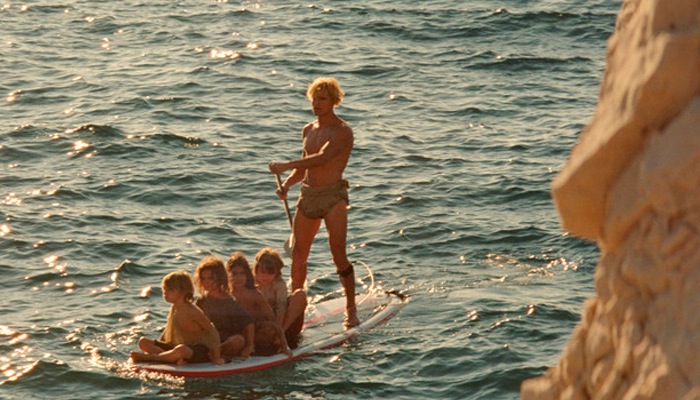
Greg Klymkiw at The Film Corner Proclaims: HYENA ROAD on BLU-RAY/DVD not worth buying due to omission of Maddin short

Home entertainment release of
dreadful Paul Gross film sans the
only reason one would ever want to
buy it. Soon to be available in
$5.00 Walmart Bargain Bins!!!

Hyena Road (2015)
Blu-Ray/DVD Review By Greg Klymkiw

Though the Paul Gross Afghanistan War folly Hyena Road is a disgrace, its real problem is that it's just plain bad as opposed to being the unmitigated stinker Gross's WWI tiptoe through the trenches Passchendaele was. That film at least had a passel of unintentional howls. This one, is bereft of even those meagre pleasures. Though Hyena Road was a theatrical flop, the Elevation Pictures/Universal Pictures Home Entertainment Blu-Ray/DVD has even more reason to tank and quickly find its way to the WalMart $5 bargain bins.

The admittedly well-transferred Blu-Ray comes on a pathetically extras-light edition. In addition to the risible film itself, it is accompanied by a few lame "making-of" featurettes which bear the unmistakeable stench of EPK. I was actually excited that the home release would be accompanied by the actual "making-of" film that the producers commissioned, the astonishing Bring Me the Head of Tim Horton: The Making of Hyena Road by Guy Maddin, Evan Johnson and Galen Johnson.

Alas, the makers and distributors of Hyena Road have chosen to NOT include the only thing that would have made the home entertainment version worth buying.

Feel free to read my trashing of Hyena Road itself HERE, my rave review of Bring Me the Head of Tim Horton: The Making of Hyena Road HERE and my delightful reports on how the film flopped at the box-office HERE and HERE and HERE.

Even more reasons to NOT waste your money buying Hyena Road on home video.

Cineplex Entertainment Honcho Mike Kennedy extols virtues of floperoo HYENA ROAD!

Thursday, 21 January 2016

BABES vs BEASTS in the Holy Land. READ Greg Klymkiw's Review of JERUZALEM now available for your pleasurable perusal on "Electric Sheep UK - a deviant view of cinema" and you will find the link to the review BELOW

JeruZalem, the Award-Winning Israeli Point-of-View Horror Film by the PAZ Brothers Opens Theatrically January 22nd 2016 in the USA via Epic Pictures Group and on January 29 2016 it opens theatrically in Canada via Video Services Corp. (VSC) and appears day-and-date with V.O.D. and iTunes.

Greg Klymkiw's ***½ review is available at
"Electric Sheep - a deviant view of cinema"
by clicking this handy-dandy link HERE
BEASTS and BABES in the Old City

Friday, 15 January 2016

INSIDE LLEWYN DAVIS - Review By Greg Klymkiw - Ultimate Coen Bros Classic on Criterion


Inside Llewyn Davis (2013)
Dir. Joel and Ethan Coen
Starring: Oscar Isaac, Carey Mulligan, John Goodman,
Justin Timberlake, Garrett Hedlund, Adam Driver, Max Casella, F. Murray Abraham

Review By Greg Klymkiw

When I first saw Joel and Ethan Coen's Inside Llewyn Davis, I must have been out of my mind. A few elements rubbed me the wrong way and I felt they kept the movie from achieving the kind of greatness I wanted it to have. Furthermore, though I moronically acknowledged the picture was full of individual moments of greatness (including one extended sequence in the middle of the film that's as great as anything the Brothers have done), I still kept thinking the movie had something wrong with it - this in spite of the fact that at the time I found it to be the most entertaining movie I'd seen in ages.

Then, it happened. I could not get the picture out of my head. The disarming tale of Llewyn Davis (Oscar Isaac), a broke, down-on-his-luck, couch-surfing Greenwich Village folk singer, dreaming of hitting the big-time, kept haunting me. Not only does the hero embark upon a very strange and telling odyssey to Chicago, he also loses a cat.

What was not to like? Nothing, it seemed.

Shot in a gorgeous almost-semi-monochrome colour by Bruno Delbonnel, vaguely inspired by the real-life late folk singer Dave Van Ronk and his posthumous biography "The Mayor of MacDougal Street" and replete with terrific musical numbers, mostly shot "live" and created in collaboration with the great T-Bone Burnett, the film compellingly plunged us into the world of Greenwich Village folksingers in the period just prior to Bob Dylan arriving on the scene and taking the world by storm.


Llewyn Davis is a serious-minded folksinger (and ultimately nothing like the gruff real-life Van Ronk) who's had to go solo since his partner in a performing duo took a dive off the (un-romantic, though oddly apt) George Washington Bridge and ended his already short life far too soon. Llewyn is broke and he hardly makes anything resembling a living as a folksinger. He hails from a working class background and is encouraged by his older sister to go back into the merchant navy. Llewyn will have none of this, though, and he continues to play whatever gigs he gets, surfs from couch to couch and borrows money left, right and centre.

He finds out his old girlfriend Jean (Carey Mulligan) is pregnant. Llewyn dallied with her behind the back of her current paramour Jim (Justin Timberlake) and now she wants an abortion since she's mortified that the baby growing in her belly might belong to the layabout itinerant she's come to despise. Llewyn is an old hand at abortions. Much of the money he earns is to pay for the extrication of unwanted spawn from his seed.

Llewyn also loses a cat belonging to a middle-aged academic Jewish couple who kindly provide him with occasional meals and a couch. The search for this cat becomes easily as obsessive as his search for fame. In fact, Llewyn's tale becomes fully anchored when he hitches a ride with two musicians (John Goodman and Garrett Hedlund) to Chicago so he can audition with a famed folk impresario (F. Murray Abraham, who proves again what a great actor he is and how utterly misused he's been in so many films unworthy of his talents).

It's this odyssey, involving a variety of bizarre conversations, strange goings-on and several sightings of the cat he's lost that, as mentioned above, is not only on a par with the very best work created by the Brothers, but serves as the true core of the film and as such, occasionally feels like a film unto itself.

So what was irking me about Inside Llewyn Davis? Well, I'm almost ashamed to admit this, but I must. The title character seemed like a major league loser - an offensively self-absorbed asshole who treats women like shit, using them as receptacles for his imperfect spunk, a bitter, bullying dipsomaniac who hurls invectives at those who can't possibly defend themselves against the force of his bile, an egomaniacal asshole who fucks up every opportunity to actually make a living as a musician in pursuit of a fame he might not even deserve and as such, is continually broke and in debt because of his pathetic "I will not sell out, attitude".

Nothing goes right for this loser and it's all his own fault.

This is a character I'd have normally loved.

God knows, I'm the last person in the world to crap on a film's character for being an asshole. So much of the 70s cinema I love is bulging with such characters, but on my first viewing I felt the stakes were so much higher than Llewyn's, the darkness those other characters were drawn to seemed more flamboyantly seedy (think James Toback's central characters in Fingers and The Gambler), that I found it borderline intolerable that the Coen Boys were rubbing my nose in the shit of someone so pretentious and inconsequential.

A loser folk singer? How could such a character appeal to me? Well, a lot really, but I was having a major brain fart the first time I saw the picture. In the days and weeks that followed, I could not only not get Inside Llewyn Davis out of my head, but the odyssey sequence I loved so much would have had no resonance without everything I idiotically couldn't stand about the film on the first go-round. In fact, the moments of humanity in the film wouldn't have had I the power they do. (A scene between Llewyn and his dementia-riddled father is not only worthy of the Coens' best work, but feels like a scene that could have been directed by John Ford if he'd been from their generation.)


I surmised that maybe, just maybe, this was a film that was really about the universal greatness inherent in those who've left their alternately rich and repressive hometowns behind for a better shot at making their dreams come true. This is certainly not unlike Bob Dylan, the Jew from Dinkytown in the land of Swedish milkmaids and stalwart car salesmen and Holiday Inn buffets, who appears briefly as a character at the end of the movie, signalling the beginning of his fame, the eventual acceptance of folk music in the larger world and sadly, one in which the film's title character would never achieve.

The movie is about fame as much as it is about talent. It's about having to know repression, real repression, to create great work that will resonate far beyond an insular community, even in a big city - one that Llewyn embraces more than he thinks he does. Maybe it's all about needing to understand - truly understand - what's both insular and heavenly in the same breath, hidden amongst those big open midwestern skies that look down upon the rolling prairies - a land that needed to be tilled by those without imagination, so that those with imagination could take what nurturing they needed before spilling out into the wider world.

When we discover that Llewyn has an illegitimate child from a few years earlier who doesn't even know he exists, we think that maybe his child, growing up in the middle of Buckeye-Fuck, Ohio will have the stuff Llewyn can't make work for himself.

The film is finally as sad as it is both joyous and funny.

Maybe, just maybe, Inside Llewyn Davis is the closest we'll come in this day and age to a film cinematically capturing the final words of Sherwood Anderson in Winesburg, Ohio wherein he writes:
"The young man’s mind was carried away by his growing passion for dreams. One looking at him would not have thought him particularly sharp. With the recollection of little things occupying his mind he closed his eyes and leaned back in the car seat. He stayed that way for a long time and when he aroused himself and again looked out of the car window the town of Winesburg had disappeared and his life there had become but a background on which to paint the dreams of his manhood."
Yeah, Inside Llewyn Davis was not worthy of my initial kvetching. It's a great film and soon after that first viewing I could hardly wait to see it again.

And again. And yet, again.

And now, released on the Criterion Collection, the again and again and again keeps multiplying exponentially.

I love it when I'm occasionally wrong. It makes the right so much richer.

THE FILM CORNER RATING: ***** Five Stars

The truly monumental director-approved Criterion Collection release of Inside Llewyn Davis is one of the Blu-Ray/DVD keepers of the new millennium. In addition to an astounding 4K digital transfer with a 5.1 surround DTS-HD Master Audio soundtrack on the Blu-ray, the disc features a new audio commentary featuring Robert Christgau, David Hajdu and Sean Wilentz, a new conversation between filmmaker Guillermo del Toro and the Coen brothers about the evolution of their approach, a forty-three-minute documentary on the making of the film, a new conversation between music producer T Bone Burnett and the Coens about folk music (with illustrations by Drew Christie), a new piece about the early sixties Greenwich Village folk scene featuring music writer and historian Elijah Wald, a short film by Dan Drasin documenting a 1961 clash between folk musicians and police in Washington Square Park, several trailers, an essay by film critic Kent Jones and the pièce de résistance of all the extras, Another Day, Another Time, a 101-minute concert documentary celebrating the music of Inside Llewyn Davis, featuring Joan Baez, Marcus Mumford, Punch Brothers, Gillian Welch, Jack White and many others.

A SPECIAL NOTE FROM THE 2013 THEATRICAL REVIEW

Albert "Al" Milgrom is the immortal nonagenarian gentleman scholar and godfather of cinema in the Coen Brothers' hometown of Minneapolis, Minnesota and they've paid a lovely tribute to one of the most beloved and important champions of film as art in America by having Adam Driver play a folk singer with the surname of Milgrom, though the character has already chosen a far more goyische stage name Al Cody. My jaw dropped when this near-hidden tidbit is revealed. Anyone who knows or loves The Great Man of Minneapolis Movie Mania will, no doubt, be infused with a warmth for the Brothers remembering and honouring a guy who's inspired more cineastes per capita than anyone in the U.S. of A. Milgrom has long been a fixture on the international film festival circuits and in Toronto during TIFF, he can often be seen furiously riding between his preferred digs at the Downtown YMCA and various screening venues on a rented bicycle. Earlier this year, he nearly killed himself whilst taking a horrific tumble during the Berlinale and only this past summer was returned from Germany to his beloved Minneapolis to continue his recovery. Way to go, Al.

Order this film directly from the links below and contribute to the maintenance of the Film Corner


Sunday, 27 December 2015

THE REVENANT - Review By Greg Klymkiw - There isn't even a revenant in this dull western

Leo Di Caprio vs Richard Harris
Who will survive? What will be left of them?

The Revenant (2015)
Dir. Alejandro G. Iñárritu
Scr. Iñárritu and Mark L. Smith
Starring: Leonardo DiCaprio, Tom Hardy, Will Poulter, Domhnall Gleeson, Forrest Goodluck

Review By Greg Klymkiw

Look, if I go see a movie called The Revenant, is it too goddamn much to ask that the movie be about a revenant? I'm not referring to some artsy-fartsy notion of a revenant - a man who has returned from certain death to wreak havoc and vengeance. No! I mean a goddamn REVENANT - a mean-ass supernatural mo-fo sharing properties of vampires, zombies and/or demons. Revenants are scary sonsabitches who delightfully did weave their grotesque way in and out of European, Nordic and West Indian folklore. Now, putting one of those suckers into a western, would genuinely kick solid ass.

Unfortunately, The Revenant is a new film by Alejandro G. Iñárritu, a filmmaker who wouldn't know kick-ass if it came and bit him on the, uh, ass. We all know this. We've seen the insufferable (and insufferably titled) Birdman or (The Unexpected Virtue of Ignorance) with its twee preciousness capturing the imaginations of film critics thinking they're, uh, smart or something and "sophisticated" audiences who are little more than pseuds looking for any excuse to crap on movies that might be even mildly entertaining. I won't even bother wasting bile on Iñárritu's previous works of dour schwance-stroking, but let it be said that he's managed to miraculously crap out another turd that's going to have way too many critics and award-givers handing out the gold.

Based loosely on the adventures of real-life frontiersman Hugh Glass, Iñárritu's film charts the tale of trappers on the run from a Native tribe on the warpath. When the trappers' chief scout Glass (Leonardo Di Caprio) is mauled by a grizzly bear, he's left in the care of his son (Forrest Goodluck) and a mangy psychopath (Tom Hardy). The psycho kills both son and father, leaving them behind with one whopper of a lie to tell everyone else. Well, it turns out Dad Glass isn't dead after all. He's hurt bad and mighty pissed off.

Still, it's going to take well over an hour of screen time to watch him lurch through the wilderness to catch up to the psycho and wreak vengeance. Lurching, crawling, hobbling, groaning and gurgling await us for over one whole goddamn hour. And once we get to the vengeance part, things continue to drag on and we get little more than an unsatisfying, artsy-fartsy version of revenge. No Joe Don Baker or Chuck Bronson shenanigans await us here.

On top of everything else, the movie is stuffed to the gills with all manner of noble, mystic savage nonsense attributed to the Aboriginal characters. That's because Iñárritu is an artist, don'cha know? Or rather, an artiste. (We know he's an artiste since he lets cinematographer Emmanuel Lubezki eke out a whole passel of picture postcards.)

Iñárritu's artist pedigree allows him to engage in typical outdated cultural gymnastics because he's a bit of a mystic, eh. He's got a whole lotta heady shit to say about the human condition, and good goddamn won't he be all high falutin' about it, too? Frankly, the only difference between The Revenant and The Ridiculous Six is that Iñárritu is not Adam Sandler, but because he's not, he'll NOT get crapped on, but will instead get one heapin' helpin' of those reverent accolades.

Who amongst them is the REAL man?

The story of Hugh Glass was previously made into Man in the Wilderness, a pretty enjoyable 1971 western by Richard C. Sarafian (who directed one of the greatest car chase movies of all time, Vanishing Point). It starred the always-intense Richard Harris as Glass and taking the role of the leader of the scum "whut-done" abandoned him, the film served up the manly, chortling old geezer John Huston. For our troubles in The Revenant, Iñárritu hands us the bearded, grunting monkey-boy Leo and, good gracious, the spindly Domhnall Gleeson. Thankfully, Tom Hardy acquits himself magnificently as the slurring, drooling psycho, but everyone else in The Revenant is so weighted down by the lofty seriousness of Iñárritu's "vision" that we might as well be watching it after being mauled by a big, old grizzly bear.

THE FILM CORNER RATING: *½ One and a half Stars.

The Revenant is in platform, followed by wide release through 20th Century Fox

Saturday, 26 December 2015

GREG KLYMKIW SELECTS THE FILM CORNER'S VERY BEST MOTION PICTURES OF 2015

So screw doing a mere 10 Best List of 2015. I stopped counting at 500. Yup, I SAW OVER 500 NEW feature films in 2015 (this being my pathetic average in these, my years of dotage). So, out of 500+ films seen, here is my Top 20 for 2015 (in alphabetical order). To qualify for inclusion, the film needed to score ***** 5-Stars. I've reserved the right, however, to name the Best Dramatic and Best Documentary Feature also. I've also included my picks in individual craft categories.

This list includes: 7 Documentaries, 7 Canadian Films
and 10 movies in languages other than English.


BEST FILM OF THE YEAR (DRAMA): SON OF SAUL by László Nemes
BEST FILM OF THE YEAR (DOCUMENTARY): HURT by Alan Zweig

GREG KLYMKIW selects the Film Corner's
TOP 20 Motion Pictures of 2015
in ALPHABETICAL order

click titles to visit original reviews
by Greg Klymkiw at The Film Corner/Electric Sheep


Cemetery of Slendor by Apichatpong Weerasethakul
Censored Voices by Mor Loushy
The Forbidden Room by Guy Maddin and Evan Johnson
Haida Gwaii: On the Edge of the World by Charles Wilkinson
A Heavy Heart by Thomas Stuber
He Hated Pigeons by Ingrid Veninger
How Heavy This Hammer by Kazik Radwanski
Hurt by Alan Zweig
Jack by Elisabeth Scharang
Leaving Africa by Iiris Härmä
Listen To Me Marlon by Stevan Riley
The Look of Silence by Joshua Oppenheimer
Mad Max: Fury Road by George Miller
Mekko by Sterlin Harjo
She Who Must Burn by Larry Kent
Spotlight by Tom McCarthy
Son of Saul by László Nemes
Stranger by Yerzhan Nurymbet
(T)error by Lyric R. Cabral, David Felix Sutcliffe
The Waiting Room by Igor Drljaca

BEST DIRECTOR (DRAMA): László Nemes, SON OF SAUL
BEST DIRECTOR (DOCUMENTARY): Alan Zweig, HURT
BEST ACTOR: Géza Röhrig, SON OF SAUL
BEST ACTRESS: Charlize Theron, MAD MAX: FURY ROAD
BEST SUPPORTING ACTOR: Louis Negin, THE FORBIDDEN ROON
BEST SUPPORTING ACTRESS: Missy Cross, SHE WHO MUST BURN
BEST ENSEMBLE PERFORMANCE: SPOTLIGHT
BEST CAMEO PERFORMANCE: Geraldine Chaplin, THE FORBIDDEN ROOM
BEST SCREENPLAY: László Nemes, Clara Royer, SON OF SAUL
BEST CINEMATOGRAPHY: John Seale, MAD MAX: FURY ROAD
BEST EDITING: Matthieu Taponier, SON OF SAUL
BEST PRODUCTION DESIGN: Galen Johnson, THE FORBIDDEN ROOM
BEST MAKEUP: MAD MAX: FURY ROAD
BEST SPECIAL EFFECTS: MAD MAX: FURY ROAD
BEST SOUND: SON OF SAUL
BEST MUSIC: Junkie XL, MAD MAX: FURY ROAD
BEST SHORT FILM: BRING ME THE HEAD OF TIM HORTON
by Guy Maddin, Evan Johnson, Galen Johnson
BEST SONG: "The Final Derriere" by Sparks, THE FORBIDDEN ROOM

Friday, 25 December 2015

SON OF SAUL - Review By Greg Klymkiw - Best Film of the Year & theNewMillennium


Son of Saul (2015)
Dir. László Nemes
Scr. László Nemes, Clara Royer
Starring: Géza Röhrig

Review By Greg Klymkiw

After seeing Son of Saul, I thought, well, there's not much reason to see anything else. It's a feeling that's certainly followed me throughout the myriad of pictures I've watched since, and even though some are very good, if not even exceptional, this extraordinary film by László Nemes is even suppressing films from my consciousness that I have seen before it - not just in the recent past, either. What Nemes accomplishes here as an artist is what we hope and pray great art will do.

I've only seen the picture once and I simply cannot shake its devastating effects. It has been seared upon my brain and weeks after seeing it, I keep playing the film over and over in my mind. The picture is beyond recollection, beyond reminiscence.

I feel that the act of seeing it is to finally experience a dramatic work, which is as close to bearing witness to events, emotions and experiences as any film I've ever seen. I feel that the act of seeing it is to finally experience a dramatic work, which is as close to bearing witness to events, emotions and experiences as any film I've ever seen. It's so grippingly real the sights and sounds feel like they're accompanied by a smell - pungent, horrific odours of death, filth, fire, rot and decay.

We know what occurred during the Holocaust, we know how insane and reprehensible genocide of any kind is, we know these things. We've seen Night and Fog, Shoah and Schindler's List, but I cannot think of any film which will ever do what Son of Saul has done.

Nemes places us in the very eye of this hurricane of devastation, this Hellfire on Earth, this 20th Century abomination which forces us to question how and why we continue to accept any hatred which is responsible for genocide.


Nemes and his co-writer Clara Royer spare nothing to plunge us directly into the madness of Auschwitz-Birkenau by the astonishing mise-en-scene of never leaving the face of Saul (Géza Röhrig), a Hungarian-Jew who works an "enviable" concentration camp job in the Sonderkommando. This group of prisoners are worked to the same levels of exhaustion as other inmates, but they are afforded a slightly loftier place in the pecking order of eventual extermination. They get slightly increased rations and slightly more "humane" work-shifts for herding their fellow Jews into the gas chambers.

The film begins with a group of prisoners forced to strip, then shoved into a shower room. Throughout the whole process, Nazi guards offer words of solace - placating the doomed prisoners with lies of a better life. Once locked into the shower room, Saul and his fellow Sonderkommando madly rifle through the clothing to extract all items of value as the screams of the nude prisoners pierce through the steel walls of the gas chamber.

Once the screams dissipate, Saul and the others drag the bodies ("the meat") out of the chamber, stack them, clean the chamber of all "filth" (urine and faecal matter expunged in both horror and death) and, of course, point out prisoners who are still alive.

These poor souls are shot or strangled. Some of them are selected by the "mad scientists" for autopsy in order to glean information as to how they survived.

It's here where Saul discovers a young boy who appears to be his son. He watches as the child is snuffed out and then tagged for autopsy. As if we, through Saul, have not already experienced a living nightmare, Nemes ramps things up even further.

The Nazis are attempting to beat the clock as the allies are ever-approaching and everything begins over again as new groups of victims are herded, stripped, gassed, piled like meat and transported to be burned.

Saul's goal is to keep up appearances, but to also obtain a proper Jewish burial for his son. The rest of the film is devoted to this, in addition to the ever-increasing pace of destruction.


The camera almost never leaves actor Géza Röhrig's face through any of this. It occasionally arcs around for us to get Saul's point of view, but these moments are fleeting and we can never escape his look of mad determination, whilst in the background, we see and hear the endless factory of death.

There is no musical score. If anything, the score is the soundscape of destruction - clangs, screams, gunshots.

Our senses are jangled, as actor Röhrig manages to keep the same face throughout, modifying it only slightly to move through the madness and achieve his goal. This might well be one of the greatest works any actor has done in any film.

The horror never lets up, but there is one sequence involving mass shootings and burnings as Saul fiercely attempts to achieve his goal, but to also convince some over-zealous Nazis that he is not to be shot and burned, that he is Sonderkommando. This sequence might well be the only time we will witness Hell on a movie screen - any movie screen. We are beyond jangled and pummelled here. The mise-en-scene forces us to experience Saul's elevated levels of horror.

The film continues to build to ever-intensifying crescendos of terror and Nemes inflicts a final cut to black that we don't see coming and winds us so painfully and horrendously that we physically feel the need to gasp for air.

This is a first feature for Nemes. One can't even imagine where he goes next as an artist, but with what he's created here, he has extraordinarily vaulted himself into the position of a Master.

There is, within the context of Saul's story, no hope, but the very act of experiencing it and bearing witness allows it anyway. No matter how devastated one is by the end, an overwhelming sense of hope swirls over us. We have experienced a work of art that we have had to experience. This is a film that defines the word "necessary".

Anything and everything we can do to urge others to see the film is our mission.

This is the hope.

The world needs to see this film and maybe, just maybe, there will be hope that the world can, because of this film, because of bearing witness, because of its mere existence, become a better place.

THE FILM CORNER RATING: ***** 5-Stars

Son of Saul is a Mongrel Films release and currently playing in Canada at the TIFF Bell Lightbox.

Thursday, 24 December 2015

THE HATEFUL EIGHT - Review By Greg Klymkiw - Tarantino DeliversThree-Hour, 70mm "Columbo" episode (sans Columbo) in the Old West: Notstupid or awful like Star Wars, mind you, and not as pretentious as TheRevenant.


The Hateful Eight (2015)
Dir. Quentin Tarantino
Starring: Samuel L. Jackson, Kurt Russell, Jennifer Jason Leigh, Tim Roth,
Michael Madsen, Bruce Dern, Demián Bichir, Walter Goggins, Zoë Bell,
Channing Tatum, Dana Gourrier, James Parks, Lee Horsley, Gene Jones,
Belinda Owino, Keith Jefferson, Bruce Del Castillo, Craig Stark

Review By Greg Klymkiw

I've loved every Quentin Tarantino movie since Jackie Brown. Though I much prefer The Hateful Eight to his overrated first and second features Reservoir Dogs and Pulp Fiction, I'm still not quite feeling the love I wanted to.

However, if you're going to see it, don't bother with the shorter digital version, and do whatever you can to see his longer 70mm roadshow version (complete with overture and intermission). For all its shortcomings, the picture is clearly meant to be seen on film, on a big screen and with all the old-style showmanship which contributes to its playability.

That said, try finding venues which can actually show the movie properly. Most theatre chains in North America (in Canada you can blame Cineplex), busted the IATSE projectionists' union many moons ago and you might be stuck with pimply ushers pathetically trying to unspool the picture.

I also reserve the right to like the movie a whole lot more on subsequent viewings.

Then again, I equally reserve the right to like it a whole lot less.


So why my mixed feelings? Well, on the surface, the picture has everything going for it. From Robert Richardson's first-rate cinematography to Ennio Morricone's evocative score and Yohei Taneda's stunning production design, the movie is visually sumptuous.

The ensemble cast never disappoints and Tarantino plugs plenty of his trademark smart-ass, deliciously foul-mouthed dialogue into their mouths. The characters are rich and varied for the proceedings as they unfold, though they often feel either archetypal or almost self-referential (to Tarantino more so than his cinematic influences) - taking a few small steps out of the norm, but maybe too small.

As well, whether in the snowy exteriors or warm interiors, compositions twixt Tarantino and Richardson capture both the intricate blocking and when necessary, superlative closeups which create indelible etchings of the myriad of compelling faces.

Is it the structure?

Not necessarily. I was pleased enough with the literary conceit of chapters to break the action up.

Is it the story itself? Well, as it tells the tale of two bounty hunters with diametrically opposed approaches to securing their quarry who, along with a variety of miscreants, all find themselves snowed in at an outpost on the trail to the next town, there's nothing especially wrong with it.

Though there's a lot more about it that should be right, but isn't.


Kurt Russell's John Ruth prefers to take 'em alive so his prisoner can go to trial and suffer by hanging, while Samuel L. Jackson's Major Marquis Warren has no time for such style - he shoots 'em dead, collects the bodies and dumps them in the hands of the law to collect his dough - no muss, no fuss.

Ruth's baggage is the bounty named Daisy Domergue (Jennifer Jason Leigh), a vicious, slovenly killer who feels close to the real-life Calamity Jane (the less-than-charitable Jane with weather-beaten face, stringy unwashed hair, a borderline psychopathic personality, manly features, obsessive characteristics and a history of poverty, dalliances with prostitution and a general illiterate, inbred, cracker barrel demeanour). This is all well and good. Jackson's saucy speechifying and Russell's incessant habit of belting Daisy in the face, are not without merit.

Where the story disappoints somewhat is that it's essentially a mystery with various members taking on roles as "detective" while others gum up the works as they're clearly not who they purport to be. On the plus side, every single character is a total scumbag. This is just fine, since many of them are damn entertaining and kind of likeable. (Bruce Dern is a favourite of mine in the movie and made me long for a Tarantino picture with him as the main character.)

It's the mystery itself which seems by rote. We know mysterious shit's gone down and that sooner or later we're going to get to the bottom of it. Unfortunately these almost procedural qualities are what tend to bog the picture down and the "ride", so to speak, along with various twists and turns feel so de rigueur that our attention span tends to wander amongst the unwieldy length of the piece. We're never especially interested in the mystery and oddly, it feels like a huge weight that hangs over everything. The mystery needs to be dealt with, but that's all it feels like. It's major a drag upon the eventual explosions of over the top violence and Tarantinoesque nuttiness.


The film also has an extremely rich subtext dealing with post-Civil-War America, but it often feels like it gets short-shrift by way of the overly-plotted aspects of the mystery itself which ultimately, is hardly that complex, lopsidedly feeling like the be-all-end-all of everything.

This is by no means a bad film, but the fact remains that it is fraught with longueurs applied to elements far less interesting than the subtext. To be bored during a Tarantino picture seems vaguely heretical, but boring it often is and no matter what engaging trappings are attached to the proceedings, we find ourselves impatiently gazing down at our respective time-pieces, wondering when the whole thing is going to be over with.

I'll take the longueurs here, though, over those in pictures like Star Wars: The Force Awakens which are ultimately about nothing, whereas the flaws attached to Tarantino's vision at least try to be about something.

I'll accept that anytime.

THE FILM CORNER RATING: *** Three Stars

The Hateful Eight plays in 70mm roadshow in select cinemas and digital everywhere else via The Weinstein Company

Sunday, 20 December 2015

GREG KLYMKIW SELECTS THE FILM CORNER'S VERY BEST HORROR FILMS OF MMXV (2015)


SHE WHO MUST BURN

GREG KLYMKIW SELECTS THE FILM CORNER'S BEST HORROR FILMS OF 2015

By Greg Klymkiw

2015 was a banner year for Horror Pictures! Anything included on this list was unleashed in Toronto via festival, theatrical and/or DVD or VOD in 2015 and garnered at least ***½ to ***** from Greg Klymkiw.

Thanks to great folks for showcasing them and hustling them like Raven Banner, Anchor Bay Entertainment Canada, Kino-Lorber, VSC, Focus Features, GAT PR, Clutch PR, Amberlight, VKPR, Toronto After Dark Film Festival, FantAsia International Film Festival, Blood in the Snow Film Festival, Toronto International Film Festival, Hot Docs Film Festival, The Royal Theatre, TIFF Bell Lightbox, Bloor Hot Docs Cinema. (If anyone's been left off, it ain't personal)

Almost all of these are indies.

Eight of them are Canadian (No surprise here, Canucks are major sickos).

Five of them are not in English.

One of them is even a documentary for Christ's sake!!!

Click on the titles to see my original review.

They're in alphabetical order, too, eh.

ANGUISH, AVENGED, BITE, BASKIN,
BUNNY THE KILLER THING
THE DARK STRANGER, GOODNIGHT MOMMY

ANGUISH by Sonny Mallhi
AVENGED by Michael S. Ojeda
BASKIN by Can Evrenol
BITE by Chad Archibald
BUNNY THE KILLER THING by Joonas Makkonen
THE DARK STRANGER by Chris Trebilcock
DEMON by Marcin Wrona

DEMON, A GIRL WALKS HOME ALONE AT NIGHT,
THE HALLOW, THE HEXECUTIONERS,
THE INHABITANTS, THE INTERIOR, LET US PREY

A GIRL WALKS HOME ALONE AT NIGHT by Ana Lily Amirpour
GOODNIGHT MOMMY by Veronika Franz, Severin Fiala
THE HALLOW by Corin Hardy
THE HEXECUTIONERS by Jesse Thomas Cook
THE INHABITANTS by Michael Rasmussen, Shawn Rasmussen
THE INTERIOR by Trevor Juras
LET US PREY by Brian O'Malley

THE NIGHTMARE, SHE WHO MUST BURN, SINISTER 2,
THE SUBLET, THE UNWANTED,
WE ARE STILL HERE, WHITE RAVEN

THE NIGHTMARE by Rodney Ascher
SHE WHO MUST BURN by Larry Kent
SINISTER 2 by Ciarán Foy
THE SUBLET by John Ainslie
THE UNWANTED by Bret Wood
WE ARE STILL HERE by Ted Geoghagan
WHITE RAVEN by Andrew Moxham

THE FILM CORNER'S INDIVIDUAL ACCOLADES FOR HORROR IN 2015:

Best Direction: Larry Kent, She Who Must Burn
-tied with- Marcin Wrona, Demon
Best Screenplay: Larry Kent, Shane Twerdun She Who Must Burn
Best Actor: Itay Tiran, Demon
Best Actress: Katie Findlay, The Dark Stranger
Best Supporting Actor: William Katt, The Unwanted
Best Supporting Actress: Enni Ojutkangas, Bunny The Killer Thing
Best Cinematography: Pawel Flis, Demon
Best Editing: Michael Palm, Goodnight Mommy
Best Production Design: Sergio De La Vega, A Girl Walks Home Alone at Night
Best Music: tomandandy, Sinister 2
Best Makeup: Jason Derushie, Amanda Wood, Bite
Best Sound: Entire Sound Team, The Interior
Best SFX: Entire SFX/VFX Team, Bunny The Killer Thing

Special Accolade: Funniest Goddamn Horror Film of The Year:
Bunny The Killer Thing

Special Accolade: Scariest Goddamn Documentary Ever Made: The Nightmare

Saturday, 19 December 2015

THE INHABITANTS - Review By Greg Klymkiw - Beantown-Based Bros Deliver New Goods


Elise Couture in the shower!!!
The Inhabitants
Director/Writers:
Michael Rasmussen,
Shawn Rasmussen
Starring:
Elise Couture,
Michael Reed,
India Pearl,
Judith Chaffee,
Rebecca Whitehouse

Review By
Greg Klymkiw


What's not to like about the Rasmussens? Those sicko siblings from Beantown wrote an ideal screenplay for John Carpenter (The Ward) and loaded it with babes in an asylum. Their directorial debut, Dark Feed, had a zero-budget movie crew shooting a horror movie (with babes, 'natch) on location in an abandoned asylum.

Now they've concocted a whole new delight.

With The Inhabitants, the Rasmussen Brothers drag you into a labyrinth of utter terror in this creepy, atmospheric haunted house thriller in the tradition of classic horror cinéma from masters like Robert Wise (The Haunting), Jack Clayton (The Innocents) and Val Lewton (uh, all of them, but notably The Curse of The Cat People and I Walked With a Zombie). There are even of dollops of homage to Dan Curtis (Burnt Offerings), John Hancock (Let's Scare Jessica To Death) and Peter Medak (famed Canuck horror classic The Changeling). Make no mistake, though, this is no geek tribute mash-up. Though the inspirations are clear, the boys have generated a rip-snorter which works in its own horrific ways in a contemporary context.

What's in there? Implements, perhaps?

In spite of its ultra-low budget pedigree, the picture looks terrific, especially since it was shot on location in the historic (and creepy) 1699 New England domicile, The Noyes-Parris House. It was owned by the (in)famous whack-job Rev. Samuel Parris, daddy-kins of Betty Parris and uncle to Abigail Williams, the two bratty sicko gals who made the accusations that led to the Salem Witch Trials.

IMPLEMENTS OF BIRTHING

These Rasmussen Beaux are mighty ingenious. They know how to stretch a buck so it doesn't look like a buck and on top of that, with their two first features, they managed to secure locations and use them well - locations that many low budget filmmakers would never know how to sniff out (and even if they did, they'd find excuses not to use them, or worse, use them improperly).

The Inhabitants begins with a nice slow burn. There are few rocky moments in this expositional portion of the film (mostly involving a slightly wooden performance from one of the supporting players), but at least these moments are bracketed by an eerie credit sequence and one excellent super-creepy performance by Judith Chaffee as a dementia-addled old woman. Once the movie blasts off, and this doesn't take long, you pretty much perch yourself on the edge of your seat and stay there.

One can never get enough of Elise Couture in the shower.

The Coffeys, Jessica (Elise Couture) and Dan (Michael Reed), are a young couple on the verge of making their dream come true. Dan has a well paying job which occasionally calls him to the big city and his hot wifey has always wanted to run a bed and breakfast - a perfect scenario for them to start a family. Whilst getting a tour of an old New England home already outfitted as such, they have, alas, no idea what they're going to be up against.

Its former owner, Aunt Rose (the aforementioned Chaffee) is about to be shoved into an assisted-living asylum by her babe-o-licious real estate saleslady niece (Rebecca Whitehouse). It seems Rose ran the place for decades with her late hubby, but since his death, she's pretty much fallen to pieces. Even as Jessica and Dan view the property, Rose glowers at them with a combination of fear and malevolence.

The entire house is outfitted with a combination of extremely old (antique) and relatively new furnishings. When asking about this cornucopia of chattels, the niece innocently declares that "the furniture belongs to the house". Little does she, nor its new owners know, that plenty more belongs to the house.

Our sexy couple (he's a handsome, well-hung hunk and she's one fetching straight-haired-brunette drink o' water with a bod fit for a girl-next-door Playboy model) are plenty happy with the place, but even they're scratching their noggins over Aunt Rose's parting words to them:

"Take care of the children."

BATTY AUNT ROSE and CREEPY UNCLE NORMAN

Turns out old, batty Rose and her departed hubby (hilariously named Norman) never had kiddies. Curiously, Lydia (India Pearl), the wife of the original owner of the "March Carriage House" from some 350 years back was, like doddering Aunt Rose, a barren woman. No matter, the long-departed Lydia faithfully served as a midwife to the earliest colonists, bringing many little ones into the world. (This explains the creepy "birthing chair" with straps and faded blood stains our couple find in the basement along with a set of grim-looking implements which seem better employed at an abattoir.)

Lydia, of course, was eventually hung as a witch. Soon after, many of the community's children went missing and were occasionally spotted wandering in the woods as if Lydia was beckoning to them. (Hint-Hint: Lydia has already been attached in this review to an actress. Figure it out, eh.)

Once the insanely attractive Coffey couple has settled into the joint, we soon get a crap-inducing scary sequence where nutty Aunt Rose makes an unexpected appearance in the middle of the night. Later on, Aunt Rose makes another appearance where she bares her bloodied, pus-ridden chest and utters:

"The children need to be fed."

IT IS IMPORTANT FOR HORROR FILMS
TO HAVE BABES (for the fellas) &
WELL-HUNG HUNKS (for the ladies).

Clearly, none of this bodes well.

The Inhabitants, though hardly the most original ghost story in the world (though it gets points for the witch background and the clearly butcher-like midwifery), is an extremely effective one and its final two thirds emit plenty of shudders, shocks and, you guessed it, bloodletting.

Throughout, there are the requisite bumps and creaks in the night, plenty of shadows moving about, several chill-inducing Ghost-Cam POVs, some superb bathtub-shower shenanigans, one especially hot sex scene (mediated via a perspective best experienced when you see the movie) and eventually some heart-stopping appearances of shit nobody wants to see anytime, anywhere - especially not in a creepy old house with way too many secret nooks and crannies full of all sorts of grotesqueries.

Don't fall to the floor with THIS coming your way.

On their own, Jessica and Dan respectively discover some really freaky secrets which affect them, predictably, but realistically within the context of the story, in terms of their loving marriage turning into something altogether malevolent. (Oh, and not that it gets to the extremes of Lars von Trier, there's even a dollop of scare-inducing gymnastics which place you in shuddery AntiChrist territory.)

Overall, this is a superbly crafted little picture - nicely shot and edited with the kind of skill one demands of any horror film - happily with a minimum of shock cuts, but plenty of shocks nonetheless. The Rasmussen Brothers have served up another nicely crafted genre delight and one that moves them forward as well as signalling even greater things to come.

One of the nice things is that they have unconsciously, I think, infused the movie with the kind of indigenous regional qualities which enhance such low budget indie horror items. It's the cherry on the sundae, so to speak. A nice, blood red cherry at that.

THE FILM CORNER RATING: **** 4-Stars

The Inhabitants is distributed by Gravitas Ventures and can be accessed via multiple VOD platforms including iTunes, Amazon Video, Vudu, Google Play, Xbox LIVE, Sony Playstation, various cable providers, and more. Alas, the picture really warranted some manner of big-screen play, but no matter. It's out there and available.

THE INHABITANTS WILL BE AVAILABLE ON BLU-RAY VIA FilmRise. FEEL FREE TO ORDER A COPY FROM THE AMAZON LINK BELOW. DOING SO WILL CONTRIBUTE TO THE ONGOING MAINTENANCE OF THE FILM CORNER:

Friday, 18 December 2015

ARABIAN NIGHTS - Review By Thomas Zachary Toles - The Captive Storyteller in Gomes Epic


Video Services Corp. (VSC) presents its Canadian theatrical release of 2015's most ambitious and unique cinematic experiences in Montreal, Vancouver and Toronto. A major hit at Cannes and TIFF, Arabian Nights (2015), directed by Portuguese auteur Miguel (Tabu) Gomes is an epic six-hour contemporary masterpiece presented in three parts: Vol. 1, The Restless One / Vol. 2, The Desolate One / Vol. 3, The Enchanted One. This revolutionary trilogy begins in Montreal – Cinema du Parc (3575 Avenue du Parc) on December 18, 2015, then begins in Vancouver – Vancity Theatre (1181 Seymour St) on January 1, 2016, and last, but not least in Toronto – TIFF Bell Lightbox (350 King St W) on January 8, 2016.

The Film Corner is pleased to present its guest critic (and lecturer, actor, director, Rhodes Scholar), Thomas Zachary Toles, to share his thoughts...


The Captive Storyteller: Arabian Nights by Miguel Gomes

Film Corner Guest Review
By Thomas Zachary Toles


When your episodic epic is over six hours long, you have plenty of time for scathing social critique, deadpan comedy, magical realism, documentary-style interviews, and an impressive number of dick jokes.

The sweeping three-part Arabian Nights by Miguel Gomes uses the familiar structure of the classic folktale collection to celebrate and contemplate the need for stories during a crisis (in this case, massive unemployment and fiscal inequality in Portugal). As Scheherazade (Crista Alfaiate) explains, stories “spring from the wishes and fears of man” and, fated as she is herself to hold an audience’s attention she quite literally affirms that stories “help us to survive.”

Whereas Federico Fellini uses Marcello Mastroianni as a fictional surrogate for himself in , Gomes becomes his own Guido Anselmi in Arabian Nights, slipping himself into the prologue--the filmmaker as both fictional character and documentary subject.

Interviews with laid off Portuguese shipyard workers are intercut with footage of an attempted wasp cull, a hazy metaphoric link that the director claims to be too stupid to clarify. Gomes describes himself in these early scenes as pretentious, idealistic, and cowardly. He literally runs from the Arabian Nights project, apparently riddled with doubts about his ambition and competence.

With these self-referential moments, Gomes thematically links his own status as a filmmaker to Scheherazade’s status as the imprisoned storyteller of Arabian Nights. While Scheherazade must always tantalize her audience night after night or be killed, Gomes sees the fate of his country hanging in the balance. The director feels a grave responsibility to respond to the draconian austerity measures across his country, yet is tormented by the thought that his creativity could fail him when he needs it most.

The prologue that introduces Arabian Nights, ostensibly takes a cinéma-vérité approach that suggests a certain faithfulness to “reality” while simultaneously employing a surreal indirectness that bleeds into fantasy. The sequence sets up a crucial collation for Gomes: that of fiction and so-called historical fact.

When the film crew is buried in the sand and Scheherazade takes control of the film’s narration, Gomes imposes his conviction that “imagination and reality have never been able to exist without each other”.


The fantastic elements of the film exist in relation to recognizable human impulse. Moments of magic sometimes serve to highlight contradictions in characters’ thought, as when the expert bird-trapper, Chapas, begrudgingly frees an old, sick genie trapped in a net. In other sequences, magical instances provide an intangible space for characters to connect with each other.

One tale, “The Tears of the Judge,” comically depicts a judge’s frustration as she unravels an increasingly ridiculous and convoluted chain of guilt. The judge becomes so overwhelmed that she rejects everyone in their stupidity, evilness, and despair, lowering her head in surrender. Then, impossibly, the judge is heartened by a sign language pardon that she cannot see. The language of mercy is shown to operate on an extra-sensual level.

The mystical elements of Scheherazade’s tales are knit into the fabric of the world, unsurprising to the characters that encounter them. Strikingly, even the most outlandish tales are filmed with a degree of asceticism. Gomes presents wind spirits, beached mermaids, and talking cows without spectacle, conscious that such inventions are no less comprehensible than the moral bankruptcy of Portugal’s leaders.

Gomes’s lack of visual extravagance in no way limits the aesthetic impact of Arabian Nights. The film’s delicate restraint can be exquisitely devastating: a fugitive patiently eats beans in the dark as officers on horseback gather behind him; Scheherazade and her father discuss her incarceration as they ride a dreamy Ferris wheel on the beach; a mirror is lowered by a dog leash towards the window of an apartment where a couple has committed suicide.

Gomes is fascinated by actors’ bodies, using long takes to capture the way they amble through landscapes or sunbathe nude on a roof. Such attention has an empathic effect. We spend so long watching Simão “Without Bowels” (Chico Chapas) wander, as he staves off the isolation of exile through the offerings of others, that when we are finally told that he has murdered his family, his corporeal vulnerability is entrenched in our minds.

Gomes’s film suggests that stories are as essential to the survival of the Portuguese people as to Scheherazade. Her real world counterparts also face miserable restrictions by tyrannical “kings.”

Heartbreaking testimonies from the unemployed people in “The Swim of the Magnificents” attempt to make sense of life in the aftermath of economic crisis (one man hands out over a thousand CVs until he feels his identity has dissolved). Gomes knows that storytelling done right expands our empathy, helping us to take hold of incomprehensible events that leave us adrift.

The disenfranchised people of Portugal form a chorus of Chaffinches, cruelly trapped, singing beautiful songs for those with the patience to listen.

And, seeing the morning break, the film critic fell silent.

THE FILM CORNER RATING: ***** 5-Stars

Video Services Corp. (VSC) presents

Arabian Nights:
Vol. 1, The Restless One
Vol. 2, The Desolate One
Vol. 3, The Enchanted One


A trilogy by Miguel Gomes

Begins in Montreal – Cinema du Parc (3575 Avenue du Parc)
December 18, 2015

Begins in Vancouver – Vancity Theatre (1181 Seymour St)
January 1, 2016

Begins in Toronto – TIFF Bell Lightbox (350 King St W)
January 8, 2016

Thursday, 17 December 2015

ARCHIE'S BETTY - Review By Greg Klymkiw - Personal Search for the "real" Archie delights


Archie's Betty (2015)
Dir. Gerald Peary

Review By Greg Klymkiw

Who in their right mind didn't read Archie Comics? Millions upon millions of fans all over the world dove into the world of this loveable carrot-topped high school student who lusted after the mega-hot brunette Veronica, but who alas, couldn't always see the forest for the trees - that the best romantic bet was (the equally hot) blonde Betty.

Dappled with a lovely array of supporting characters, Archie comics presented a riotously funny and culturally astute world of average clean-cut teenage life in post-War America. Keeping a happy non-political microscope trained upon these kids, we were able to follow their adventures all the way through the Korean War, Vietnam War, the Cold War, massive social upheavals, student unrest, the civil rights and all those turbulent anti-war/anti-draft movements. If you slavishly devoted yourself to Archie comics, you'd ever know any of that stuff was happening anyway. Archie provided a safe haven for all.


The villains, if they can even be called that, included the conceited rich boy Reggie and the teachers/administrators of the sleepy Riverdale high school. Even the latter weren't really villains in any traditional sense, they just wanted the kids to stop goofing off and do well in school.

No Red Skull, Doc-Ock or Doctor Doom plagued the kids of Riverdale.

For me, I restricted my Archie reading to the Saturday colour comic pages and daily B/W strips in the newspaper. Being a snob even back then, I'd never be caught dead actually buying Archie in any comic book store. Those purchases were left up to my little sister. I would, however, read all her Archie comics in a tantalizing closet of shame (replete with Portnoy-inspired Mounds wrappers for added intimacies).

For years, though, I harboured a grudge against Archie. All the comic books in our family home were stored in cardboard boxes in the basement. During a horrendous sewer flood, my Dad insanely tried to save as many of my comic boxes as possible. Some of them "drowned" forever. Alas, poor, desperate Dad couldn't distinguish between what was painstakingly marked on the boxes in bold, black felt. Upon surveying what was saved, I discovered that all my precious Golden Age Marvels - most of which would have increased in value (to the tune of thousands of dollars) - were lost forever. What remained were several boxes of my sister's Archie Comics.

The aforementioned tragic event occurred 25 years ago and remained as a black stain upon my heart the whole time. Luckily, filmmaker/critic Gerald Peary's sweetly obsessive feature documentary, Archie's Betty, was what finally restored my faith in the ageless carrot-top of Riverdale.


Before succumbing to his eventual dotage, Peary chose to embark upon an incredible journey with his co-producer Shaun Clancy to seek out the real-life inspirations for original cartoonist Bob Montana's Archie comics. And yes, they're out there. They exist. Archie and all his friends are living, breathing entities. (Well, some more living and breathing than others, but surely you catch my drift here.)

Using a nice array of archival materials, graphics, personal reminiscence and interviews, Archie's Betty proves to be a lovely, nostalgic journey into the very thing which captured (and continues to capture) the imaginations of loyal readers and aficionados numbering in the mega-millions. What's especially engaging is that the picture is rooted in Peary's own personal obsession with Archie. As such, the picture has a gentle rag-tag quality with Peary himself narrating the story. Playing beautifully with the fanboy aesthetic, he's crafted a fine documentary which sprints along nicely with the sprightly cutting of editors Aleksandar Sasha Lekic and David Reeder.


He spins the true-life yarn of a young Jewish kid (Peary himself), the first in his family to be born in America. He discovered Archie comics on trips with his Dad to the local Flat-Top-styling barbershop in his hometown. Peary's parents, having fled the horrors of Jew-hating Nazis and Pogrom-happy Russian Cossacks, hilariously and ironically lived in a variety of American locales in which they were the only Jews for hundreds of miles. (In a contemporary context this is not unlike being the only Muslims living in Alpena, Arkansas.)

Here, the geeky, bookish, movie-loving Peary (who eventually became one of America's most esteemed film critics) found plenty of laughs, solace and boners (mostly over Betty). Acting on a good tip, Peary begins his pilgrimage to Montana's hometown - Haverhill, Mass. Peary's obsession leads him (and us) on a Willard-like quest up the big river known as America. Seeking neither Col. Walter E. Kurtz, nor the Heart of Darkness, Peary ferrets out all of Archie artist/scribe Bob Montana's old girlfriends, pals and acquaintances.

Mysteries abound. Some folks clearly seem to be inspirations for the beloved comic book, others appear to be amalgams. Many are still living. Some are dead and here Peary must place a Deerstalker cap upon his brainy, fevered noggin to piece together the lives of those who've joined the late Montana in the clouds of comic book Heaven.

What drives Peary like a cattle stampede in a John Ford western, is Betty - Blonde Betty - the love of Peary's early manhood. the real-life Betty - Archie's Betty. This is the most compelling and deeply moving search of all and the results are guaranteed to open the ocular sluices.


The journey will be a treat for all, but none more so than Archie fans young and old. In fact, Peary's film is so delightfully and humorously reverent, that it will no doubt add even more lucre into the gaping, bottomless maw of Archie Comic Publications Inc. And yes, the film not only helped me make peace with my Archie enmity, but thanks to one of Peary's interview subjects, the Archie expert Natalie Pendergast, I learn that her perspective is one that must have been shared by generations galore. As she explains:

"Before I knew anything about comic book theory or the scholarship of the comic and graphic novel, I was first a huge fan of Archie comics as a young child. As a girl I felt like I could relate much more to the characters. because of the scenarios - romantic, focusing on problems with friends, parents, school difficulties and what-not."

I thought about my little sister, over forty years ago and even my young teenage daughter now, at least ten years younger than the astute Pendergast, and the generations upon generations of young women who sought out Archie for those things that were more familiar than the usual macho posturing of comics. Hearing Peary's tales and then experiencing as he finds real-life inspirations for these characters, made me think of my own deeply submerged love for Archie.

I look at those rescued boxes of 40 year old Archie comics differently now. I sometimes even open the lids and reach into the treasures within and enjoy them now, not just in a closet, but openly and delightedly as I share them with my own little girl who now has the real thing to cherish in addition to her huge collection of thick, paperback-bound Archie comic compilations.


If anything, Archie's Betty places Bob Montana and the Archie Comic Publication's work within the context of being based on real people and as such, continues to speak to kids of all ages, all over the world, for God knows how many more generations.

Or, as Archie oft said, "Fantastic!"

THE FILM CORNER RATING: **** 4-Stars

Archie's Betty is currently in platform release in the USA in cinemas, cinematheques film festivals and comic book conventions. Feel free to visit the official website for more information HERE and to buy it on DVD click HERE.

In Canada, the official Canuck premiere will be in early 2016 as
a theatrical engagement at the Bloor Hot Docs Cinema in Toronto.