Showing posts with label Espionage. Show all posts

Wednesday, 26 July 2017

ATOMIC BLONDE - Review By Greg Klymkiw - Special screening at Fantasia 2017 of this lifeless, empty, boring espionage action thriller, not so special.

Charlize kicks ass, but the movie does not.

Atomic Blonde (2017)
Dir. David Leitch
Scr. Kurt Johnstad
Nvl. Antony Johnston, Sam Hart
Starring: Charlize Theron, James McAvoy,
John Goodman, Eddie Marsan, Sofia Boutella, Toby Jones

Review By Greg Klymkiw

When a movie featuring Charlize Theron kicking ass and engaging in explicit lesbian action (with nudity, no less) during the waning days of the Cold War in Berlin turns out to be a big fat boring mess, the disappointment is enough to hurt. Adding insult to my injury is that I had the distinctly extraordinary experiences of being in East Berlin before the wall came down (in 1988) and actually being in Berlin when the damn wall did finally come down (in 1989). My sufferance through the overall period/atmosphere inadequacies of Atomic Blonde (no matter how many "period" tunes have been annoyingly stuffed onto the film's soundtrack) is all the greater.

Though screenwriter Kurt Johnston (adapting the Antony Jonston/Sam Hart graphic novel) loads up on the tropes of espionage thrillers, he does so with the kind of ham-fisted inadequacy that makes the whole affair unnecessarily obtuse and worse, so that we finally don't care about any of the characters and/or proceedings. I was forced to almost constantly check the time, agog at how slow and dull it all was.

Director David Leitch (co-director of the much-better-written John Wick) at least knows how to stage all the action sequences (especially one delicious set piece that feels like it's all one long take) so that we're not annoyed by the usual herky-jerky on display in virtually every other contemporary action movie, but sadly, his efforts are all for nought since none of these ultra-violent extravaganzas have anything more going for them than the craft itself. We have no emotional stakes in anything or anyone and as such, we're bored to distraction when the film's onscreen participants are being shot and/or pulverized.

For those who care, the picture details the attempts of super-blonde British super-spy Lorraine Broughton (Charlize Theron) to extract an East German political prisoner (Eddie Marsan). A dirty double-dealer (the dullishly smarmy James McAvoy) gums up the works whilst a lesbian wannabe spy (Sofia Boutella) beds down our heroine and places herself at great risk. All of this nonsense is relayed in flashback as Lorraine is interrogated by her boss (Toby Jones) and a C.I.A. bureaucrat (John Goodman). None of this carries any weight or interest and is certainly bereft of the grand atmosphere inherent in works such as the classic John le Carré film adaptations like Martin Ritt's The Spy Who Came in From the Cold, Tomas Alfredson's Tinker Tailor Soldier Spy and the better James Bond efforts with Sean Connery.

Atomic Blonde is Dullsville - from beginning to end. And oh, does it end. It has one of those interminably predictable endings upon endings upon endings. Not caring about plot and character is one thing, but being boring is the picture's greatest sin.

THE FILM CORNER RATING: * One-Star

Atomic Blonde, a Focus Features release had a Special Screening at Fantasia 2017.

Thursday, 29 June 2017

Army of Shadows (L'armée des ombres) - Review By Greg Klymkiw - Grim, Haunting Portrait of Collaboration and Resistance at Toronto's TIFF Bell Lightbox in summer 2017 series "Army of Shadows: The Films of Jean-Pierre Melville" and, via a gorgeous (O.O.P. limited availability) Blu_Ray/DVD via the Criterion Collection

Collaboration is a dirty business. So is Resistance.

Army of Shadows AKA L'armée des ombres (1969)
Dir. Jean-Pierre Melville
Nvl. Joseph Kessel
Starring: Lino Ventura, Simone Signoret, Jean-Pierre Cassel,
Christian Barbier, Paul Crauchet, Claude Mann, Paul Meurisse, Serge Reggiani

Review By Greg Klymkiw

Collaboration is a dirty business. So is resistance. In an occupied country, both will thrive, yet seldom have either been more grim, mean and downright foul than in France during World War II.

Jean-Pierre Melville's film adaptation of Joseph Kessel's fictionalized version of his own real-life experience during this shameful period of 20th Century French History is not only a masterpiece, but it might be one of the most heroic depictions of the French Resistance ever made. That said, Melville's brand of heroism is replete with relentless outrage and deep, deep anguish.

Army of Shadows (L'armée des ombres) will be a bitter pill for any audience to swallow, but its necessity might be more urgent now than ever. "Occupation" of one country by another has become especially endemic to the ongoing and mounting political strife plaguing our world in this century and has resulted in the kind of "collaboration" and "resistance" that ripped the guts out of France and so many other European countries during the Second World War. One of the most fascinating features/attributes of Melville's picture is the fact that it stands before us as a film made almost half a century ago, about events that occurred almost one quarter of a century before the film itself was made, and yet here we sit, now, looking at it, our jaws agape over the cruelties and complexities the movie depicts, and realizing, ever-sadly, how so little, how so goddamn little in our world has actually changed.

It's a movie of universal qualities. The picture comes by them due to the strange narrative and stylistic structures Melville has chosen to infuse it with, all of which place us in a world that, from beginning to end, knock us off-kilter, keep us on edge and finally instil in us a dread that its events, which once happened, are indeed happening now and will happen again and again if we do not, by both acknowledgment and action, recognize and work towards ensuring that it stops.

Melville creates a film here that rubs our noses in the fact that our very nature as human beings is highly susceptible to the damage caused by occupation and how the inevitable resulting collaboration with occupying forces yields the kind of self-serving selfishness (the selfishness of survival, if you will) which gives way to the kind of inhumanity that even resistance can engender.

So how then, does he do this?

The first thing Melville chooses to greet us with are words.

Popping up from deep black, brilliant white typeface announces:

"Unhappy memories! Yet I welcome you...You are my long lost youth..."

My God, was there ever an epigram infused with more truth?

There is no elegant fade to black from these words, no gentle dissolve. Melville jolts us with a cut and the beautifully composed long shot he bestows upon us is that of the Arc de Triomphe de l'Étoile, that glorious symbol of France's victories over those who would dare profane French soil - a testament to the fallen warriors of the Revolutionary and Napoleonic Wars and, indeed, the resting place of the Tomb of the Unknown Soldier from World War I.

The Eiffel Tower might well be the ultimate symbol of Paris, but situated at one end of the Champs-Élysées, smack in the middle of the now-named Place Charles de Gaulle, but the more evocatively once-named Place de l'Étoile, the imposing Arch of Triumph remains, for most of us, the definitive apogee of France itself.

And we sense, immediately, that something is amiss. It's not the shot itself, nor is it the the drumbeats and marching feet from a line of soldiers on parade that slowly creep onto the soundtrack and intensify, but rather, it's the sky towering above the grand arch, so grey, so weirdly forbidding in the drabness of the clouds that makes us uneasy.

The camera never moves - or so it seems. Initially, the soldiers are so far away from us they're dwarfed by the Arch itself. As the parade gets closer and the music and marching become ever-cacophonous: beats, bleats, blasts and finally a blare - we're jolted into reality and the camera does indeed shift, ever-so subtly for us to realize that the soldiers are Nazis. As they get closer, filling the frame, defaming the composition of the Arch itself, our nerves are jangled.

And we are sickened.

Things don't get brighter. Melville bestows the rest of the opening of the film in swathes of dull blues, greens and greys as we're introduced to the well-groomed civil engineer Philippe Gerbier (Lino Ventura) who is being driven to a prison camp filled with "enemies" of the collaborationist Vichy government of France, the ruling bureaucracy which has prostrated itself before the Germans who have swallowed the country whole as an occupying force.

Dirty Nazis.

Dirtier still are the French - or rather, those Frenchmen who betray their soil, their nation and their people to serve the foul occupiers.

Phillipe is treated by his captors in a relatively gentlemanly fashion. Housed in a barracks that was ironically designed by the French to house German officers, but is instead now populated by Frenchmen, the pensive, almost bookish prisoner has little regard for his fellow captives, until he takes a shine to a bright young man who proposes a brilliant plan of escape.

This will be our (and Phillipe's) first taste of betrayal in the film. The vibrant youthful co-conspirator sells out our hero to the Vichy pigs and he soon finds himself transported to a Nazi facility. Phillipe escapes (quickly, efficiently and shockingly engineered) and we eventually find him ensconced on the Riviera where he leads the French Resistance movement.

From here, the film charts a series of resistance movements - some successful, and others scuttled by either circumstance or worse (and most often), betrayal. Occupying forces count on the Judas Kiss and Melville's film doesn't spare its characters from being forced to sell out. Then again, and most tragically, the film doesn't save several other characters from refusing to turncoat, and what awaits them is torture and inevitably, agonizing death. And though we see numerous instances of characters succumbing to the equivalents of the "death-by-a-thousand-cuts", Melville conversely doesn't spare an equal number of them from being snuffed out brutally and swiftly.

Throughout his career, Melville 's approach to on-screen violence was unique in its savage efficiency and in Army of Shadows, we are "treated" to several instances of this, so ferocious in the barbarity of the acts, that we're forced to cringe and gasp through several agonizing stranglings, stabbings, beatings and shootings. From a tea towel garrotte wrenching a traitor's last gasps of air to a cold, hard pistol appearing out of nowhere, pausing to give its intended victim a few moments of recognition and then, the inevitable, the blast of a gunshot, the piercing of flesh and death that is as merciful as it is cruel.

There are, of course, moments of tenderness, love, loyalty and yes, even hope. However, the film's overall tone is one of despair. The picture begins as it ends, beginning with one thing and allowing it to transform into something quite different - jolting us out of anything resembling comfort or complacency.

Yes, amongst the army of shadows in this horrific topsy-turvy world of collaboration and resistance, there is heroism, but nobody - nobody is a winner.

THE FILM CORNER RATING: ***** 5-Stars

Army of Shadows AKA L'armée des ombres is being screened during the TIFF Bell Lightbox series entitled "Army of Shadows: The Films of Jean-Pierre Melville" and is available on the Criterion Collection in a (limited availability O.O.P.) BLU-RAY and DVD that includes an audio commentary with film historian Ginette Vincendeau, an interview with editor Françoise Bonnot, On-set footage and excerpts from archival interviews with director Jean-Pierre Melville, cast members, writer Joseph Kessel, and real-life Resistance fighters, "Jean-Pierre Melville et L’armée des ombres” (2002) and "Le journal de la Résistance" (1944), a rare short documentary shot on the front lines during the final days of German-occupied France.

Friday, 6 November 2015

SPECTRE - Review By Thomas Zachary Toles - There Cannot Be Spoilers in this Review of Spectre Because You Already KNOW What Happens

Klymkiw hates Sam Mendes, hated every Bond reboot aside from Casino Royale and hates Spectre. Klymkiw's going to take a nap whilst Rhodes Scholar Extraordinaire, Thomas Zachary Toles, AVIDLY inspects Spectre.
Spectre (2015)
Dir. Sam Mendes
Starring: Daniel Craig, Christoph Waltz, Ralph Fiennes

Review By Thomas Zachary Toles

I would like to formally congratulate Judy Dench for escaping the Bond franchise.

Early in the Dench-free Spectre, Bond (Daniel Craig) is suspended from MI6 for having the audacity to play by his own infinitely successful rules. Casting red tape aside as if it were a sexually frustrated woman, 007 walks defencelessly into a shadowy organization’s home-crater and murders legions of poorly trained goons, only to feel an arbitrary pang of mercy before finishing off their impossibly vile leader, Oberhauser (Christoph Waltz). As M (played by Ralph Fiennes, the pitiful rescuer of Judy Dench) explains, this proves to us that Bond, unlike a drone, knows when not to kill.

Bond vows to quit MI6 so he can settle down into a hollow relationship, mainly to provide him with fresh emotional baggage that might just propel him into another adventure in 2018.

Spectre’s absurdly cobbled together plot is meant to suggest that Oberhauser is the architect of all of Bond’s recent tragedies, the big final boss of Craig’s career as the secret agent. Oberhauser is interested in global surveillance, a contemporary paranoia that is pitted against the apparently unproblematic alternative: white male government agents with carte blanche access to exquisitely lethal weaponry.

The most amusing part of Spectre comes on the heels of the recent revelation that Daniel Craig hates playing Bond, despising the character’s misogyny nearly enough to turn down the tri-annual dump truck of money at Craig Manor. There is a [*ahem*] spectre of weary embarrassment behind Craig’s eyes even as he throws a man off a train or ejects himself from a car.


As a matter of fact, Sam Smith, the musician behind Spectre’s completely inappropriate theme, also seems intent on puncturing whatever remains of the Bond myth.

Spectre is far more comprehensible than Quantum of Solace (the opening scene is fairly strong) and, in some ways, less annoying than Skyfall (no childhood homes in sight), but it continues to spin the wheels of a franchise that really ought to be on its last legs. What a plunge from Casino Royale, which miraculously suggested that there might still be something to admire in a well-made, intelligently ironic Bond film.

Though the Mission: Impossible films do many impressive things that the Bond films fail to do, somehow the 007 brand keeps attracting audience members in droves. And I admit, Bond’s allure has sustained a certain nostalgic significance for me, despite the many dubious aspects of the franchise. If Idris Elba could somehow be cast as the interminable spy, my ears might perk up. Until then, I stand by Bond’s decision at Spectre’s conclusion to walk away from his thoroughly exhausted lifestyle.

Sadly, I know that Craig’s claim that he would rather slash his wrists than play Bond again is as unrealistic as his character’s departure from MI6. Both the actor and the character will undoubtedly reprise their roles in a forthcoming jaunt into the high-octane doldrums.

Sam Mendes, the director of Skyfall and now, Spectre, proves once again that he can kill James Bond as easily as he decimates most every movie he purports to direct. On the other hand, the producers of the Bond franchise, like Bond himself, are experts in knowing when not to kill something.

THE FILM CORNER RATING: *½ One-and-a-half stars

Predictably, Spectre is playing everywhere.

Tuesday, 28 July 2015

MISSION IMPOSSIBLE: ROGUE NATION - Review By Greg Klymkiw - Not since DePalma…...


Mission Impossible: Rogue Nation (2015)
Dir. Christopher McQuarrie
Starring: Tom Cruise, Rebecca Ferguson, Simon Pegg, Jeremy Renner,
Ving Rhames, Alec Baldwin, Sean Harris, Simon McBurney, Jens Hultén

Review By Greg Klymkiw

I've got to hand it to producer Tom Cruise with this latest instalment of the Mission Impossible franchise. His savvy overseeing has delivered several key elements which manage to place Ethan Hunt well atop James Bond in the international super-spy sweepstakes.

Most importantly, by handing the directorial reins to Christopher McQuarrie (director of the solidly entertaining Jack Reacher and screenwriter of the superb Valkyrie), Cruise has nailed things down very nicely with this fine decision; Rogue Nation is easily the best-directed MI picture since Brian DePalma's dazzling inaugural entry in the series during the summer of 1996. McQuarrie (save, perhaps for DePalma himself) manages (like those "Ukraine girls" in The Beatles' "Back in the USSR") to knock you out and leave the "West"/rest behind, including John Woo's humourlessly overwrought MI:II, J.J. Abrams' non-directed MI:III and Brad Bird's close, but no cigar Ghost Protocol.

McQuarrie handles virtually every action set piece with the skill and bravura of a master. DePalma is sorely missed in one sequence involving multiple assassination attempts during an opera, not because McQuarrie handles it badly, but because one can only imagine how much better DePalma might have helmed it. Aside from this, though, McQuarrie's mise-en-scene is clean, kinetic and sprinkled with dashes of humour. In fact, Rogue Nation features a two-part car/motorcycle chase which had me twisting about in my seat like one of Lars Von Trier's spastics in The Idiots. I daresay that it might well be a contender for one of the ten best chases ever committed to film.


The plot in these roller coaster extravaganzas usually takes a back-seat to the pyrotechnics, but thankfully this one is simpler and easier to follow than most. Here, Ethan and his team raise the ire of CIA bureaucrat Alec Baldwin and he immediately disbands Ethan's team. Our plucky hero realizes how close he is to nailing a dangerous criminal mastermind, so, with stalwart assistance from regulars Simon Pegg, Ving Rhames and Jeremy Renner, he goes rogue to take the scum down. That's it. End of story, really, and a fine coat hanger with which to drape one mega-thrilling action scene on top of another.

The added bonus here is one kick-ass babe played by Rebecca Ferguson. Aside from being mouth-wateringly gorgeous, she handles herself nicely in all manner of fisticuffs and, like all women, looks especially sexy brandishing firearms.


All the elements here are familiar, but McQuarrie's helmsmanship is seldom less than dazzling. If the Bond producers don't watch out as they keep hiring ham-fisted, tin-eyed losers like Marc Forster and Sam Mendes to keep ruining and wasting Daniel Craig in the horrendously dull and dour 007 films, MI is poised to be the go-to spy franchise.

NOTE: If you get a chance to see MI:RN in IMAX, please do so. I sat front row centre and enjoyed several instances of delightful upchucking.

THE FILM CORNER RATING: ***½ 3-and-a-half Stars

Mission Impossible: Rogue Nation is a Paramount Pictures release.

Friday, 26 June 2015

THE OSTERMAN WEEKEND - Review By Greg Klymkiw - Unfairly Maligned Peckinpah Part 1


The Osterman Weekend (1983)
Dir. Sam Peckinpah
Starring: Rutger Hauer, John Hurt, Burt Lancaster, Dennis Hopper,
Meg Foster, Helen Shaver, Cassie Yates, Craig T. Nelson. Chris Sarandon

Review By Greg Klymkiw

I think the critics who trashed Sam Peckinpah's The Osterman Weekend when it first came out in 1983 were completely out to lunch about one key detail. Even though both Peckinpah and screenwriter Alan Sharp were dissatisfied with the script (based on Robert Ludlum's novel), the common critical complaint was the unintelligibility factor. My response on that front is: HOGWASH! Is the film a mass of confusion and mystery? It sure is, but none of this is detrimental to one's overall enjoyment of the film since it's the very inscrutability of the strange riddles haunting all its characters which keeps us guessing and which, is ultimately so simple, that we want to kick ourselves in the head for not getting "it".

I will admit that my first helping of the film theatrically was fraught with some disappointment at its lack of over-the-top bloodletting, but recent screenings (the DVD edition from ten-years ago and the new Blu-Ray release, both via Anchor Bay) restored my faith in Peckinpah's direction and his take on the material.

And back in the day, what in the Hell was I thinking about? The movie is incredibly violent (much of it submerged in the weird social dynamics of the "friends" who are getting together for weekend frolics) and eventually, all out nail baiting suspense and action during the final third of the picture.

In addition to all of that, there's a substantial creep factor to the whole affair which makes you feel like a vigorous scrub with a fresh, brand new loofah pad to exfoliate yourself of all the vile filth necrotizing upon your flesh.


John Tanner (Rutger Hauer) is a superstar TV journalist whose penetrating interviews are both feared and lauded by politicians and bureaucrats alike. His connections at all levels of government are deep seeded. His best friends from college include a number of successful power brokers all thriving in disparate, but successful fields and each year they have a weekend get-together spurred on by Bernie Osterman (Craig T. Nelson), a TV-news producer and John's closest friend.

This year's "Osterman" weekend is going to be a bit different for all concerned. John has been recruited by Lawrence Fassett (John Hurt), a mysterious CIA field operative. It seems Osterman and John's other pals, plastic surgeon Richard Tremayne (Dennis Hopper), his snarky, coke-snorting wife Virginia (Helen Shaver), sleazily brilliant stock trader Joseph Cardone (Chris Sarandon) and sexy, loopy wifey Betty (Cassie Yates) are all making scads of extra dough as Soviet spies. Fassett wants to surveil the entire weekend and use John to expose his friends, but to also broker a deal to "turn" them into double agents.

John agrees to this entire mad scheme because he's a genuine patriot, but most of all, he's promised a one-on-one no-holds-barred interview with Maxwell Danforth (Burt Lancaster), a kind of CIA equivalent to the FBI's J. Edgar Hoover.

The weekend, however, goes horribly awry - mostly because John is out of his depth. Coupled with a domestic dispute with his wife Ali (Meg Foster), his overt nervousness and the fact that he and his family are going into this after a harrowing kidnap attempt upon them by Soviet agents. Tanner is convinced all his friends know what he's up to and they in turn are besieged with their own domestic entanglements as well as fearing their old pal is using the weekend to nail them.

Peckinpah beautifully handles the sordid, nasty veneer of bourgeois excess which slowly descends into the kind of bitter acrimonious game-playing which would feel more at home in George and Martha's demented domestic set-up in Edward Albee's "Who's Afraid of Virginia Woolf". And let's not forget that everything, every nook and cranny of John's home is outfitted with hidden surveillance cameras as our fey, chain-smoking Fassett voyeuristically observes several banks of monitors, like some mad Peeping Tom.

Tensions amongst the friends mount to extreme proportions and one can feel the potential for an explosion of violence. And when it comes, it's one shocker after another, all filtered through Peckinpah's astonishing feel for the mad ballet of carnage when men and women transform into seething, stalking beasts of prey.

Survival instinct is one thing and Peckinpah amps it up to total Red Alert, but amidst it all is a completely unhinged psychopath who will stop at nothing to extract life from anyone and everyone at all costs.

This is dazzling stuff. Of course, it could have even been far more vile and demented, but once again, poor Peckinpah was assailed by producers who refused to acquiesce to his complete vision, one which took voyeurism and vengeance to borderline extremes of surrealism. In spite of this, what's left is plenty effective.

My most recent screening of the picture on Blu-Ray was like a veil had been joyously lifted from the images and dramatic action. Upon first seeing The Osterman Weekend in 1983, the CIA surveillance methods in the movie seemed like science fiction, but nowadays, what's all on display is, quite miraculously, a chilling mirror image of both the contemporary mainstream media manipulation we're assailed with and the 1984-like invasion of our privacy. I can't help but think that Peckinpah was all-too aware that his film would be released on the eve of the actual year of Our Lord, 1984. The Orwellian undercurrent is perfectly in synch with the film's narrative, Peckinpah's taut, imaginative mise-en-scene and a kind of newfound power the film has attained in light of all that currently plagues us.

The Osterman Weekend was clearly ahead of its time.

As such, "Bloody" Sam got the last laugh on all of us.

THE FILM CORNER RATING: ***½

The Osterman Weekend is available on Blu-Ray from Anchor Bay Entertainment Canada and Anchor Bay/Starz (in the USA). It ports over two key extras from the original DVD release from 10 years ago, a commentary track from by film historians/critics (and Peckinpah aficionados) Paul Seydor, Garner Simmons, David Weddle and Nick Redman. Best of all is the 80-minute making-of documentary Alpha to Omega. Sadly missing from this release is Peckinpah's cut of the film. Granted, it was a crude telecine transfer of the 35mm work print, but it provided considerable insight into Peckinpah's unexpurgated hopes for the film.

Monday, 4 February 2013

FAIR GAME - Review By Greg Klymkiw - Doug Liman's Tense Political Thriller in Style of 70s Paranoia from Pakula and Costa-Gavras


Fair Game (2010) dir. Doug Liman
Starring: Naomi Watts, Sean Penn, Bruce McGill and Sam Shepard

****

By Greg Klymkiw

Politicians, our purported leaders, cannot be trusted. As instruments for the New World Order, they're out for themselves and their cronies. Even worse are the bureaucrats, administrators and snivelling minions below them - they're bigger whores than the elected officials since they do what their leaders want them to do either intentionally, or pathetically, because they're too stupid to know any better.

The cheapest whores of them all are the media. They're bought and paid for with junkets and dreams of exclusivity. It's a vicious circle wherein the losers are the very few amongst the aforementioned power brokers who actually want to do the right thing.

Such is the world of Fair Game, a terrific new fact-based political thriller by the estimable director Doug (Go, Swingers, The Bourne Identity) Liman.

In the tradition of such fine thrillers as The Parallax View, All the President's Men (both by Alan J. Pakula) and the best Costa-Gavras works such as Missing, Z and State of Siege, Liman's film uncovers one of the more regrettable (of the infinite) acts of deceit perpetrated by the American government against both its own people and the rest of the world.

Telling the story of former undercover CIA operative Valerie Plame (Naomi Watts) and her husband Joe Wilson (Sean Penn), the former U.S. ambassador to Niger, the film is set against the backdrop of the Bush administration as it seeks evidence that Iraq possesses Weapons of Mass Destruction (WMD). Plame works to get Iraqis to speak the truth and in return promises anonymity and protection. Her bosses want someone to get evidence, but through more diplomatic channels. The bosses ask Plame to write an assessment and recommendation that Joe, her husband, is the right man for the job.

Needless to say, there are NO weapons of mass destruction. The Bush administration chooses to ignore the espionage work by the husband and wife who risk their own lives and the lives of others to get this information.

When an irate Joe runs an op-ed piece in the New York Times that expresses his frustration and calls the American administration bald-faced liars, Bush and his sleazebag, knee-pad-adorned bureaucrats - along with the media - tar and feather Joe and his wife. Valerie remains stoic while Joe becomes openly hostile and critical towards the Bush administration.

Liman nicely balances the public and private, the political and the thriller and straight up delivers a maddening expose of a lie perpetrated by those who can't be trusted and how weasel bureaucrats deflect their fibbing and incompetence onto those who can ill-afford to withstand such an assault.

Those whom they deem expendable become the "fair game" of the title.

In reality, though, it's more than the handful of innocents who become "fair game", it's the electorate, the nation, the world as a whole who join the club of the expendables.

Both Penn and Watts sizzle in their roles and receive able support - notably from Sam Shepard as Plame's father and the fabulous character actor Bruce McGill. Liman surrounds all of them with his taut mise-en-scene which he not only directs, but photographs as well.

Watching the film will frustrate you and make you angry as hell. The exemplary filmmaking is so first-rate in clearly and simply illustrating how elected officials and their handpicked toadies in the administration and media are bald-faced incompetents, bearing little or no regard for the principles they've been chosen to uphold, but instead wade in a vat of their own fecal matter to cover their individual and collective sphincters.

And that, ladies and gentlemen, is my punditry for today.

Wolf Blitzer, move over.

"Fair Game" is available on DVD and Blu-Ray via E1 Entertainment.

Monday, 20 August 2012

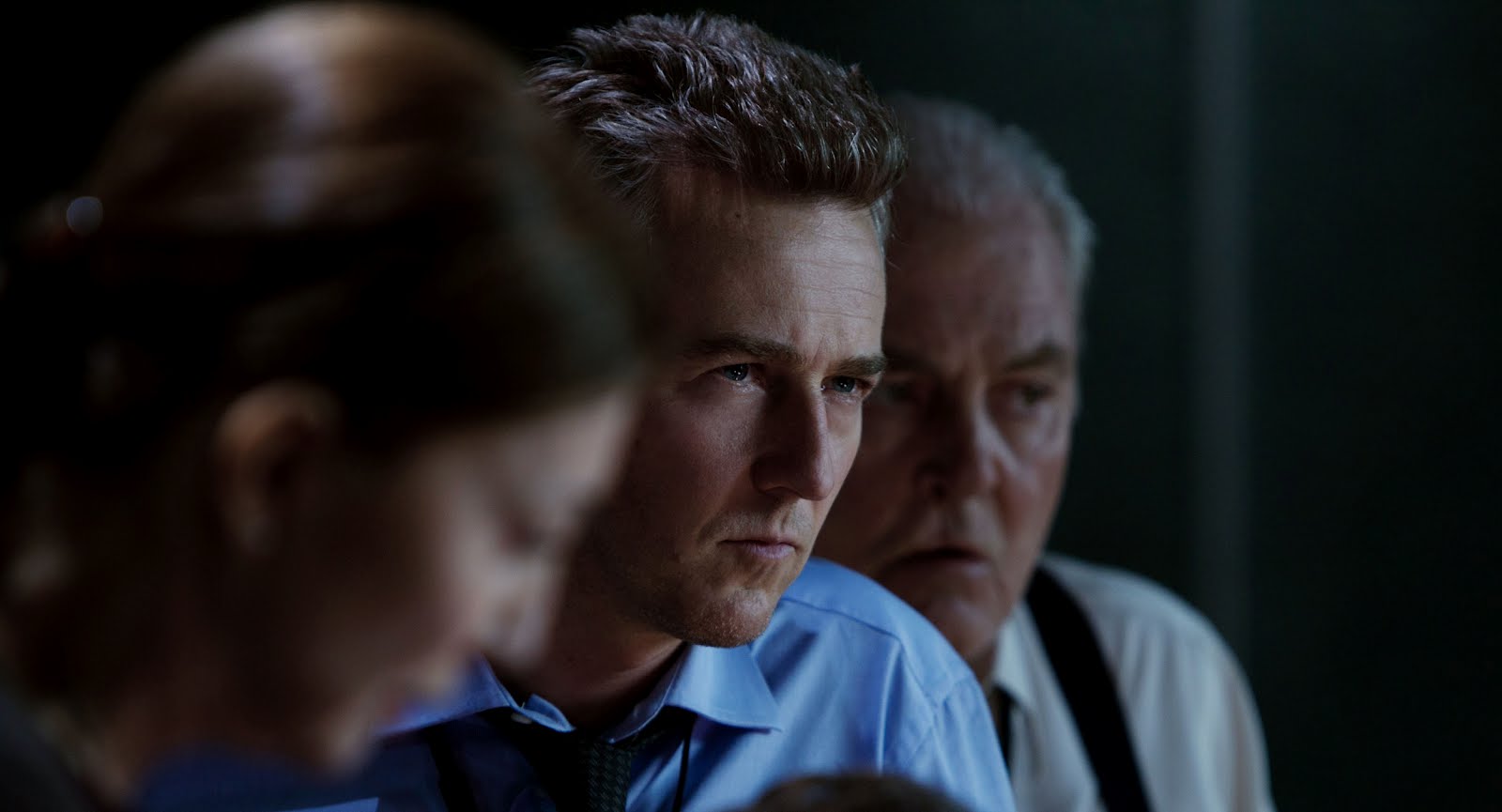
THE BOURNE LEGACY - Review By Greg Klymkiw - Men in suits standing around under fluorescent lights and talking plus old-style, classically directed action scenes makes this Bourne reboot crackling good entertainment.


The Bourne Legacy (2010) dir. Tony Gilroy

Starring: Jeremy Renner, Rachel Weisz, Edward Norton, Joan Allen, Stacy Keach, Zejlko Ivanek, David Strathairn, Scott Glenn, Albert Finney

***1/2

Review By Greg Klymkiw

My idea of a great spy movie is men in suits standing around under fluorescent lights and talking. I don't really need to know what they're talking about - so long as it SOUNDS like THEY know what they're talking about and that whatever it is they're saying SEEMS to pertain to the story at hand. If they're looking at computer monitors, hugging phones to their ears and/or yapping via headsets, I'm super-okay with this. It's definitely a bonus if they're chain smoking, but in this day and age, I'm willing to (grudgingly) forgive a lack of cancer stick ingestion.


If a lot of the dialogue is expositional, this is not as bad as one might think as it assists in our being able to follow what's going on - sort of. It should still be infused with lots of jargon, double-speak and varying degrees of solemnity. It's best we not know too much. The gist is fine. In fact, if the actors are great, I suppose we don't really even need the gist.

The men should mostly be 40-80-something and must look like bureaucrats (which, lest we forget, spies ultimately are). Moustaches are nice, but a supremely clean-cut dome and mug can work just as well.

If they resemble Edward Norton - BONUS! If actually played by Edward Norton, this is, in the parlance of pinball aficionados, double boni.

In this day and age, it is acceptable if women are involved in the endless conversations, but I must admit, I prefer there to be as few of them as possible. If they are babes, this is clearly a bonus - so long as their hair (preferably blonde) is pulled back very tight. Brunettes are fine if they're Rachel Weisz and play scientists in white lab coats. The hair, in this case, does not have to be pulled back tight, but is preferred.

Between these seemingly bottomless pits of conversation, there should be a few good dollops of violence and at least three (my favourite number) nail-biting action set-pieces.

This all pretty much sums up Tony Gilroy's The Bourne Legacy, an extremely satisfying sequel/reboot to the popular Jason Bourne three-picture series based on Robert Ludlum's bestselling books. The first was launched capably by Doug Liman with The Bourne Identity and perfected by the magnificent Paul Greengrass with (the best of the trilogy) The Bourne Supremacy and (second best of the trio) The Bourne Ultimatum.)

Starring Matt Damon as an assassin employed and "programmed" by a secret inner chamber of the CIA, the Bourne pictures had less in the way of claustrophobic spy-speak in the bureaucratic back rooms and a lot more wham-bam action. Compared to those three, The Bourne Legacy feels like an art film, or at least, a second-cousin to Tomas Alfredson's recent version of John le Carré's Tinker Tailor Soldier Spy. All four pictures were written by Tony Gilroy, the extremely talented son of playwright/director Frank Gilroy.

As a director, Gilroy has left the semi-risible-semi-watchable Duplicity behind him and returned to the promise he displayed in Michael Clayton. The Bourne Legacy might actually be his best picture to date - lacking the fencepost-sitting of his Clive Owen-Julia Roberts comedy thriller and the occasional dark pretension of the George Clooney effort. This new Bourne picture bodes very well, I think, for us to expect future quality endeavours from this assured voice (and hopefully future instalments in the franchise).

Legacy introduces us to a new "Bourne" played with stalwart assuredness by Jeremy Renner. It appears the inner bowels of the CIA under the special project Treadstone (that originally yielded the "One-of-a-kind" Jason Bourne) has, in actuality, generated several superhuman killers and NOW, they want them all dead and to completely erase the whole operation (which includes killing anyone who works for it). Renner plays Aaron Cross, though for much of the film's running time he's nameless - so much so that some people assumed Renner had taken over the Bourne role from Matt Damon. (I was one of them.)

So, between endless scenes of glorious talking, Renner avoids assassination, hooks up with a Treadstone scientist (Rachel Weizs) marked for assassination and the two of them bop all over the world - kicking ass.

The writing is first-rate for the genre, all the performances are top-flight and what I really love about Gilroy's direction is just how old-school his coverage of action scenes is. They're nail-biting, visceral and relatively free of the spatially-challeneged herky-jerky variety. (The Greengrass herky-jerky is in a class by itself. He's a real filmmaker and he has total control of the footage. His compositions, though short, are painterly and we never lose a sense of where we are or where the characters are unless Greengrass WANTS us too.)

Most action-oriented franchises these days are pretty stupid and usually not all that well made. Some of them even fool critics and audiences into thinking the movies are actually good (e.g. Christopher Nolan's overrated, overhyped tripe and the utterly bland-o-rama and barely competent JJ Abrams, to name a couple of directors offering up roller coaster rides masquerading as movies).

The Bourne Legacy is good, solid filmmaking and delivers anything any fan of espionage-action films would ever want. While it feels like a teaming of Damon and Renner is inevitable, I certainly, on paper anyway, have no problem with the prospect of this.

"The Bourne Legacy" is currently in world wide release from Universal Pictures.


Tuesday, 20 March 2012

TINKER TAILOR SOLDIER SPY on Blu Ray and DVD - Review By Greg Klymkiw


"Tinker Tailor Soldier Spy" is now available in North America on Blu-Ray and DVD in North America via eOne Films (Canada) and Universal (USA). It's a stunning transfer and features a great commentary track with director Alfredson and star Gary Oldman (though with a few annoying blank gaps). The European Region B version on Optimum has quite a few more goodies on it, though, so if you have a multi-region player, you might be better off buying this one. If you missed this movie on a big screen - as per usual, SHAME ON YOU! Buy it! Watch it! Cherish it!
Buy the North American version of "Tinker Tailor Soldier Spy" on Amazon.ca and Amazon.com with good extras, but missing the super extra stuff on the European version or buy the super-deluxe European Region B version (with lots of great features not on the North American version) of "Tinker Tailor Soldier Spy" at Amazon.UK


Tinker Tailor Soldier Spy (2011) dir. Tomas Alfredson
Starring: Gary Oldman, John Hurt, Toby Jones, Colin Firth, Ciarán Hinds, Benedict Cumberbatch, Mark Strong, David Dencik, Kathy Burke, Simon McBurney

****

By Greg Klymkiw

When we think of bureaucrats, if we bother to think about them at all, our first thought is usually that of a pencil-pushing-paper-shuffling civil servant toiling at a desk under fluorescent lights in a drab office filled to the rafters with others of the same ilk. I am even more uncharitable. I prefer to think of most civil servants as pathetic cogs within an imperfect machine (a Franz Kafka nightmare) who are more interested in feathering their own nests as they "make work" and scavenge about like turkey vultures upon any opportunities to extend their miserable existence in order to keep their position secure.

Perhaps the best description of a bureaucrat is the one detailed by the German sociologist Max Weber. According to Weber, a bureaucrat is appointed to his or her position solely on the basis of conduct - pure and simple (those intent on rocking boats need not apply) and faithfully, almost-blindly exercises whatever duties are delegated in strict accordance with rules that are completely impersonal. The key emolument, according to Weber, is a lifelong career and the promise of advancement (including benefits and a healthy pension). Most importantly, the bureaucrat must place his or her judgment to serve higher authorities, thus sacrificing said personal decisions if they conflict with official duties as prescribed by regulatory authorities.

Mr. Weber pretty much encapsulates my own thoughts on the matter, but with far more charity than I'm usually prepared to extend. My idea of a good bureaucrat (not always an oxymoron) is one who utilizes rules as a mere guideline and does, in fact, flout the conventional expectations when the cold black and white demands interpretation, thought and personal choices that result in better decisions within the course of exercising those duties which are ultimately there for the betterment of those who require them - especially when the prescribed formulae have NOTHING to do with reality.

When one thinks about spies engaged in international espionage, one seldom thinks of them as bureaucrats. Far too many examples exist in popular culture to allow for this. When our thoughts turn to espionage, we think of Sean Connery as James Bond - immaculately attired, bedding down a bonanza of babes, downing martinis shaken not stirred and equipped with the sort of derring-do usually suited to a comic book superhero. We certainly do not think of men attired in cheap three-piece suits, bags under their eyes, the weight of the world on their shoulders and pushing pencils whilst nattering on in buzz-word-infused babble.

Novelist John le Carré changed all that with his numerous bestselling thrillers that placed the emphasis on the drudgery and bureaucracy of spying and one of his best books, Tinker Tailor Soldier Spy eventually became a much-beloved BBC miniseries starring Alec Guinness as the poker-faced hero George Smiley. Given the complexities of the chess-like plot, one would think a feature length version of the book would be a losing proposition.

Not so.

With the brilliant Swedish filmmaker Tomas (Let The Right One In) Alfredson at the helm, the 2011 feature version of Tinker Tailor Soldier Spy is one of the best movies of the year and one of the great spy movies of all time.

It's a simple enough plot for a movie like this. In fact, it's the plot's simplicity which brilliantly allows the tale to work with the sort of red-herring-layered elements, complex characterizations and thematic concerns that delve deep below the surface.

George Smiley (Gary Oldman) and his boss Control (John Hurt) are high level members of the British intelligence service who are forced into retirement when a mission to uncover a Soviet double agent in their midst goes horribly wrong, resulting in one of Control's top agents Jim Prideaux (Mark Strong) falling victim to a Soviet assassin in Hungary. A new breed/regime comprising Bill Haydon (Colin Firth), Percy Alleline (Toby Jones), Roy Bland (Ciarán Hinds) and Toby Esterhase (David Dencik) take over. One of them is a traitor. All four are especially persnickety, slimy, power-hungry bureaucrats and Bill, in particular, is pleased as punch to have been dinking his trusted colleague's wife.

After Control's death, Smiley is secretly coaxed out of retirement to ferret out the Russkie mole. With the help of a keen young agent Peter Guillam (Benedict Cumberbatch) a former audio-visual specialist Connie Sachs (Kathy Burke), a rogue bag-boy Ricki Tarr (Tom Hardy), memories of Control's tutelage and a surprise ally, a complex chess game plays itself out as the layers are slowly stripped away to reveal the truth.

Simple stuff and even those who haven't read the book and/or seen the BBC miniseries might well figure out the mystery long before the movie ends. It doesn't really matter because frankly, it's the ride that counts.

And what a ride!

Director Alfredson plunges us into the bleak, cold, rainy nightmare of the Cold War during the early 70s. With cinematography by Hoyte Van Hoytema (The Fighter) that harks back to the great work of Owen Roizman (Network, The Exorcist, The French Connection, Three Days of the Condor), Alfredson delivers a movie set in the 70s that looks and feels like it was MADE in the 70s. With gorgeous grain dancing across every frame, we're plunged into the murky world of bureaucrats playing deadly cat and mouse games.

And make no mistake about it, this is a world of civil servants - sitting at ratty, old office furniture, under bleak fluorescent lights, chain smoking as they engage in endless discussion whilst guzzling back cloudy cups of tea. While there are a handful of brutal encounters, they're dealt with efficiently, but not gratuitously. The suspense comes from subtleties and is found in the most unusual places - one great set piece that will have audiences on the edges of their seats involves the simple act of going through files.

I kid you not.

Alfredson's pace is masterful. It moves like a snail - but a very creepy, crawly, determined snail. Every look, gesture, eyebrow twitch, hushed word and stealthy gait explodes with resonance. He creates a very real, compelling world and one that is populated with complex and compelling characters.

The state of distrust and paranoia within the bureaucracy is especially creepy. Buried in deep shadows, dim light and the aforementioned dancing grain, the first two lines of dialogue in the movie are: "You weren't followed?" and "Trust no one." The latter is especially apt in the world Alfredson depicts, but frankly, fits very nicely with the Kafka-like nightmare that IS the civil service. And interestingly, as the movie progresses, it's so cool seeing the aforementioned Max Weber description of bureaucrats and bureaucracies play themselves out within the movie. It's like being a fly on the wall of a very strange world - one that plays out in government offices across the globe on a daily basis, but even stranger when they're set in the context of intelligence gathering and subtle back room war between super powers.

And like mentioned above, good civil servants know the rules, but if they know them really well and play by them, they also know when the rules need to be broken in order to move things beyond points of utter stagnation.

Not a single cast member seems out of place in this great picture - it's one terrific piece of acting after another. Gary Oldman, however, owns this movie and delivers the performance of his lifetime. His astonishing poker-face and rigid body language are stunningly controlled. His most phenomenal work is when Smiley decides when to display, ever-so subtly, something resembling an emotion wherein we see what Smiley wants us to see, or what we (and other characters) THINK Smiley wants us to see. And let it be said that Oldman delivers one of the most staggering screen monologues in movie history - it's up there with the greats: Richard Burton's "Bergin" speech in Who's Afraid of Virginia Woolf, Marlon Brando's "fake Ophelia" lament in Last Tango in Paris and Al Pacino's "football is life" speech in Any Given Sunday.

Finally, it's not just the impeccable taste and artistry with which the movie is rendered that makes it such an exquisite experience. The movie holds up to repeat viewings BECAUSE it all doesn't hinge on the mechanics of its admittedly solid plot, but rather the atmosphere of despair, adversity and pathetic game-playing that drives the world of these spies - on both sides of the fence. There are a series of flashbacks to a Christmas party where all the bureaucrats are united in the common goal of joy - albeit joy fuelled by the melancholy of booze - but they are UNITED, under one roof (albeit one lit with grotesque fluorescent lights) and amidst the revelry, a betrayal that's somewhat deeper than mere turn-coating and double-dealing is revealed and the sadness this evokes cuts to the bone.

Cutting even deeper still is something John Hurt's character Control declares. He says, "Nothing is genuine anymore." And he's right. When the old gives way to the new, it's not always rebirth which yields results - especially not in bureaucracies. Rebirth often means the death of that which is genuine - when the typical bureaucrats, those nest-feathering prigs seeking self-preservation over adherence to the honest goals of the civil service (no matter how coldly arrived at), worm their way into the works - gumming them up and casting aside the genuine values of those who would rather do good.

It's a great movie!


Tuesday, 20 December 2011

TINKER TAILOR SOLDIER SPY - Review By Greg Klymkiw - "Nothing is genuine anymore," declares a chief intelligence bureaucrat in this genuinely great motion picture. From the brilliant director of LET THE RIGHT ONE IN, this is one of the finest spy thrillers ever committed to film.


Tinker Tailor Soldier Spy (2011) dir. Tomas Alfredson
Starring: Gary Oldman, John Hurt, Toby Jones, Colin Firth, Ciarán Hinds, Benedict Cumberbatch, Mark Strong, David Dencik, Kathy Burke, Simon McBurney

****

By Greg Klymkiw

When we think of bureaucrats, if we bother to think about them at all, our first thought is usually that of a pencil-pushing-paper-shuffling civil servant toiling at a desk under fluorescent lights in a drab office filled to the rafters with others of the same ilk. I am even more uncharitable. I prefer to think of most civil servants as pathetic cogs within an imperfect machine (a Franz Kafka nightmare) who are more interested in feathering their own nests as they "make work" and scavenge about like turkey vultures upon any opportunities to extend their miserable existence in order to keep their position secure.

Perhaps the best description of a bureaucrat is the one detailed by the German sociologist Max Weber. According to Weber, a bureaucrat is appointed to his or her position solely on the basis of conduct - pure and simple (those intent on rocking boats need not apply) and faithfully, almost-blindly exercises whatever duties are delegated in strict accordance with rules that are completely impersonal. The key emolument, according to Weber, is a lifelong career and the promise of advancement (including benefits and a healthy pension). Most importantly, the bureaucrat must place his or her judgment to serve higher authorities, thus sacrificing said personal decisions if they conflict with official duties as prescribed by regulatory authorities.

Mr. Weber pretty much encapsulates my own thoughts on the matter, but with far more charity than I'm usually prepared to extend. My idea of a good bureaucrat (not always an oxymoron) is one who utilizes rules as a mere guideline and does, in fact, flout the conventional expectations when the cold black and white demands interpretation, thought and personal choices that result in better decisions within the course of exercising those duties which are ultimately there for the betterment of those who require them - especially when the prescribed formulae have NOTHING to do with reality.

When one thinks about spies engaged in international espionage, one seldom thinks of them as bureaucrats. Far too many examples exist in popular culture to allow for this. When our thoughts turn to espionage, we think of Sean Connery as James Bond - immaculately attired, bedding down a bonanza of babes, downing martinis shaken not stirred and equipped with the sort of derring-do usually suited to a comic book superhero. We certainly do not think of men attired in cheap three-piece suits, bags under their eyes, the weight of the world on their shoulders and pushing pencils whilst nattering on in buzz-word-infused babble.

Novelist John le Carré changed all that with his numerous bestselling thrillers that placed the emphasis on the drudgery and bureaucracy of spying and one of his best books, Tinker Tailor Soldier Spy eventually became a much-beloved BBC miniseries starring Alec Guinness as the poker-faced hero George Smiley. Given the complexities of the chess-like plot, one would think a feature length version of the book would be a losing proposition.

Not so.

With the brilliant Swedish filmmaker Tomas (Let The Right One In) Alfredson at the helm, the 2011 feature version of Tinker Tailor Soldier Spy is one of the best movies of the year and one of the great spy movies of all time.

It's a simple enough plot for a movie like this. In fact, it's the plot's simplicity which brilliantly allows the tale to work with the sort of red-herring-layered elements, complex characterizations and thematic concerns that delve deep below the surface.

George Smiley (Gary Oldman) and his boss Control (John Hurt) are high level members of the British intelligence service who are forced into retirement when a mission to uncover a Soviet double agent in their midst goes horribly wrong, resulting in one of Control's top agents Jim Prideaux (Mark Strong) falling victim to a Soviet assassin in Hungary. A new breed/regime comprising Bill Haydon (Colin Firth), Percy Alleline (Toby Jones), Roy Bland (Ciarán Hinds) and Toby Esterhase (David Dencik) take over. One of them is a traitor. All four are especially persnickety, slimy, power-hungry bureaucrats and Bill, in particular, is pleased as punch to have been dinking his trusted colleague's wife.

After Control's death, Smiley is secretly coaxed out of retirement to ferret out the Russkie mole. With the help of a keen young agent Peter Guillam (Benedict Cumberbatch) a former audio-visual specialist Connie Sachs (Kathy Burke), a rogue bag-boy Ricki Tarr (Tom Hardy), memories of Control's tutelage and a surprise ally, a complex chess game plays itself out as the layers are slowly stripped away to reveal the truth.

Simple stuff and even those who haven't read the book and/or seen the BBC miniseries might well figure out the mystery long before the movie ends. It doesn't really matter because frankly, it's the ride that counts.

And what a ride!

Director Alfredson plunges us into the bleak, cold, rainy nightmare of the Cold War during the early 70s. With cinematography by Hoyte Van Hoytema (The Fighter) that harks back to the great work of Owen Roizman (Network, The Exorcist, The French Connection, Three Days of the Condor), Alfredson delivers a movie set in the 70s that looks and feels like it was MADE in the 70s. With gorgeous grain dancing across every frame, we're plunged into the murky world of bureaucrats playing deadly cat and mouse games.

And make no mistake about it, this is a world of civil servants - sitting at ratty, old office furniture, under bleak fluorescent lights, chain smoking as they engage in endless discussion whilst guzzling back cloudy cups of tea. While there are a handful of brutal encounters, they're dealt with efficiently, but not gratuitously. The suspense comes from subtleties and is found in the most unusual places - one great set piece that will have audiences on the edges of their seats involves the simple act of going through files.

I kid you not.

Alfredson's pace is masterful. It moves like a snail - but a very creepy, crawly, determined snail. Every look, gesture, eyebrow twitch, hushed word and stealthy gait explodes with resonance. He creates a very real, compelling world and one that is populated with complex and compelling characters.

The state of distrust and paranoia within the bureaucracy is especially creepy. Buried in deep shadows, dim light and the aforementioned dancing grain, the first two lines of dialogue in the movie are: "You weren't followed?" and "Trust no one." The latter is especially apt in the world Alfredson depicts, but frankly, fits very nicely with the Kafka-like nightmare that IS the civil service. And interestingly, as the movie progresses, it's so cool seeing the aforementioned Max Weber description of bureaucrats and bureaucracies play themselves out within the movie. It's like being a fly on the wall of a very strange world - one that plays out in government offices across the globe on a daily basis, but even stranger when they're set in the context of intelligence gathering and subtle back room war between super powers.

And like mentioned above, good civil servants know the rules, but if they know them really well and play by them, they also know when the rules need to be broken in order to move things beyond points of utter stagnation.

Not a single cast member seems out of place in this great picture - it's one terrific piece of acting after another. Gary Oldman, however, owns this movie and delivers the performance of his lifetime. His astonishing poker-face and rigid body language are stunningly controlled. His most phenomenal work is when Smiley decides when to display, ever-so subtly, something resembling an emotion wherein we see what Smiley wants us to see, or what we (and other characters) THINK Smiley wants us to see. And let it be said that Oldman delivers one of the most staggering screen monologues in movie history - it's up there with the greats: Richard Burton's "Bergin" speech in Who's Afraid of Virginia Woolf, Marlon Brando's "fake Ophelia" lament in Last Tango in Paris and Al Pacino's "football is life" speech in Any Given Sunday.

Finally, it's not just the impeccable taste and artistry with which the movie is rendered that makes it such an exquisite experience. The movie holds up to repeat viewings BECAUSE it all doesn't hinge on the mechanics of its admittedly solid plot, but rather the atmosphere of despair, adversity and pathetic game-playing that drives the world of these spies - on both sides of the fence. There are a series of flashbacks to a Christmas party where all the bureaucrats are united in the common goal of joy - albeit joy fuelled by the melancholy of booze - but they are UNITED, under one roof (albeit one lit with grotesque fluorescent lights) and amidst the revelry, a betrayal that's somewhat deeper than mere turn-coating and double-dealing is revealed and the sadness this evokes cuts to the bone.

Cutting even deeper still is something John Hurt's character Control declares. He says, "Nothing is genuine anymore." And he's right. When the old gives way to the new, it's not always rebirth which yields results - especially not in bureaucracies. Rebirth often means the death of that which is genuine - when the typical bureaucrats, those nest-feathering prigs seeking self-preservation over adherence to the honest goals of the civil service (no matter how coldly arrived at), worm their way into the works - gumming them up and casting aside the genuine values of those who would rather do good.

It's a great movie!

"Tinker Tailor Soldier Spy" is currently in theatrical release via E-One Entertainment.