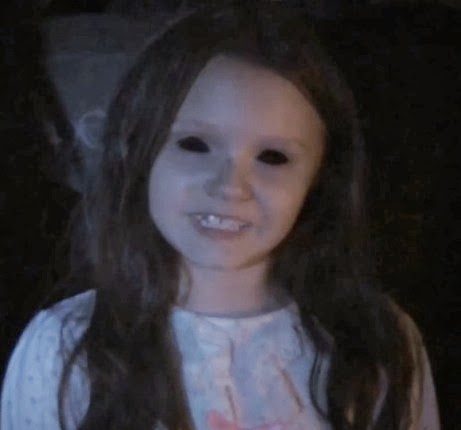
Showing posts with label Ghosts. Show all posts

Monday, 31 July 2017

PULSE - Review By Greg Klymkiw - Profound Kurosawa J-Horror Classic gets Arrow Blu-Ray

Now I'm alone
with my last friend in the world
and I have found happiness.

Pulse/Kairo (2001)
Dir. Kiyoshi Kurosawa
Starring: Kumiko Aso, Haruhiko Kato, Koyuki, Kurume Arisaka, Koji Yakusho

Review By Greg Klymkiw

About 15 years ago I saw Kiyoshi Kurosawa's Pulse. It's stayed with me these many long years. I just finished watching the Arrow Films Blu-ray. I hadn't seen the movie since it scared the living shit out of me first-run on the big screen in 2002 and this recent viewing was like seeing it for the first time. Upon its conclusion and for some time afterwards I continued to shudder and weep. Not only because of the content of the movie, its profundity and deeply moving qualities, but because I felt so grateful that cinema exists to have afforded a genuine artist like Kurosawa the opportunity to unleash it upon us. And of course, when I see a picture this great, it reminds me, yet again, that I love cinema so very, very much. No matter how bad movies are these days, work like this exists and can continue to be made in spite of everything going against the medium now.

Pulse (aka Kairo) is a ghost story, but unlike any ever made. It deals with the notion that there's no more room in that place whereever the spirits of the dead go and now they are crossing over into our world, our living world. As people slowly begin to realize what's happening, it causes mass despair because what the ghosts communicate to the living is that death is eternal loneliness. People in the billions begin to commit suicide.

We follow two people who eventually find each other and realize that the only way they can survive is to be with each other, to never be alone. Of course, it takes some time and plenty of creepy and often downright shocking scares for this to happen.

Michi (Kumiko Aso) works in a plant shop. One of her co-workers has been missing for days. She goes to investigate and what she witnesses is ghastly. Her other co-workers become afflicted with a depressive malaise and she's eventually left to fend for herself.

Kawashima (Haruhiko Katô) is a university student who signs up for the internet (when the film was made, remember these were still relatively early days for the world wide web) and he discovers something online that's both ghoulish and more than a little disturbing. He befriends Harue (Koyuki), a computer science student, to help him get to the bottom of this ominous mystery. What they slowly begin to discover is truly shuddersome.

Yes, Michi and Kawashima's stories converge and as Tokyo's population dwindles to virtually nothing, they find each other. As Tokyo burns, covered with a thick, soupy haze (at one point, a flaming jet crashes into the middle of the city) they flee, pledging to go as far as they can go.

Throughout the film, Kurosawa assails us with moaning, wailing, desperate apparitions. A strange website called "The Forbidden Room" offers curious advice involving red duct tape (never has red duct tape been as hair-raisingly nightmarish as it is here). Recently departed humans turn into grim ectoplasmic black shadows on walls, floors and sidewalks (creepily conjuring images of similar shadows after the Hiroshima/Nagasaki bombings). At times we hear these shadows crying out, "Help me." All of this is delivered with a slow, macabre pace. dread ever-mounting.

At one point, it's explained:

"Ghosts won't kill people, because that would just make more ghosts. Instead they will try to make people immortal by quietly trapping them in their own loneliness."

This provides little solace to both the viewer and the characters.

Pulse has a truly unique look via cinematographer Junichiro Hayashi (gorgeously captured on the Arrow Films' Blu-Ray). Film grain is readily apparent and dances upon the screen ever-so delectably. The colour palette is made up of greys, pale browns and sickeningly bleached greens. Shadows and darkness run rampant - at times it seems like we can see virtually nothing, but shots will hold long enough to reveal tiny dollops of light and detail.

Kurosawa presents a world of loneliness, disconnection and deep, numbing and increasing pain. To say the film is prescient, would be an understatement. And yes, Pulse moves us to tears. When a character eventually declares:

"Now I'm alone with my last friend in the world and I have found happiness;"

We simply don't believe it. We can't.

THE FILM CORNER RATING: *****

Pulse/Kairo is available on a tremendous Special Edition from Arrow Films (this company is truly the Criterion Collection of genre cinema). It includes a High Definition digital transfer on Blu-ray (1080p) and a Standard Definition DVD, the Original 5.1 audio (DTS-HD on the Blu-ray), New optional English subtitle translation, New interview with writer/director Kiyoshi Kurosawa, New interview with cinematographer Junichiro Hayashi, "The Horror of Isolation": a new video appreciation featuring Adam Wingard & Simon Barrett (Blair Witch, You’re Next), an Archival ‘Making of’ documentary, four archival behind-the-scenes featurettes, Premiere footage from the Cannes Film Festival, Cast and crew introductions from opening day screenings in Tokyo, Trailers and TV Spots.

Saturday, 19 December 2015

THE INHABITANTS - Review By Greg Klymkiw - Beantown-Based Bros Deliver New Goods


Elise Couture in the shower!!!
The Inhabitants
Director/Writers:
Michael Rasmussen,
Shawn Rasmussen
Starring:
Elise Couture,
Michael Reed,
India Pearl,
Judith Chaffee,
Rebecca Whitehouse

Review By
Greg Klymkiw


What's not to like about the Rasmussens? Those sicko siblings from Beantown wrote an ideal screenplay for John Carpenter (The Ward) and loaded it with babes in an asylum. Their directorial debut, Dark Feed, had a zero-budget movie crew shooting a horror movie (with babes, 'natch) on location in an abandoned asylum.

Now they've concocted a whole new delight.

With The Inhabitants, the Rasmussen Brothers drag you into a labyrinth of utter terror in this creepy, atmospheric haunted house thriller in the tradition of classic horror cinéma from masters like Robert Wise (The Haunting), Jack Clayton (The Innocents) and Val Lewton (uh, all of them, but notably The Curse of The Cat People and I Walked With a Zombie). There are even of dollops of homage to Dan Curtis (Burnt Offerings), John Hancock (Let's Scare Jessica To Death) and Peter Medak (famed Canuck horror classic The Changeling). Make no mistake, though, this is no geek tribute mash-up. Though the inspirations are clear, the boys have generated a rip-snorter which works in its own horrific ways in a contemporary context.

What's in there? Implements, perhaps?

In spite of its ultra-low budget pedigree, the picture looks terrific, especially since it was shot on location in the historic (and creepy) 1699 New England domicile, The Noyes-Parris House. It was owned by the (in)famous whack-job Rev. Samuel Parris, daddy-kins of Betty Parris and uncle to Abigail Williams, the two bratty sicko gals who made the accusations that led to the Salem Witch Trials.

IMPLEMENTS OF BIRTHING

These Rasmussen Beaux are mighty ingenious. They know how to stretch a buck so it doesn't look like a buck and on top of that, with their two first features, they managed to secure locations and use them well - locations that many low budget filmmakers would never know how to sniff out (and even if they did, they'd find excuses not to use them, or worse, use them improperly).

The Inhabitants begins with a nice slow burn. There are few rocky moments in this expositional portion of the film (mostly involving a slightly wooden performance from one of the supporting players), but at least these moments are bracketed by an eerie credit sequence and one excellent super-creepy performance by Judith Chaffee as a dementia-addled old woman. Once the movie blasts off, and this doesn't take long, you pretty much perch yourself on the edge of your seat and stay there.

One can never get enough of Elise Couture in the shower.

The Coffeys, Jessica (Elise Couture) and Dan (Michael Reed), are a young couple on the verge of making their dream come true. Dan has a well paying job which occasionally calls him to the big city and his hot wifey has always wanted to run a bed and breakfast - a perfect scenario for them to start a family. Whilst getting a tour of an old New England home already outfitted as such, they have, alas, no idea what they're going to be up against.

Its former owner, Aunt Rose (the aforementioned Chaffee) is about to be shoved into an assisted-living asylum by her babe-o-licious real estate saleslady niece (Rebecca Whitehouse). It seems Rose ran the place for decades with her late hubby, but since his death, she's pretty much fallen to pieces. Even as Jessica and Dan view the property, Rose glowers at them with a combination of fear and malevolence.

The entire house is outfitted with a combination of extremely old (antique) and relatively new furnishings. When asking about this cornucopia of chattels, the niece innocently declares that "the furniture belongs to the house". Little does she, nor its new owners know, that plenty more belongs to the house.

Our sexy couple (he's a handsome, well-hung hunk and she's one fetching straight-haired-brunette drink o' water with a bod fit for a girl-next-door Playboy model) are plenty happy with the place, but even they're scratching their noggins over Aunt Rose's parting words to them:

"Take care of the children."

BATTY AUNT ROSE and CREEPY UNCLE NORMAN

Turns out old, batty Rose and her departed hubby (hilariously named Norman) never had kiddies. Curiously, Lydia (India Pearl), the wife of the original owner of the "March Carriage House" from some 350 years back was, like doddering Aunt Rose, a barren woman. No matter, the long-departed Lydia faithfully served as a midwife to the earliest colonists, bringing many little ones into the world. (This explains the creepy "birthing chair" with straps and faded blood stains our couple find in the basement along with a set of grim-looking implements which seem better employed at an abattoir.)

Lydia, of course, was eventually hung as a witch. Soon after, many of the community's children went missing and were occasionally spotted wandering in the woods as if Lydia was beckoning to them. (Hint-Hint: Lydia has already been attached in this review to an actress. Figure it out, eh.)

Once the insanely attractive Coffey couple has settled into the joint, we soon get a crap-inducing scary sequence where nutty Aunt Rose makes an unexpected appearance in the middle of the night. Later on, Aunt Rose makes another appearance where she bares her bloodied, pus-ridden chest and utters:

"The children need to be fed."

IT IS IMPORTANT FOR HORROR FILMS
TO HAVE BABES (for the fellas) &
WELL-HUNG HUNKS (for the ladies).

Clearly, none of this bodes well.

The Inhabitants, though hardly the most original ghost story in the world (though it gets points for the witch background and the clearly butcher-like midwifery), is an extremely effective one and its final two thirds emit plenty of shudders, shocks and, you guessed it, bloodletting.

Throughout, there are the requisite bumps and creaks in the night, plenty of shadows moving about, several chill-inducing Ghost-Cam POVs, some superb bathtub-shower shenanigans, one especially hot sex scene (mediated via a perspective best experienced when you see the movie) and eventually some heart-stopping appearances of shit nobody wants to see anytime, anywhere - especially not in a creepy old house with way too many secret nooks and crannies full of all sorts of grotesqueries.

Don't fall to the floor with THIS coming your way.

On their own, Jessica and Dan respectively discover some really freaky secrets which affect them, predictably, but realistically within the context of the story, in terms of their loving marriage turning into something altogether malevolent. (Oh, and not that it gets to the extremes of Lars von Trier, there's even a dollop of scare-inducing gymnastics which place you in shuddery AntiChrist territory.)

Overall, this is a superbly crafted little picture - nicely shot and edited with the kind of skill one demands of any horror film - happily with a minimum of shock cuts, but plenty of shocks nonetheless. The Rasmussen Brothers have served up another nicely crafted genre delight and one that moves them forward as well as signalling even greater things to come.

One of the nice things is that they have unconsciously, I think, infused the movie with the kind of indigenous regional qualities which enhance such low budget indie horror items. It's the cherry on the sundae, so to speak. A nice, blood red cherry at that.

THE FILM CORNER RATING: **** 4-Stars

The Inhabitants is distributed by Gravitas Ventures and can be accessed via multiple VOD platforms including iTunes, Amazon Video, Vudu, Google Play, Xbox LIVE, Sony Playstation, various cable providers, and more. Alas, the picture really warranted some manner of big-screen play, but no matter. It's out there and available.

THE INHABITANTS WILL BE AVAILABLE ON BLU-RAY VIA FilmRise. FEEL FREE TO ORDER A COPY FROM THE AMAZON LINK BELOW. DOING SO WILL CONTRIBUTE TO THE ONGOING MAINTENANCE OF THE FILM CORNER:

Wednesday, 21 October 2015

BACKTRACK - Review By Greg Klymkiw - Predictable supernatural thriller - TADFF 2015

Adrien Brody registers some autopilot anguish for us.
Backtrack (2015)
Dir. Michael Petroni
Starring: Adrien Brody, Sam Neill, Bruce Spence,
Robin McLeavy, Malcolm Kennard, Jenni Baird

Review By Greg Klymkiw

Man, when Adrien Brody is playing a character in anguish, nobody can reproduce this single note with more autopilot consistency than he can. In this wannabe "thoughtful" Aussie thriller, Brody plays a psychiatrist grieving over the death of his child - all the more so since he believes her demise was his fault. In spite of this, he's decided to ease back into his practice in order to give psychiatric care to others even though he's hardly healed from his own wounds.

Luckily, Brody has an old pal and mentor in the form of stalwart Sam Neill to see him through the rough patches and the two of them have plenty of opportunities to talk things out. Brody maintains his grimace of anguish in these scenes whilst Neill is plastered with a virtually Botoxed visage of concern.

Anguish is Botoxed into Adrian Brody's face
as he commingles with a ghost.

In no time at all, one of Brody's clients, a mysterious little girl, proves to be a ghost.

Or is she a figment of his overheated anguish and despair?

Well, it matters not since he's being haunted either way.

Not surprisingly, Brody needs to eventually engage himself in the Backtrack of the film's title in order to retrace a few steps from his deep, distant past in his old small-town. He reconnects with his alcoholic Dad, a retired policeman with his own deep, dark secrets and a plucky young policewoman who begins to smell a rat.

And a smelly, hoary old rat it turns out to be.

Sam Neill registers concern.
Brody registers ('natch) anguish.

Eventually, all this plays out as predictably as one would expect in a film which purports to be above the tropes of its genre, but is, in fact, replete with and dependent upon them.

There's a veneer of competence here which means the film can't be totally flushed down the toilet, but the picture is ultimately as dull as it is derivative and infused with the kind of mock-intelligence which bamboozles some (including, presumably, its makers) into assuming the movie is far more lofty than it is.

Still, one cannot deny how great Adrien Brody is at conveying anguish.

In Backtrack, his entire persona proves to be an immoveable feast.

THE FILM CORNER RATING: *½ One-and-a-half-Stars

Backtrack enjoys is Canadian premiere at TADFF 2015.

Monday, 12 October 2015

WE ARE STILL HERE - DVD/BLU-RAY Review By Greg Klymkiw - Anchor Bay Entertainment Canada unleashes this Creepily Effective Old-Fashioned Haunted House Thriller on homevideo - COUNTDOWN TO TADFF 2015

My countdown to the 2015 Toronto After Dark Film Festival (TADFF 2015) will feature a variety of pieces on great genre work in the tradition of this terrific film festival which occurs in Toronto, Canada, Oct. 15-23, 2015. Let this countdown serve as a buffet of delectably exotic appetizers before the Big Meal Deal of my festival coverage.

COUNTDOWN TO TADFF 15 #3 is in honour of Anchor Bay Entertainment Canada's recent BluRay/DVD release of Ted Geoghegan's We Are Still Here


We Are Still Here (2015)
Dir. Ted Geoghegan
Starring: Barbara Crampton,
Andrew Sensenig, Larry Fessenden, Lisa Marie, Monte Markham

Review By Greg Klymkiw

There's always room for a solid "things that go bump in the night" haunted house picture, so long as the proceedings are handled with proficiency and a minimum degree of stupidity. Ted Geoghan's first feature film We Are Still Here succeeds on both counts.

Yes, we've been down this road before. The Sacchettis are an attractive, well-to-do couple still grieving from the accidental death of their only son. They've chosen flight from familiar surroundings to heal and move into a gorgeous, old house in the wide open spaces of Inbred-ville, New England. Situated on a gorgeous estate, isolated, but not too far away from a nearby village (full of inbreds), the couple appear to have nailed the real estate find of the century.

Uh-oh.

We all know that when an old, long-unoccupied house in the middle of nowhere goes for a steal, there's bound to be some ectoplasmic shenanigans going on. Luckily, we are not the Sacchettis. We are the audience. We know better, which is always a good deal for us, yes?

Anne (played by the always-delectable Barbara Crampton of Re-Animator fame) feels her son's spirit is still with them and that he's followed them to their new digs. Paul (Andrew Sensenig), being the lowly male of the equation is far more practical about such matters, but he sensitively humours her and agrees to a visit from their longtime spiritualist friends. May (played by the gorgeous Lisa Marie of Vampira fame in Ed Wood and unceremoniously booted by director Tim Burton in favour of the ratty-mopped Helena Bonham Carter) is psychic. Her hubby Jacob (the always wonderful character actor and Habit director Larry Fessenden, looking more like Jack Nicholson in The Shining with every picture) is a dope-smoking old hippie with new-agey powers in crystals and seances.

It's always convenient when bereaved couples know spiritualist couples. It makes horror movies so much more lively, yes?

Of course, what would a New England community of inbreds be without a couple of real whoppers of inbreds? Creepy old neighbour Dave McCabe (Monte Markham) and his nutty wife Maddie (Susan Gibney) pop by for a friendly visit wherein we get all the dope on the Sacchettis' new home.

It's an old funeral parlour, situated on unhallowed ground and formerly run by a family who pilfered bodies and sold them to a nearby medical college. Or so we're told.

Yes, it's always convenient when bereaved couples move into old funeral parlours on unhallowed ground formerly run by inbreds who sold bodies to be sliced and diced by med students. It's even more convenient that the inbreds might actually have been innocent of this crime and murdered by the inbred townspeople.

Are you with me? Good. This is what our impish filmmaker has laid out for the mega-scares to follow. Though screenwriter Geoghegan doesn't really go beyond the stock tropes of most ghostly melodramas, Geoghegan the director does go through some mighty impressive gymnastics of helmsmanship to knock us on our collective butts all the way through this effective chiller.

Babe-O-Licious Barbara Crampton as HOT now
as she was in 1985's RE-ANIMATOR. Hubba-Hubba!

The real star of the film is Canadian cinematographer Karim Hussain who superbly handles Geoghegan's morbidly creepy mise-en-scene with considerable aplomb. The camera feels like a character unto itself - its gorgeous compositions and lighting make us feel like something genuinely unholy is actively observing the proceedings whilst occasionally making us feel like we're seeing stuff that may or may not be there. Hussain moves the camera so deftly and subtly that we're often chilled to the bone - not just by the gorgeously captured winter climes surrounding the house, but by the manner in which it glides and/or settles upon the dank details of the house and especially, the basement. The chilling musical score and alternately shivery, heart-attack-inducing sound design are also brilliantly rendered, giving us ample creeps and shocks.

Especially in the basement.

Oh yes! 'Tis always convenient for a haunted house to have a clammy basement with a boiler on the fritz causing temperatures to rise and a strange wall that supposedly has nothing behind it.

Then, there are the ghastly apparitions and, the blood.

They are plenty ghastly.

And yes, there is plenty of blood. (And thanks to a lovely Straw Dogs-inspired climax, the picture racks up a very impressive body count.)

All that said, if you're looking for a bit more meat on the bones of the bereaved couple horror scenario, you're not going to find it here. There's potential to have steered the film into the complex, layered territory of Nicolas Roeg's Don't Look Now, but Geoghegan seems content to keep us in the shock-o-rama territory of his more clear influence, the grand Italian shock-meister Lucio (The Beyond, The House by the Cemetery) Fulci.

I accept this.

The movie forced me to soil myself on numerous occasions. Luckily, I've learned long ago to always wear adult diapers for my sojourns into the cinematic territory of haunted house thrillers. Thankfully, this one is up there with those pictures keen on skilfully delivering all the visceral thrills and chills which, ultimately, are the hallmark for all fine horror pictures.

THE FILM CORNER RATING: ***½ 3-and-a-Half-Stars

We Are Still Here from Anchor Bay Entertainment Canada and Raven Banner is now available on a superb Blu-Ray/DVD release which comes complete with extras including a superb commentary track from filmmaker Ted Geoghegan.

Sunday, 19 July 2015

WE ARE STILL HERE - Review By Greg Klymkiw - Creepily Effective Old-Fashioned Haunted House Thriller at the 2015 FANTASIA INTERNATIONAL FILM FESTIVAL in Montreal


We Are Still Here (2015)
Dir. Ted Geoghegan
Starring: Barbara Crampton,
Andrew Sensenig, Larry Fessenden, Lisa Marie, Monte Markham

Review By Greg Klymkiw

There's always room for a solid "things that go bump in the night" haunted house picture, so long as the proceedings are handled with proficiency and a minimum degree of stupidity. Ted Geoghan's first feature film We Are Still Here succeeds on both counts.

Yes, we've been down this road before. The Sacchettis are an attractive, well-to-do couple still grieving from the accidental death of their only son. They've chosen flight from familiar surroundings to heal and move into a gorgeous, old house in the wide open spaces of Inbred-ville, New England. Situated on a gorgeous estate, isolated, but not too far away from a nearby village (full of inbreds), the couple appear to have nailed the real estate find of the century.

Uh-oh.

We all know that when an old, long-unoccupied house in the middle of nowhere goes for a steal, there's bound to be some ectoplasmic shenanigans going on. Luckily, we are not the Sacchettis. We are the audience. We know better, which is always a good deal for us, yes?

Anne (played by the always-delectable Barbara Crampton of Re-Animator fame) feels her son's spirit is still with them and that he's followed them to their new digs. Paul (Andrew Sensenig), being the lowly male of the equation is far more practical about such matters, but he sensitively humours her and agrees to a visit from their longtime spiritualist friends. May (played by the gorgeous Lisa Marie of Vampira fame in Ed Wood and unceremoniously booted by director Tim Burton in favour of the ratty-mopped Helena Bonham Carter) is psychic. Her hubby Jacob (the always wonderful character actor and Habit director Larry Fessenden, looking more like Jack Nicholson in The Shining with every picture) is a dope-smoking old hippie with new-agey powers in crystals and seances.

It's always convenient when bereaved couples know spiritualist couples. It makes horror movies so much more lively, yes?

Of course, what would a New England community of inbreds be without a couple of real whoppers of inbreds? Creepy old neighbour Dave McCabe (Monte Markham) and his nutty wife Maddie (Susan Gibney) pop by for a friendly visit wherein we get all the dope on the Sacchettis' new home.

It's an old funeral parlour, situated on unhallowed ground and formerly run by a family who pilfered bodies and sold them to a nearby medical college. Or so we're told.

Yes, it's always convenient when bereaved couples move into old funeral parlours on unhallowed ground formerly run by inbreds who sold bodies to be sliced and diced by med students. It's even more convenient that the inbreds might actually have been innocent of this crime and murdered by the inbred townspeople.

Are you with me? Good. This is what our impish filmmaker has laid out for the mega-scares to follow. Though screenwriter Geoghegan doesn't really go beyond the stock tropes of most ghostly melodramas, Geoghegan the director does go through some mighty impressive gymnastics of helmsmanship to knock us on our collective butts all the way through this effective chiller.

Babe-O-Licious Barbara Crampton as HOT now
as she was in 1985's RE-ANIMATOR. Hubba-Hubba!

The real star of the film is Canadian cinematographer Karim Hussain who superbly handles Geoghegan's morbidly creepy mise-en-scene with considerable aplomb. The camera feels like a character unto itself - its gorgeous compositions and lighting make us feel like something genuinely unholy is actively observing the proceedings whilst occasionally making us feel like we're seeing stuff that may or may not be there. Hussain moves the camera so deftly and subtly that we're often chilled to the bone - not just by the gorgeously captured winter climes surrounding the house, but by the manner in which it glides and/or settles upon the dank details of the house and especially, the basement. The chilling musical score and alternately shivery, heart-attack-inducing sound design are also brilliantly rendered, giving us ample creeps and shocks.

Especially in the basement.

Oh yes! 'Tis always convenient for a haunted house to have a clammy basement with a boiler on the fritz causing temperatures to rise and a strange wall that supposedly has nothing behind it.

Then, there are the ghastly apparitions and, the blood.

They are plenty ghastly.

And yes, there is plenty of blood. (And thanks to a lovely Straw Dogs-inspired climax, the picture racks up a very impressive body count.)

All that said, if you're looking for a bit more meat on the bones of the bereaved couple horror scenario, you're not going to find it here. There's potential to have steered the film into the complex, layered territory of Nicolas Roeg's Don't Look Now, but Geoghegan seems content to keep us in the shock-o-rama territory of his more clear influence, the grand Italian shock-meister Lucio (The Beyond, The House by the Cemetery) Fulci.

I accept this.

The movie forced me to soil myself on numerous occasions. Luckily, I've learned long ago to always wear adult diapers for my sojourns into the cinematic territory of haunted house thrillers. Thankfully, this one is up there with those pictures keen on skilfully delivering all the visceral thrills and chills which, ultimately, are the hallmark for all fine horror pictures.

THE FILM CORNER RATING: *** 3-Stars

We Are Still Here from Dark Sky and Raven Banner enjoyed its Canadian Premiere at the 2015 Fantasia International Film Festival in Montreal. For further info, visit the fest's website HERE.

Friday, 31 October 2014

THE INNOCENTS - Review By Greg Klymkiw - Henry James Classic on Criterion BluRay

The perfect marriage
of literature & cinema
The Innocents (1961)
Dir. Jack Clayton
Starring: Deborah Kerr, Peter Wyngarde,
Megs Jenkins, Martin Stephens, Pamela Franklin, Michael Redgrave

Review By Greg Klymkiw

There are few pieces of literature in the English language which can come close to the icky dread achieved by Henry James in his novella "The Turn of the Screw" and even fewer still that dare match its almost nectarous levels of creepy, languorous and bone-chillingly odious delights. It's writing that sticks to the roof of your mouth and short of attempting to dig the thick ooze from your maw, you're more often tempted to let it slide stealthily to the pit of your gut until it makes its abominable presence known within your intestines and sits there, like an immobile blob of mucky goo, never to be fully expunged, but just waiting for you to partake of its abominations again and again and yet again until all hope of it ever leaving you is hope worth abandoning. James hooks you for a lifetime and you never shake yourself free of his prose until you're good and dead. Even then, one suspects it will follow you to whatever place your soul ends up in.

That's just the way it is with "The Turn of the Screw" and one of the most phenomenal achievements in all of cinema is how astoundingly producer-director Jack Clayton was able to replicate James's literary power in his film version The Innocents, yet do so in ways that only cinema is capable of. Clayton, of course, surrounded himself with only the finest collaborators to pull this off including a screenplay adaptation by Truman Capote and William Archibald, astonishing cinematography by Freddie Francis, a haunting Georges Auric score and Jim Clark's first-rate cutting.

There's also that to-die-for cast. The gorgeous Deborah Kerr leads the charge. Her icy beauty is pinched and coiled within her indelible performance as Miss Giddens, the repressed, small-town preacher's daughter who takes her first step away from home to be governess to the creepy Miles (Martin Stephens) and innocent Flora (Pamela Franklin), the respective nephew and niece of the confirmed playboy bachelor Uncle (Michael Redgrave) who leaves his "inherited" charges socked away in his sprawling, isolated, lonely country estate managed by the kindly housekeeper Mrs. Grose (Megs Jenkins). What should be idyllic (though in fairness, creepy rural mansions can never really be idyllic), soon gives way to unspeakable horrors in a house so pernicious that each revelation of the evil and perversion coursing through the estate's very soul grips us as obsessively as it does Miss Giddens. The previous governess, you see, the prim but comely Miss Jessel (Clytie Jessop), fell hard for the coarse, brutish groundsman Peter Quint (Peter Wyngarde) and their relationship was not only one driven by sadomasochistic abuse, but Giddens discovers that the children were privy to it, if not even victims of it.

And yes, Giddens see ghosts. Quint and Miss Jessel died most tragically on the grounds of the estate and worse yet, Giddens fears that their ghosts are attempting to possess the innocents, the children, in order to keep their sick, venal, sordid sexual relationship alive in the bodies of the brother and sister she's been sworn to protect.

The very idea that children, siblings no less, could be compelled to offer up their bodies and souls to a continuance of sadomasochism is the stuff of both great literature and cinema.

The novella is written primarily in the first person by Miss Giddens and her "voice" is captured quite remarkably in the trademark Henry James ultra-long sentences, replete with endless parenthetical connectors and interjections. The prose yanks you this way and that way and yet, you're never less than compelled to plough through the eerie, horrifying, mounting and ever-perverse delirium of the text. There are, of course, given its first-person, subtle signposts suggesting that Giddens's narration might not always be reliable, and that there might not even be ghosts at all, but that she's simply going quite mad from repression, longing and isolation. And yet, in spite of this, we always believe that what she's seeing, she believes.

Though one suspects Clayton's mise-en-scene would have always employed the approach he eventually took, it was finally enhanced by the happy accident of distributor 20th Century Fox insisting the film be shot in their patented ultra-widescreen format Cinemascope. This at first annoyed Clayton, but as he soon resigned himself to this format, he and Freddie Francis concocted a brilliant approach which is as faithful to James's prose style as any film adaptation of a literary source could be. Objects and figures are placed at extreme ends of the frame, movements are subtle, yet pointed, and the outer edges of the frame are always treated with distorted anamorphic effects and filtering to create the sense that you're in a world that exists exclusively within the domain of this wretched house, one which is haunted by sick, loathsome spirits.

The other astounding thing is how Clayton scares the Bejesus out of you - not by shock cuts, but by both the languorous, gorgeously composed camera movements, but better yet by the appearance of the ghosts. They appear in the frame almost naturally, sometimes in broad daylight. (James used his prose to create light and often, it's these very segments that are scariest). The POV of the ghosts is almost always via Giddens, but there's one astounding appearance of the vile Quint at a window where we see him before Giddens does. I can assure you, you'll fill your drawers when this occurs. As well, Clayton makes judicious use of dissolves which act, not just transitionally and in terms of delineating time and space, but to also add an essence of the creepy crawly whilst also capturing the very heart and soul of Henry James.

At approximately 125 words, here's a sample of James's creepy prose style in ONE SENTENCE. Note the twists and turns, the parenthetical asides and connectors, all of which are so similar to Clayton's visual style:

But it was a comfort that there could be no uneasiness in a connection with anything so beatific as the radiant image of my little girl, the vision of whose angelic beauty had probably more than anything else to do with the restlessness that, before morning, made me several times rise and wander about my room to take in the whole picture and prospect; to watch, from my open window, the faint summer dawn, to look at such portions of the rest of the house as I could catch, and to listen, while, in the fading dusk, the first birds began to twitter, for the possible recurrence of a sound or two, less natural and not without, but within, that I had fancied I heard.

These very images and sentiments, if not literally captured by Clayton, are spiritually captured by the manner of how things are placed in the frame and how he and Francis manipulate our gaze to where they want us to go. The aforementioned passage is also important as it presents visual touchstones and feelings that should be infused with beauty and caring, but also creepily hint that things with Miss Giddens and/or the house itself are not quite right. Clayton through his miss-en-scene does the same thing, not with words, of course, but through his lens. Like some miracle, Clayton furthermore can capture Giddens's "restlessness" and infuse it with both face-vslue feeling, but something just a touch off.

At a mere 65-words, here's a sentence from James, using Giddens's "voice" wherein we're privy to one of her nocturnal wanderings. The very length and structure of the sentence, glides with a somnambulistic ease and yet, replicates feelings and actions within Giddens that induce us to feel what she feels:

Tormented, in the hall, with difficulties and obstacles, I remember sinking down at the foot of the staircase – suddenly collapsing there on the lowest step and then, with a revulsion, recalling that it was exactly where more than a month before, in the darkness of night and just so bowed with evil things I had seen the specter of the most horrible of women.

That Clayton replicates this very thing cinematically is beyond simple skill as a filmmaker, but is, rather, the work of an artist who himself is so possessed with James (and by extension, James's creation Miss Giddens) that his own directorial touches, whilst remaining wholly cinematic, are as Jamesian as they are his own.

The Innocents is filmmaking at its finest and it's a film that creates images and feelings that are as haunting for you as they are for the characters in the film and even more miraculously, as haunting as they were in written form in a work, so ahead of its time, yet also of its time. The repression of the very ethos of Victorian culture and literature is unabashedly created by Jack Clayton in his film to deliver a movie that will not only terrify the living wits out of you, but stick to your craw and haunt you - at least until you see the film again, and again, and yet, again.

And trust me, the movie never ceases to creep you out.

Never! No matter how many times you see it.

THE FILM CORNER RATING: ***** 5-Stars

The Innocents is available from The Criterion Collection on Blu-Ray and DVD. The anamorphic monochrome images have not looked this good since I first saw a 35mm print on a big screen and the gorgeously designed and mixed sound which was applied via the delectably monaural track affixed literally to its prints via optical in the late, great and lamented analogue process. Both of these elements are handled with utmost respect to the original approach via the high definition digital process of an all-new 4K digital restoration, with the uncompressed monaural soundtrack. The extra features are absolutely first-rate and this might well be one of the best, if not THE best home entertainment product generated this year. We get a fine wide introduction and remarkable commentary track by the noted cultural historian Christopher Frayling, an unbelievably wonderful interview with cinematographer John Bailey about director of photography Freddie Francis and the look of the film which, I'm happy to say (and by virtue of all the things Bailey points out), corroborate my own belief that the miss-en-scene is as faithful to Henry James as any film has a right to be faithful to its literary source without being literary, but wholly cinematic. An additional added feature includes 2006 interviews with Freddie Francis himself, editor Jim Clark and script supervisor Pamela Mann Francis - all of whom provide just the kind of insight into the making of the film that delivers pure, practical as well as artistic knowledge that will appeal to both film lovers and filmmakers. You'll also find the requisite trailer and sumptuous accompanying booklet.

Tuesday, 5 August 2014

REAL (aka "Riaru") - Review By Greg Klymkiw - Kiyoshi Kurosawa visits a subconscious ghosts @FantAsia2014

A fleeting childhood memory permeates a subconscious world
of love, loss and ghost-like shadows of a life once lived.
Real (aka "Riaru") (2013)
dir. Kiyoshi Kurosawa
Starring: Takeru Sato, Haruka Ayase, Joe Odagiri, Miki Natakani

Review By Greg Klymkiw

Kiyoshi Kurosawa (Pulse, Cure, Charisma) is nothing if not ambitious. His latest film Real is set in a future not too removed from our own in which it's possible to scan the subconscious of those we love who are deep in a coma.

Here, a young couple face their greatest challenge when a wife attempts suicide and her husband is wired to her mind as she lays dead to the living world. Here they are able to communicate in a strange living purgatory of ghosts, shadows and zombie-like replicas of life itself. The couple faces the challenge of solving a mystery which might be able to revive the wife, or at least provide some spiritual solace to her tragic decision. It involves a drawing of a plesiosaur which she gifted to her husband in their childhood and that he's misplaced.

To say more is to upset the delicate intricacies of this haunting and deeply moving tale of love and loss. Kurosawa's deliberate pacing is, as always, infectious and though he's lest interested in evoking terror, he does manage to give us the creeps.

Though the film overstays its welcome whilst watching it, you can't get the damn thing out of your head afterwards. As always, it's the mark of a genuine artist.

THE FILM CORNER RATING: ***½

Real enjoyed its Quebec Premiere at the FantAsia 2014 Film Festival.

Wednesday, 21 May 2014

GOOD PLACE - Review By Greg Klymkiw - Funny, moving short by one of Canada's most talented female directors, plays the Toronto Inside Out LGBT Film Festival program "Lesbian Shorts:Bound (By Love)"

When we look to the sky we look for answers.
Dyan Bell and Seamus Morrison in Gina Bucci's GOOD PLACE

Baby Brother, Big Sister
SIBLING SHENANIGANS
in the SUBURBS
Good Place (2014) Dir. Gina Bucci ****
Starring: Dyan Bell, Seamus Morrison, Alisen Down
Review By Greg Klymkiw

There are people in our lives who are linked to us so inextricably that even though we haven't seen them for awhile, their appearance is enough to bring us back to what made them special in the first place. No matter how unexpected their materialization in our world might be, the feelings they engender always seem just like yesterday. Such is the case with Connie (Dyan Bell) in Gina Bucci's gem of a short film Good Place. Things are rocky and uncertain in her relationship with Beth (Alisen Down), exemplified quite clearly one morning when some pre-nine-to-five nookie takes a back seat to affairs of the career rather than affairs of the heart. Connie is left alone with an empty house when Beth decides to sneak off to work. Rather than facing the day, Connie crawls under the blankets, but her comfy ostrich head in the sand is short-lived when the door bell rings and an unexpected visitor enters back into her life.

Reunited with her little brother Joey (Seamus Morrison), Connie dives into a whole lotta fun. The twenty-something siblings regress ever-so delightfully into childhood and soon, whatever weight is on Connie's shoulders is lifted by her baby brother's good humour, cheer and love. Though everything feels like it's back to normal, a cloud seems to hang over the events of the day, a nagging sense that the freewheeling warmth rooted in a lifetime of a big sister's love for her baby brother, can't possibly last forever.

After a day of childlike sibling shenanigans, brother and sister soon find themselves under a night sky. The limitless possibilities inherent in a universe dwarfs them and yet envelopes them in the warmth of belonging to something much larger. Life and love puts both of them in a good place and as long as faith and love remain strong, the possibilities seem limitless.


Like the best short films, Good Place offers us a simple situation, a slice of a life that acts macrocosmically for the characters involved and, in a sense, provides thoughts and feelings familiar to us while also letting us make them our own and take from them what we will and must. Bell and Morrison deliver memorable and naturalistic performances - fresh, attractive and altogether winning. Bucci's direction is assured and the film is deftly cut by Tiffany Beaudin. Visually arresting without overt flash, Director of Photography Sue Johnson tricks us into thinking she's shot the picture with yeoman rigour, but that's the clever deception. It doesn't bring unwarranted attention to itself and we're almost never aware of just how indelible the images are, serving the natural rhythm of the dramatic action. And then, we're treated to a load of chocolate fudge syrup on the ice cream and Good Place delivers a few final shots that sweep us off our feet until one simple, slow upward tilt completely takes our breath away.

It's a sweet, lovely, mystical and even phantasmagorical little picture that continues to solidify Bucci as a genuine force to be reckoned worth in Canadian Cinema. Ever since seeing one of her first short films, the original and profoundly moving A Quiet Little Riot, I've been looking forward to each new work by Bucci with baited breath.

Someone please give this lady some money to make a feature. It'll pay off in spades.

Good Place is part of a program of short films at the Toronto Inside Out LGBT Film Festival. The series is entitled LESBIAN SHORTS: BOUND (BY LOVE) and in addition to Good Place, it features Dream Date, Dyke Central: Taboo, Neighbours, Anti-Aging Ema and Curtains. For more information, visit the festival website HERE.

Here are some fine LGBT films. Feel free to order them from the handy links below and in so doing, you'll be supporting the ongoing maintenance of the Film Corner.


Full Disclosure:
I've followed Bucci's career avidly for many years.
I'm credited on this film as a Story Consultant.
It's what I do, though.

Thursday, 2 January 2014

PARANORMAL ACTIVITY: THE MARKED ONES - Review By Greg Klymkiw - The Dreaded Hispanic Fifth Wheel

More of the same found footage activities of the paranormal kind come our way in this fifth instalment of the ghostly horror series about witchcraft and demonic possession captured by people who seem to do nothing else but shoot every second of their lives through home video cameras.

Come join me at
Satan's Tupperware Party!
Paranormal Activity: The Marked Ones (2014) *
Dir. Christopher Landon
Starring: Andrew Jacobs, Jorge Diaz, Gabrielle Walsh

Review By Greg Klymkiw

After seeing the first Paranormal Activity, I hoped there'd never be a sequel. I knew this was wishful thinking, but when I see a picture that feels perfect, I don't want its existence besmirched by an endless barrage of substandard instalments that deliver more of the same, but go out of their way to generate useless backstory and fleshing-out. After seeing the first film, I felt delectably walloped, but was also left with enough questions about what had occurred that they enriched the experience by lending an air of mystery to the proceedings. I didn't want to know that Katie was the target of an ages-old conspiracy of witches carrying out demonic possession, nor did I want to know the reasons why. What happened in the first film was enough.

Even still, I'd gird my loins appropriately and then faithfully see each and every new instalment. Parts II and III of the followups, though bereft of the power of the first, were surprisingly fun, creepy and offering enough jolts to satisfy me on visceral levels. Part IV, though, seemed like the beginning of the end and the latest instalment comes close to tarring and feathering Oren Peli's original offering.

I might be possessed, but I still
brush my teeth twixt hauntings.
The Marked Ones is set against the backdrop of California's Hispanic community. Given how scary Santeria is - at least for this fella - I thought that maybe we'd go into somewhat different territory. Alas, this is something that's never exploited for what it could have been worth.

What it barfs up instead is a Hispanic kid with a video camera discovering weird stuff in an apartment below his own family's abode.

A well-known witch in the community boasts a series of odd comings and goings including a pal from school. The pal is always distant and in a hurry. Lucky, for all concerned, we're treated to a ritual involving the naked old witch and a gorgeous young lovely displaying full frontal nudity. However, what follows is pure tedium until the last 20-or-so minutes when the filmmakers deliver a close-but-no-cigar fright-fest.

This, of course, is hardly enough to save the picture.

A clutch of Hispanic kids break into the apartment after it's been sealed with police tape after a grisly murder and then, more of the same - weird noises, odd images and the ever-mounting dread that a kick-ass climax will ensue. The movie briefly skirts with Hispanic gang involvement, but this is never properly fleshed out. Like all the sequels, we never get a sense of the characters and hence, don't really care what's going to happen.

This is all more retreading on a well worn series and the only new element is that the filmmakers have ensured a whole new marketplace amongst Hispanic audiences. Replete with vaguely ethnocentric trappings, one expects appearances from either Topo Gigio and/or The Frito Bandito.

How the mighty continue to fall - this time to the strains of La Cucaracha.

"Paranormal Activity: The Marked Ones" is in wide theatrical release worldwide via Paramount.

Wednesday, 1 January 2014

PARANORMAL ACTIVITY - Review By Greg Klymkiw - #1 still packs a wallop on the eve of a 5th sequel

A 5th Paranormal Activity is now out there in the world. Though the sequels to the original have had a few decent frissons, nothing held up to the first serving of the found footage ghost story. For fun, I'm looking back at the very first Paranormal Activity and after a few years of not watching it, I can happily say it holds up magnificently.
Paranormal Activity (2009)****
dir. Oren Peli
Starring: Katie Featherston,
Micah Sloat, Mark Fredrichs
Review By Greg Klymkiw

Any and all clichés one could utilize to describe the overall effect of this magnificently directed, utterly extraordinary and near-perfect no-budget horror movie would be apt – it’s heart-stopping, nerve-jangling and pulse-pounding.

More than suitable, albeit hackneyed descriptions, one and all, but in some ways a disservice to use because Paranormal Activity is such an exquisitely rendered creep-fest that any superlatives it deserves (clichéd or not), will ultimately pale in comparison to the experience of bearing witness to what unfolds. There is also the fear that as much as one wants people to see it, any overwrought praise has the ability to set up the sort of high expectations that no picture could ever live up to.

Well, let it be said that I had absolutely NO expectations.

As per usual, I managed, in advance of seeing the picture for the first time, to avoid reading all reviews. No puff pieces for this fella, either, since I can’t stomach reading them anyway. I partook of no trailers, nor any of the usual hype used to hawk movies. All I knew going in was the title. Knowing even that, I assumed it would be a horror movie, and, being a rabid fan of late-night radio stars Art Bell and George Noory of “Coast-to-Coast” fame, I furthermore suspected the picture would be dealing with one of my favourite subjects in horror movies – paranormal activities, of course; those forces in the universe that are received with as much scepticism as profound belief.

With no expectations or knowledge, I sat back and let it happen.

And happen, it most certainly did.


On the surface, the picture falls into the shaky-video-cam thriller mockumentary tradition of The Blair Witch Project, Cloverfield and Quarantine. It blows all of them into near oblivion – not because there’s anything profoundly original about Paranormal Activity (well. there is, actually - more on this later), but because it’s endowed with the sort of relentless, obsessive quality one might find in the very best horror thrillers and feels less machine-tooled than the aforementioned.

It’s also just plain scary - something that I never really felt about the mock thrills within the trio cited above; due, I suspect, to the feeling that I could feel the hands of the filmmakers at work just a little too obviously.

Paranormal Activity elicits the sort of unexpected explosions of fear-induced fecal matter into my undies that all great horror films wrench out of you because writer-director Oren Peli creates mounting dread by avoiding so many of the trademarks of the shaky-cam genre.

Number one, it is not overwrought – at least not all the way through and ONLY when it needs to be.

Secondly, the performances are fresh and naturalistic. The attractive leads seem like any normal young couple flung into a situation that is clearly out of their realm of experience.

Thirdly, and perhaps most importantly, the shaky-cam is actually not all that shaky. In fact, it’s mostly very, very still. Locked off in tableau for a good portion of the picture, the camera is a silent witness to some of the most horrifying images I have yet to experience (which takes some doing since about 1/3 of the over 30,000 titles I've seen in my life are affiliated with genres devoted to terror). There’s no blood – not too much, anyway: there’s no elaborate, over-the-top digital effects and there are no cheap shocks (well…maybe just a few, but – Goddamn! – if they aren’t effective).

While we are presented with the terror in the familiar stillness and darkness of night, the manner in which many of the scares are delivered are rooted in an approach that is less common in this age of torture pornography masquerading as horror. And it is the stillnes that resonates most profoundly in the picture. This is the stuff of most of the nightmares that haunt us.

It is a terror of the creepiest kind and as such, comes far closer to the work of Val Lewton and/or William Friedkin by way of Jim McBride’s legendary mockumentary David Holzman’s Diary.

Lewton was the legendary producer and head of the RKO horror unit in the 40s where he created a series of brilliant works like The Cat People, I Walked With A Zombie and a handful of other creepy pictures that not only revolutionized how horror films were made, but still work in a current context - mainly for their adherence to finding terror in ordinary, (and mostly) contemporary situations touched by some form of psychic or psychological malevolence. As well, Lewton's pictures discovered utter horror in what is NOT seen – stillness, quiet, shadow, darkness and obsession. These are the real monsters in Lewton’s work. Paranormal Activity is replete with these attributes.

Friedkin’s The Exorcist battered us with the most horrendous, extreme images that still shock to this very day – yet the reason they shock is that they are framed in the clinical detail of how Regan, the devil-possessed child, is run through a battery of painful and intrusive tests and, most importantly, how the horror is rooted in the lives and locale of normal people. Paranormal Activity has a clinical precision in the obsessive detailing of every moment of the lives of the central figures in addition to the added delightful detailing of paranormal phenomena via a supernatural expert who's brought in to assess the odd goings-on.

And yes, because of such attention to details prior to the super-explosions of creepiness, the movie is all the more terrifying.

If the abovementioned were then filtered through the birthplace of the mockumentary, Jim McBride’s 1967 David Holzman’s Diary, an obsessively grainy vérité look at the psychological disintegration of a man who uses a camera to chart his descent into madness, one would come very close to experiencing the brilliant, visceral terror of Paranormal Activity.

Following 20 days in the lives of a seemingly normal man and woman trying to videotape and live with the horrible entities threatening the woman’s sanity and eventually, both their lives, Paranormal Activity draws from well-honoured cinematic traditions and manages to go its own unique way. In fact, it is the normal people and locales in this picture that make us squirm whenever night falls and the camera just sits there – a quiet observer of the mounting horror. These are normal people in an extraordinary situation who are recording the strange events in their lives.

Paranormal Activity is a clever variation on pinching oneself to confirm that either there is nothing to worry about or, in the worst case, that it’s not a dream. And if it’s not a dream, the only solace our characters (and we, the audience) can take is that the central figures (and by extension, us) are not completely out of our minds. Unfortunately, what befalls the two main characters is so blood-curdling that insanity, or death would be better than having to live yet another night – face to face with evil incarnate.

This is a movie that demands being experienced on a big screen. It takes the home movie aesthetic and swallows us whole. The very essence of a big-screen experience is what envelopes and virtually consumes us. Every small, subtle and horrific detail explodes in our faces with the kind of power and force that big-screen features are meant to do. Subsequent small screen viewings will also prove interesting, especially when the alternate “first version” (without the reworked and decidedly kick-ass “theatrical” conclusion) is also watched – but only AFTER seeing it theatrically.

Paranormal Activity is a corker of a horror film. Another cliché for your edification, but one that is perfectly appropriate. One leaves the theatre drained, solemnly quiet, and alternately contemplative and stunned.

It’s the magic of movies, and for that, I am most grateful.

Paranormal Activity is available on Paramount Blu-Ray along with sequels II, III and IV. Part V, Paranormal Activity: The Marked Ones is in extremely wide release world wide.

Sunday, 17 November 2013

THE UNINVITED - Review By Greg Klymkiw - Creepy ghost thriller from Hollywood's Golden Age gets the deluxe Criterion Collection treatment on a sumptuous new Blu-Ray and (if you must) DVD.


A city-dwelling brother and sister (Ray Milland and Ruth Hussey) on vacation, fall in love with a gorgeous old British countryside house overlooking the sea. Pooling their finances together, they buy the house from a nearby landowner (Donald Crisp) who sells against the wishes of his granddaughter (Gail Russell) who, as it turns out, was born in the house. Once the siblings move in, they discover it's haunted. Really haunted. It harbours several tragic secrets and not one, but two ghosts. The intrepid couple begin a horrifying journey into the very soul of this diseased domicile to discover the truth and hopefully exorcise the thing that possesses it.

GAIL RUSSELL - Tragic Unsung Talent
The Uninvited (1944) *****
Dir. Lewis Allen
Starring: Ray Milland, Ruth Hussey, Gail Russell,
Donald Crisp, Cornelia Otis Skinner

Review By Greg Klymkiw

During the very tail end of cinema's first half-century point, no major Hollywood studio production featured a genuine supernatural ectoplasmic phenomenon until Paramount Pictures unleashed director Lewis Allen's The Uninvited in 1944. Previous films utilizing ghosts presented them within the context of chicanery at the hands of corrupt sideshow-style mediums or as faked incidents to inflict madness, confusion or scams upon certain characters or simply real (or imagined) entities in comedies with macabre settings. Based upon a novel by Dorothy Macaradle, Allen's haunting picture is indeed a haunting yarn of a bonafide haunting within the walls of a truly haunted house. "Haunt" is the key word here.

Though decades have passed since the picture was unleashed (and how, in recent years, shocks and special effects have gone completely over the top), the movie still has the power to give an audience considerable gooseflesh and does so with a stately dignity and mutedly, shuddering horror.

What strikes the viewer at the beginning of the film, is that the two house-owners-to-be have been enjoying a gorgeous, sun-drenched day and whilst still in the thick of a far-from-nocturnal romp, they enter the beautiful old house that is as benign in its interior as it is out-of-doors. It's a bit dusty and un-lived-in to be sure, but warm light beams through every window and casts a lovely glow over all the usual nooks and crannies that normally (in such pictures) are dark with portent.

The other thing that hits us in the early going is that this is going to be a movie imbued with a genial sense of humour - not tongue-in-cheek, by any means, but rooted firmly in character, action, situation and narrative. The twosome are clearly urbane and witty - tossing off nicely-timed quips in each others' direction - and their entire discovery of the house occurs after their teensy idiot white dog goes tearing after a squirrel and disappears into the home's interior. The fact that the bantering brother and sister don't merely retrieve the dog, but use it as an excuse to snoop around is also amusingly light-hearted (and a telling touch in terms of character).

The element of natural comedy also comes into play with the romantic subplot involving Ray Milland's attraction to Donald Crisp's granddaughter. It's not quite a meet-cute, but upon her first appearance, the stunningly radiant Gail Russell does everything in her power to dissuade the couple from seriously pursuing their interest in the house. (Russell, by the way, was a lovely actress, but suffered from alcoholism that limited her participation in films and eventually killed her tragically at the age of 36. She remains still, a great unsung talent.)

Russell's combination of vulnerability and camera-loving sex appeal hints very strongly at the wonderful performances she would deliver in subsequent movies - albeit too few and far between. The character's sense of "unfinished business" with both the house and the mother she really can't remember pervades much of the latter half of the film and a great deal of why we do care is rooted in the delicate performance of this young actress who was barely out of her teens when she made the film. One of the more disturbing subplots to which Russell handily acquits herself is when her grandfather packs her off into the clutches of an especially diabolical psychotherapist (played with reptilian flourish by the great Cornelia Otis Skinner).

The relationship that does eventually blossom between Milland and Russell, however, is extremely fun and genial, though always tempered by the young lady's obsession with the house and her long-dead Mother. That we get a very funny sea-sickness sequence as Milland attempts to seduce the fetching young lady that's bizarrely buffered by some clearly disturbing events is for me, and always has been, one of the things I loved about the movie.

There's very little here that feels by rote. Perhaps so much of it can be attributed to the movie being the first of its kind, but I also feel that Lewis Allen's direction is sharply intelligent. It's an early work in his career - a first feature after a couple of documentary/propaganda shorts - and one senses a youthful exuberance in his play with the medium. As well, there's no denying that when the film delivers up the scares, Allen plunges us into a kind of overdrive in the sinister department.

Oddly, Allen never really attained the artistic success his work here might otherwise predict. His followup was an entertaining, but inferior thriller from the same studio the following year (1945's The Unseen) and of the fifteen or so features he delivered, his only real exceptional work was Suddenly. The latter title is especially well-directed by Allen from an excellent Richard Sale screenplay that rather unpleasantly foreshadowed the Kennedy assassination and, in fact, offers a super-scary parallel to Lee Harvey Oswald in fedora-adorned star Frank Sinatra's performance as a would-be presidential assassin. The bulk of Allen's career was spent in the early days of television as a camera jockeying director on some of the better genre series (Perry Mason, The Rifleman, Gunsmoke, The F.B.I.). That said, two exceptional features and a wealth of tersely enjoyable T.V. dramas is a pretty decent output.

If anyone doubts Allen's direction in The Uninvited, though, one needs only to experience the various scenes involving requisite bumps in the night, sickeningly urgent footsteps padding amongst the halls and the utterly horrendous moans and wails of a voice belonging to a woman cannot be located. If anything is amiss in the film, it might be the odd screenplay which includes back-story elements that seem far less interesting (and even a tad convoluted) to us than the visceral scares. God knows, however, that most contemporary films even more clumsily bear this flaw. The Uninvited is clearly, in most ways, well ahead of its time.

Finally, this is a movie all about creeping us out against the backdrop of psychological turmoil mixed with uncanny metaphysical gymnastics and after so many years, it has any number of moments that continue to deliver the goods and to reiterate, ever-so emphatically, Lewis Allen's direction seldom disappoints. The actual physical appearances of the ghosts (which are admittedly pretty fleeting, though aptly grotesque and very nicely rendered by good, old fashioned optical effects), were not even part of Allen's mise-en-scene and had to be added at the studio's insistence (rightly). In spite of this, though, one needs only recall how the film's director approaches the very first entrance into a top-floor artist studio in the old house that's been mysteriously locked. Sun blazes into the room and yet we, along with the characters cannot help but feel the chill in the air and the shudders created by the huge windows overlooking the rolling grounds, steep cliffs and roiling waters of the open sea.

Oh, how the sea beckons. So strangely and beautifully.

And murderously.

"The Unseen" is available on a newly restored Blu-Ray transfer from the Criterion Collection. There is, for those who love cinema, and particularly classic genre cinema, absolutely no reason NOT to add this package to their permanent movie collection. The disc has any number of nice supplements: A 2K digital film restoration, with a wonderful uncompressed monaural soundtrack, an interesting but strangely critical visual essay by filmmaker Michael Almereyda, the requisite trailer and booklet, plus the always delightful late night aural treats of a radio adaptations - though in this case featuring not one, but two different broadcasts from 1944 and 1949, both starring Ray Milland. The movie is also available on DVD, but why you wouldn't own a Blu-Ray player and HD monitor is beyond me.